Friendly, practical advice to help you breastfeed twins, triplets or more with confidence.
Congratulations on welcoming (or soon welcoming) your multiples! You might feel excited, nervous, or even a bit overwhelmed – and that’s completely normal.
Preparing yourself and your family can help you manage the extra challenges, and there will be plenty of smiles and cuddles ahead.
Breastfeeding more than one baby can seem daunting, but with support, many mums find their own way and succeed. Here’s how you can make it work for you and your babies.
How breastfeeding can help
Breastfeeding is important for your health and your babies’ health. It’s especially valuable if your babies are born early or need extra care. Breastfeeding is quick and convenient and, for families with more than one baby, can save you a lot of money!
Can I make enough breastmilk?
Yes, you can! Your body makes milk based on your babies’ needs. The more often your babies feed and remove milk from your breasts, the more milk you’ll make. This is the principle of ‘supply and demand’.
If your babies seem extra hungry or want to feed more often, that’s normal. Their extra sucking tells your body to make more milk. Feeding your babies when they show signs of hunger helps keep your supply up. Even if others question whether you have enough milk, trust that your body can keep up as long as your babies are feeding well and often.
Remember, every mum and baby is different. If you have concerns about your milk supply, reaching out for support can help you feel more confident.
Feeding more than one baby
Getting comfortable and making sure your babies are well attached to the breast helps prevent soreness and helps your babies feed well. In the early days, you might want to try different positions to see what works best for you and your babies.
At first, feeding your babies one at a time can help you focus on learning how each baby latches and feeds. If you have someone at home with you, they can help by bringing you one baby at a time and settling the other(s) while you feed. Offer the breast to whichever baby wakes first, then wake the other(s) for their feed as needed.
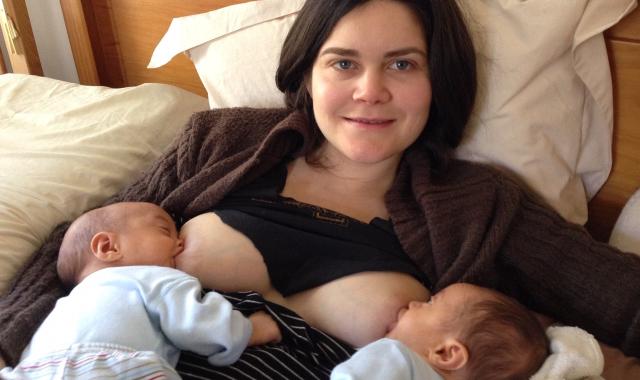
As you get more confident, you might like to try feeding your babies together. This can save time, but it’s okay if you prefer to feed them separately – do what works best for you and your family.

‘Twin’, ‘football’ or underarm hold

Parallel hold

Front ‘v’ hold
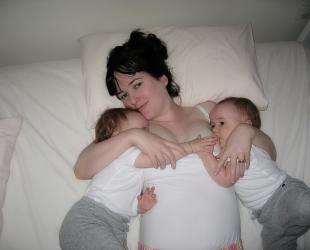
Lying down

Feeding triplets
Feeding positions
‘Twin’, ‘football’ or underarm hold
The most common hold and the best to use when you don’t have help. Good for small babies and useful after a caesarean birth.
Parallel hold
A more discreet position but may be hard when your babies are young. It is a good hold when you are away from home. With older babies you can feed this way without pillows and it can be done using an armrest in a small armchair.
Front ‘v’ hold
A good method for feeding at night. May also be helpful if you're in pain when you're sitting. Can be difficult with tiny babies unless you have help, as you have little control over their heads.
Lying down
Mothers of single babies often find lying down with their baby makes life much easier as they get more rest. With practice you can do this with two.
Feeding triplets
You'll find more tips and positions in the ABA booklet Breastfeeding: twins, triplets and more.
Expressing milk
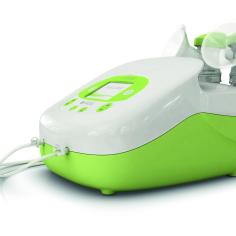
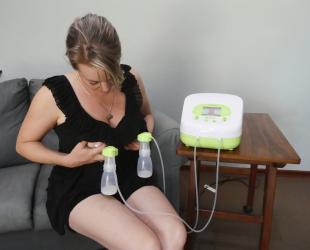
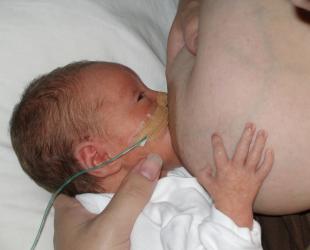
If any of your babies are small or premature, you might need to express milk. Even small amounts of colostrum are valuable, giving your babies nourishment and protection from infection.
It is a big help if you can surround yourself with people who are skilled and knowledgeable about how breastfeeding works. Their confidence and support will reassure you that you can get your milk supply going and keep it going until your babies can feed from your breasts.
Read more about expressing milk
© Australian Breastfeeding Association December 2025
Expecting twins? Find more information and support
Our online interactive birth preparation class, just for you
Breastfeeding Preparation Session - Multiples
Evidence-led info and practical tips from our Special Situation Information Series
Breastfeeding: twins, triplets and more