Home / Breastfeeding Information / World Health Organization (WHO) International Child Growth Standards, 2006


World Health Organization (WHO) International Child Growth Standards, 2006
Summary appears in 'Essence' magazine
Volume 42, Number 6
Exclusively for ABA subscribers

World Health Organization (WHO) International Child Growth Standards, 2006


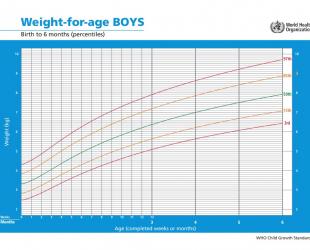
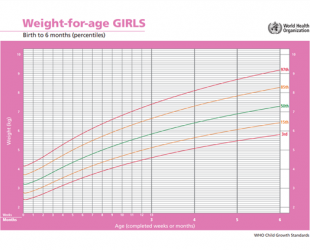
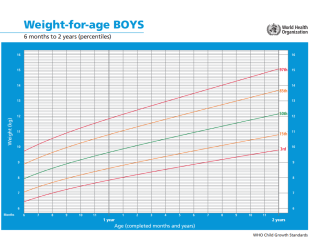
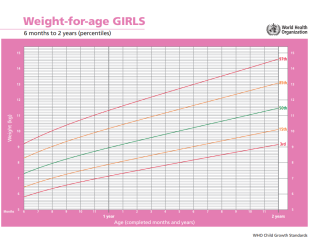
These standards, released on 27 April 2006, are based on the breastfed child as the biological norm for growth and development. The study was initiated by WHO in 1997 and data was collected over seven years (1997-2003). 8440 children from six countries were involved (Brazil, Ghana, India, Norway, Oman and USA). The children were selected based on optimal environment for proper growth: recommended infant and young child feeding practices, good healthcare, mothers who did not smoke and other factors associated with good health outcomes.


The new standards confirm that children born anywhere in the world and given the optimum start in life have the potential to develop within the same range of height and weight. Peek a boo!

Why were new standards needed?

  • The old charts are based on data from late 1970s from children in the USA. Many of these babies were artificially fed.
  • The old measurements were based on irregular measurements, too far apart to identify trends.
  • The old standards merely described how these children grew whereas the new standards aim to describe how children should grow.


Two different charts have been in use in Australia:

  1. The 1977 Charts (National Center for Health Statistics charts)
  2. The 2000 Charts (Centers for Disease Control and Prevention charts)


It had been known for some time that the 1977 charts were an inadequate representation of normal growth rates for babies. Major limitations to these 1977 charts were that they were based on middle class, white children living in a small part of Ohio between 1929 and 1975. Measurements were conducted at quite wide intervals. The infants were predominantly artificially fed. Exclusively breastfed infants were in the minority.


In 1993 a WHO expert committee was concerned that accuracy of feeding advice might be erroneous if the reference growth charts used did not adequately represent the physiological growth pattern of breastfed infants. In an attempt to correct some of the deficiencies of the 1977 charts, the 2000 charts were formulated.


In May 2000 the Centers for Disease Control and Prevention (CDC) released new growth charts for the United States. The 2000 charts were created from data collected between 1963 and 1994 within the USA and were based on five cross sectional growth studies. Larger numbers of babies across different states with different ethnic backgrounds were used, however the percentage of breastfed infants in the study was similar to that in the general population, in that relatively few infants were breastfed for more than a few months. Overall, breastfeeding rates were very low. For example, in one source, 54.7% of women initiated breastfeeding, 21% of babies were exclusively breastfed to four months, 9.8% were partially breastfed and 24% were completely weaned at four months. Breastfeeding rates were much lower in several other groups used for this study. In one group only 24.4% were EVER breastfed.


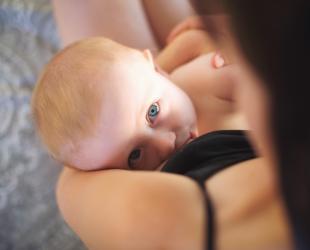
Baby playing at breast Some of the more recent data (1994) was excluded due to the increasing trend of overweight children.


The new World Health Organization charts are based on data from exclusively breastfed babies, which show what is biologically normal. WHO research involved 8440 children from six countries, brought up in environments where breastfeeding, good diet, and prevention and control of infection prevailed.

How were the new Charts constructed?

  • Children in the study came from across the world, and from each continent -Brazil, Ghana, India, Norway, Oman and USA.
  • Children were from affluent areas so that there were no socio-economic or environmental constraints to growth/health.
  • Each baby was followed for two years.
  • In each site, 80% of deliveries were involved.
  • Babies were first screened 12-24 hours after birth. Only single, healthy, term babies were in the study.
  • Mothers were all non-smokers during pregnancy and after.
  • Each mother was assigned a lactation counsellor to ensure that there was at least four months and as close to six months as possible of exclusive breastfeeding - that is, nothing other than breastmilk was given to the baby.
  • The measurements taken were: weight, length and head circumference from birth, and from three months, arm diameter, subscapular skin-fold and triceps skin-fold as well.
  • Babies received 20 home visits: once every 2 weeks until 2 months then every month from 3-12 months then every 2 months until 2 years.
  • Illnesses and feeding practices and maternal smoking were also continually monitored.
  • The same portable measuring equipment and techniques were employed at every site.
  • Equipment was calibrated daily with standard weights and lengths.
  • Field workers went through rigorous training and quality control checks.
  • Home visits were conducted by two field workers. Each took the measurements independently then compared. If values were not within defined ranges of each other then measuring was repeated.
  • All data was entered twice to ensure it was correct. There were many quality control measures at each step, which ensured very high quality data at each site. The data was collated centrally in Geneva.
  • These developmental milestones were also recorded:
    1. Sitting without support
    2. Hands and knees crawling
    3. Standing with assistance
    4. Walking with assistance
    5. Standing alone
    6. Walking alone


Comparing Charts

A World Health Organization study (Onis and Onyango, 2003) compared the 2000 CDC charts to charts compiled using 226 healthy breastfed infants. There were notable differences in the growth of the breastfed babies compared with the 2000 CDC chart. The breastfed infants grew faster in the first two months and less rapidly from 3-12 months compared with the 2000 charts. This growth pattern is seen consistently in several countries in healthy breastfed children. Breastfed infants plotted similarly to the 1977 NCHS charts but the apparent decline in weight gain appeared to be delayed by one month. Both the 1977 charts and the 2000 charts suggest a faltering of weight gain in breastfed infants with the consequent risk that breastmilk is judged to be insufficient for growth from this early age. Onis and Onyango concluded: 'The impact of this misinterpretation on infant mortality and morbidity from infectious diseases worldwide is potentially serious.' Their study determined that the 2000 charts were no more suitable for breastfed infants than the 1977 charts.


The overall upward shift in the 2000 chart would result in infants being classified more frequently as underweight and fewer overweight. Health experts believe the old growth charts may have contributed to childhood obesity and associated problems such as diabetes and heart disease in later life.


It is important that growth charts used represent normal growth since growth reference charts for infants and young children are among the most widely used instruments in public health and clinical medicine. Paediatric health professionals throughout the world rely mainly on the evaluation of growth to assess maternal lactation performance and determine the optimal timing of the introduction of complementary foods.

Normal patterns in breastfed babies... non-breastfed babies are different!

Breastfed babies appear to self regulate their energy intake to lower levels. Breastfed babies have different metabolic rates and different sleeping patterns. Artificially fed babies on average have higher intakes of energy and as a result are heavier.


One study (Dewey, 1998) explains some of the differences between breastfed and artificially fed infants. The average weight gain of breastfed babies is lower, even after complementary foods are introduced. The length gain is also less in some studies. Growth in head circumference does not differ by feeding mode. Breastfed infants are generally leaner at 12 months of age. Evidence suggests that there are no adverse effects to the slower weight gain of breastfed infants; they do not differ in activity level and they experience less illness and have enhanced cognitive development.

About the New Charts 2006

The new charts include detailed motor development records, and linking motor development to anthropometric standards (measurements). The important message is that normal physical growth is essential but by itself insufficient to assess normal development.


The new charts show that environmental differences - not genetic endowment - are the principal determinants of disparities in child growth. With these new charts parents, doctors, policymakers and child advocates will know when the nutrition and healthcare needs of children are not being met.


The new growth curves are expected to provide a single international reference that represents the best description of physiological growth for all children less than five years of age and to establish the breastfed infant as the normative model for growth and development.


The WHO is very clear that the new growth charts apply not just to breastfed babies. In fact they describe how all babies should grow in all places around the world. If a baby is growing in a way that differs from what is indicated in the new charts, s/he is malnourished (in the case of artificially fed infants that means too many calories). Artificial baby milk manufacturers want these charts to be understood to apply only to breastfed babies because when people realise that artificially fed infants don't grow normally, it is likely to mobilise health professionals into protecting and promoting breastfeeding.


In 2006, 99 countries were using the old charts. It is expected that the majority of these countries will have adopted the new standards by 2010.

What needs to be done to ensure all children grow well according to these standards?

  • Breastfeeding should be supported, protected and promoted.
  • Mothers should be informed and empowered to practise exclusive breastfeeding for the first six months.
  • Children should be provided with wholesome, nutritionally appropriate foods after six months.
  • Vaccinations and good health care should be accessible.

World Health Organization Child Growth Standards

Key Messages

  • The new WHO Child Growth Standards show how every child in the world should grow. These new Standards set the benchmark for growth and development of all children from birth to age five, replacing old references which only described how a sample of children were growing at that time and place.
  • Every child in every part of the world has the potential to grow and develop as described in these Standards as long as his and her basic needs are met. The Standards show that nutrition, environment and healthcare are stronger factors in determining growth and development than gender or ethnic background.
  • For the first time, we now have a technically robust tool to measure, monitor and evaluate the growth of all children worldwide, regardless of ethnicity, socio-economic status or type of feeding. Under-nutrition, overweight and obesity, and other growth and nutrition-related conditions can be detected and addressed at an early stage in a child's life. These standards are for all children, not just for use with some groups.
  • The Standards are based on the breastfed infant as the normative growth model. The nutritional, immunological and growth benefits of breastfeeding have been proven, and so the breastfed infant is the natural standard for physiological growth. This is in keeping with national and international guidelines that recognise breastfeeding as the best source of nutrition for infants.
  • The Standards will be an effective tool for detecting obesity. They allow for earlier diagnosis of excessive weight gain. In fact, the current obesity epidemic in many countries would have been detectable earlier had this new standard been available 20 years ago.
  • The Standards provide all who aim to improve the health of children with a powerful advocacy tool. With these standards, parents, doctors, advocates and policymakers will know the standards of what constitutes good nutrition, health, and development. The Standards provide strong evidence for the protection, promotion and support of the right of every child to develop to his or her full potential.

References:

WHO website: www.who.int/nutrition/topics/childgrowth/en/index.html
Victorian Government website www.health.vic.gov.au/childhealthrecord/growth_details/qanda.htm
Dewey KG. Growth Characteristics of Breast-Fed Compared to Formula-Fed Infants. Biol Neonate 1998; 74:94-105.
Onis M, Onyango AW. The Centers for Disease Control and Prevention 2000 growth charts and the growth of breastfed infants. Acta Paediatr 2003; 92:413-419.


The Lactation Resource Centre also has information on the new charts - www.lrc.asn.au/whocharts.html


Top