Finding the right balance between breastmilk and solids is key in your baby’s first year.
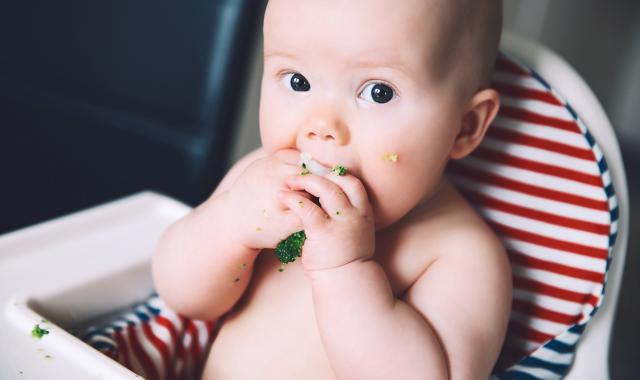
Starting solids is about helping your baby learn and explore new foods, while making sure their diet helps them to grow and thrive.
From around 6 months, babies begin to need more nutrients than breastmilk alone can provide. Together, breastmilk and solids can meet their needs.
Here’s how to balance the two and what to expect as your baby grows.
After 6 months, your baby needs both breastmilk and solids
- Breastmilk remains a key part of your baby’s diet when they start solids. It provides half or more of their energy from 6 to 12 months.
- Solid foods are also important. Without them, your baby may not get enough of key nutrients like iron and zinc.
Flexibility is key
The balance between breastmilk and solids will slowly change over time.
- Early on, offering the breast before solids means you can be sure your baby is getting their main food first. This may help you to feel more relaxed about them trying new foods. If your baby falls asleep after breastfeeding, you can offer solids when they next wake.
- You can offer solids at any time that suits you and your baby. Family mealtimes are ideal.
- Continue to offer breastfeeds whenever your baby wants. They don’t have to be tied to mealtimes.
- After a few months, your baby will need more solid food and may gradually reduce breastfeeds.
Starting solids: learning, not replacing
- Starting solids is about tasting and learning to handle food, and topping up key nutrients, more than satisfying hunger.
- Family foods are an important add-on to breastmilk, not a replacement.
- After 12 months, breastmilk can still be part of your toddler’s diet but they’ll start eating more family foods.
How much food does my baby need?
- At first, one or two small ‘meals’ of solid food each day is enough.
- Begin with very small amounts – just a taste or a teaspoon.
- Many babies won’t eat much until about 7 months.
- Gradually build up to three meals a day (plus drinks) by around 9 months. Add one or two healthy snacks as needed.
General guide for babies aged 7–12 months
Here’s how much babies should eat from the different food groups each day. It’s based on the Australian Dietary Guidelines. Every baby is different. Some need a little more, some a little less and amounts may vary from day to day.
- Meats, poultry, fish, eggs, legumes: 30g per day (e.g. 1 to 2 tablespoons cooked meat or 1 egg or 1/2 cup cooked beans). Focus on the good sources of iron first.
- Grain foods: 60g per day (e.g. 1½ slices bread or 3/4 cup cooked pasta)
- Vegetables: 30–40g per day (e.g. 1/4 cup cooked veggies)
- Fruit: 10g per day (e.g. 1/8 medium piece of fruit such as apple or banana)
- Dairy foods: Small amounts, like 1/2 tablespoon yoghurt or 5g cheese
- Fats and oils: Small amounts, like 1 tablespoon avocado or up to 1 tablespoon nut paste
What if my baby isn’t interested in solids?
Some babies are keen eaters, while others just want to play with their food. In the first 12 months, breastmilk is still meeting many of your baby's needs. Keep offering small amounts of whatever foods your family is eating but try not to worry if they don't take much at first. Most importantly, mealtimes should be relaxed and pressure-free.
Focus on nutrient-dense foods, especially iron-rich options, aiming for quality, rather than quantity. Try offering solids when your baby is hungriest, then follow up with a breastfeed.
If you’re concerned, or your older baby still doesn’t seem interested in solids, talk to your child health nurse or GP.
Breastfeeds and solids for toddlers
As your child grows, they’ll start eating more of the foods your family enjoys. Simple family meals, adapted as needed, are usually best. There’s no need for special 'toddler foods'.
Many toddlers are naturally picky eaters and their appetite can change from day to day. When they aren’t eating much food, breastmilk can help to meet their needs. From 1 to 2 years, it provides a third of the energy they need each day. And even when they are eating well, breastfeeds can continue to be a comforting and nutritious part of their day for as long as you both wish.
About toddler milks
'Toddler' or 'growing-up' milks marketed for children over 12 months don’t provide any benefit over family foods and aren’t recommended by health experts. For most children, a variety of family foods, together with water and breastmilk (if you’re still breastfeeding), provide all the nutrition they need as they grow.
© Australian Breastfeeding Association July 2026
Read more about introducing solids
Evidence-led info and practical tips from our Breastfeeding Information Series
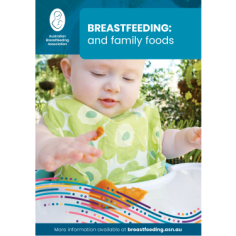
Breastfeeding: and family foods