Health experts say to start around 6 months. Learn why timing matters.
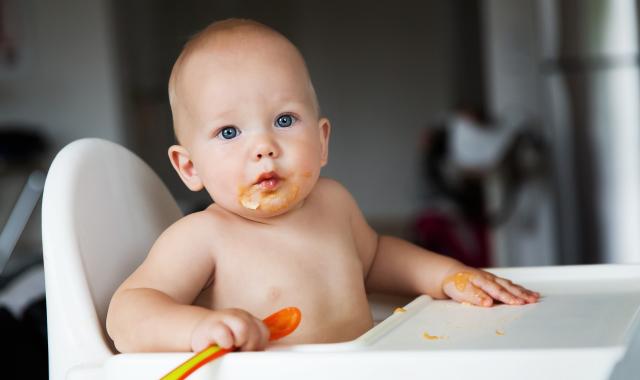
Starting solids is a big step for you and your baby. There’s a lot of advice out there, so it can be hard to know what’s right. The good news is, health experts have clear, evidence-based recommendations to help you.
Here’s what the major health authorities say about when to introduce solids.
Australia’s National Health and Medical Research Council (NHMRC):1
- Advises exclusive breastfeeding for around the first 6 months.
- After 6 months, continue breastfeeding alongside complementary foods for at least 1 year, or as long as mother and child desire.
World Health Organization (WHO):2
- Recommends exclusive breastfeeding for the first 6 months.
- After 6 months, continue breastfeeding alongside complementary (family) foods for 2 years or beyond.
These recommendations are based on research into what babies need to grow and stay healthy. It’s important to wait until your baby shows signs that they’re ready, because starting solids too early can cause problems. Watching for these signs and following the guidelines helps give your baby the best start.
Signs your baby is ready
Every baby develops at their own pace but most will show these signs at around 6 months:
- Sitting upright with little support.
- Good head and neck control.
- Showing interest in your food (reaching for it, watching you eat).
- Losing the tongue-thrust reflex (not pushing food out with their tongue).
If your baby isn’t showing all these signs yet, that’s okay. Some babies aren't ready until a little later.
Why not start earlier?
You might hear advice to start solids before 6 months but there are good reasons to wait until your baby is ready. Here’s why:
- Your baby’s tummy isn’t ready: Young babies’ digestive systems can’t cope well with the fats and proteins found in other milks, eggs, meat, fruit, vegetables and cereals.
- Kidneys need time: Babies’ kidneys aren’t able to handle the large amount of salt found in many processed foods.
- No sleep benefit: Starting solids early won’t help your baby sleep through the night. Research shows there’s no difference in night-waking between babies under 6 months who have solids and those who have only breastmilk.3 In fact, some babies sleep worse if solids upset their tummy.
- Allergy risk isn’t reduced: There’s no good evidence that starting solids earlier means less chance of allergies.4 The timing of solids is just one factor. Your baby’s overall development and readiness matter too.
- Breastmilk protects against illness: Breastfeeding helps protect babies from illness, even in developed countries like Australia.5 Waiting to introduce solids helps keep this protection strong.
- Guidelines consider more than allergies: When experts set guidelines, they look at babies’ nutritional needs, ability to chew and swallow safely, risk of getting too little breastmilk and risk of illness or infection.6
Why not wait longer?
- Iron and zinc become important. By around 6 months, your baby's iron and zinc stores from birth start to run low. Breastmilk is still an important source of nutrition, but babies now need iron-rich foods as well. Offering foods such as meat, poultry, eggs, legumes and tofu helps meet their growing nutritional needs.
- Learning to chew and eat. Starting solids isn't just about nutrition. It's also how babies learn to chew, move food around their mouth and swallow different textures safely. These eating skills develop through practice and help support normal oral development.
- The first year is important for allergy prevention. Current allergy guidelines recommend introducing common allergy-causing foods during your baby's first year.7 This includes foods such as egg and peanut in age-appropriate forms soon after they have started solids. Exposure during the first year may help reduce the risk of food allergy.
- Learning about food. Babies need time to get used to different tastes, textures and family foods. Starting solids around the time they show signs of readiness gives them opportunities to practise eating skills and explore new foods. Waiting too long to introduce solids may make it harder for some babies to accept new textures and foods.
In summary: Around 6 months is when many things come together. Your baby's body is ready to handle food, they need extra nutrients such as iron and zinc and they can begin exploring family foods and developing important eating skills, while continuing to breastfeed.
Dealing with pressure and advice
It’s common to get advice from family and friends to start solids early. They mean well but your baby’s readiness is what matters most. Trust your instincts and the evidence. If you’re ever unsure, a chat with an ABA breastfeeding counsellor or educator can help.
Getting started
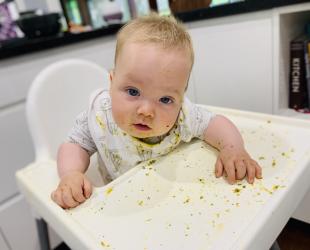
When your baby is ready, make mealtimes relaxed and enjoyable. Let your baby join family meals, even if they’re not eating much yet. Prepare for mess. Try a bib with a catcher, a mat under the chair, and a relaxed attitude. Respect your baby’s tastes and interest. Some days they’ll eat more, some days less, and that’s perfectly normal.
Find out more about getting prepared and first foods
© Australian Breastfeeding Association August 2026
- National Health and Medical Research Council. (2012). Infant Feeding Guidelines: Information for Health Workers. Canberra: NHMRC.
https://www.nhmrc.gov.au/health-advice/public-health/nutrition/infant-feeding-guidelines - World Health Organization. (2023). WHO Guideline for complementary feeding of infants and young children 6–23 months of age. Geneva: WHO.
https://www.who.int/publications/i/item/9789240081864 - Brown, A., & Harries, V. (2015). Infant sleep and night feeding patterns during later infancy: Association with breastfeeding frequency, daytime complementary food intake, and infant weight. Breastfeeding Medicine, 10(5), 246–252. https://doi.org/10.1089/bfm.2014.0153
- Anderson J., Malley K., Snell, R. (2009). Is 6 months still the best for exclusive breastfeeding and introduction of solids? A literature review with consideration to the risk of the development of allergies. Breastfeeding Review 17(2): 23–31. https://pubmed.ncbi.nlm.nih.gov/19685855
- Victora, C. G., Bahl, R., Barros, A. J., França, G. V., Horton, S., Krasevec, J., Murch, S., Sankar, M. J., Walker, N., Rollins, N. C., & Lancet Breastfeeding Series Group (2016). Breastfeeding in the 21st century: epidemiology, mechanisms, and lifelong effect. Lancet, 387(10017), 475–490. https://doi.org/10.1016/S0140-6736(15)01024-7
- Breen, C., Scarpone, R., Perkin, M. R., & Boyle, R. J. (2025). Food allergy prevention: is earlier complementary food introduction really the optimal approach? Clinical & Experimental Allergy, 55(9), 748-751. https://doi.org/10.1111/cea.70142
- Vale, S. L., Netting, M. J., Hornung, C. J., Smith, J., Roche, I., McWilliam, V., ... & Ford, L. S. (2026). Australasian Society of Clinical Immunology and Allergy (ASCIA) Guideline: Infant feeding for food allergy prevention. Clinical & Experimental Allergy. 56(4). https://doi.org/10.1111/cea.70217
Read more about introducing solids
Evidence-led info and practical tips from our Breastfeeding Information Series
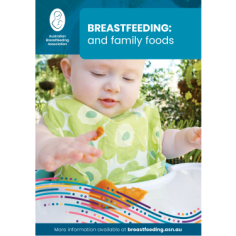
Breastfeeding: and family foods