How Baby Friendly hospitals support you and your baby with breastfeeding
You might come across the term ’Baby Friendly’ when you’re reading about birth or hospital care. Hospitals with this accreditation follow practices that support you and your baby with breastfeeding in the early days. This can help make it easier to get started and keep going.
This approach is part of a global program called the Baby Friendly Hospital Initiative (BFHI).
What is BFHI?
The Baby Friendly Hospital Initiative (BFHI) is a joint World Health Organization (WHO) and UNICEF project. It aims to give every baby the best start in life by creating healthcare environments where breastfeeding is supported and protected.
In Australia, this program is known as the Baby Friendly Health Initiative.
Baby Friendly accreditation is a quality standard. It shows that a hospital or health service is committed to providing a high level of care for mums and babies.
What makes a hospital ‘Baby Friendly’?
Baby Friendly hospitals follow practices that support the health and wellbeing of mums and babies.
These include:
- giving clear and consistent information about feeding your baby
- helping you start breastfeeding soon after birth
- supporting you to recognise and respond to your baby’s feeding cues
- encouraging you and your baby to stay close together
- supporting you if breastfeeding feels challenging
To be accredited as ‘Baby Friendly’, hospitals follow a global standard called the ‘Ten Steps to Successful Breastfeeding’, developed by WHO and UNICEF.
Read the Ten Steps below.
Critical management procedures:
- Step 1a. Comply fully with the International Code of Marketing of Breast-milk Substitutes and relevant World Health Assembly resolutions.
- Step 1b. Have a written infant feeding policy that is routinely communicated to staff and parents.
- Step 1c. Establish ongoing monitoring and data-management systems.
- Step 2. Ensure that staff have sufficient knowledge, competence and skills to support breastfeeding.
Key clinical practices:
- Step 3. Discuss the importance and management of breastfeeding with pregnant women and their families.
- Step 4. Facilitate immediate and uninterrupted skin-to-skin contact and support mothers to initiate breastfeeding as soon as possible after birth.
- Step 5. Support mothers to initiate and maintain breastfeeding and manage common difficulties.
- Step 6. Do not provide breastfed newborns any food or fluids other than breast milk, unless medically indicated.
- Step 7. Enable mothers and their infants to remain together and to practise rooming-in 24 hours a day.
- Step 8. Support mothers to recognize and respond to their infants’ cues for feeding.
- Step 9. Counsel mothers on the use and risks of feeding bottles, teats and pacifiers.
- Step 10. Coordinate discharge so that parents and their infants have timely access to ongoing support and care.
Step 10 is where the Australian Breastfeeding Association (ABA) comes in. Baby Friendly hospitals in Australia often work closely with local ABA groups and provide ABA information when you leave hospital. This means you can continue to access support with breastfeeding in the months and years to come.
How can a Baby Friendly hospital support you and your baby?
Being in a Baby Friendly hospital doesn’t mean everything will feel easy because every mum and baby are different. But it can mean you have more consistent support in the early days.
You may notice:
- More time with your baby
Skin-to-skin contact after birth is supported, helping you and your baby get to know each other. - Help to get started
Staff are trained to support breastfeeding and can help if you’re finding things tricky. - Clear, consistent information
Staff follow the same approach, so advice is less likely to feel confusing or conflicting. - Support if plans change
If you and your baby need to be separated, you can be supported to express your milk and keep breastfeeding going.
Support beyond your hospital stay
Going home with a new baby can bring new questions.
Baby Friendly hospitals plan for this by helping you connect with ongoing support.
In Australia, this often includes connecting you with the Australian Breastfeeding Association (ABA). You may be given ABA information when you leave hospital, so you know where to turn for support in the weeks and months ahead.
Who else benefits from Baby Friendly care?
Baby Friendly care also supports families, health professionals and the wider community.
For families
- a stronger understanding of your baby’s needs
- more confidence in caring for your baby
- benefits for your baby’s health and development
- benefits for your own health
For health professionals
- ongoing learning and skill development
- greater confidence in supporting breastfeeding
- a shared approach across the care team
For hospitals and health services
- a recognised standard of care
- practices that support mums and babies, rather than routine separation
- a way to show their commitment to family-centred care
For the community
- increased awareness of the importance of breastfeeding
- improved health outcomes for mums and babies
- lower healthcare costs linked to illness
- environmental benefits, as breastfeeding produces no waste
How can I find a Baby Friendly hospital?
If you’re planning where to give birth, you could ask your care provider if your hospital is Baby Friendly accredited.
If it’s not, you might like to ask what support is available to help you and your baby with breastfeeding.
You can also find a list of accredited hospitals in each state and territory on the Baby Friendly Health Initiative Australia website.
© Australian Breastfeeding Association June 2026

My breastfeeding plan
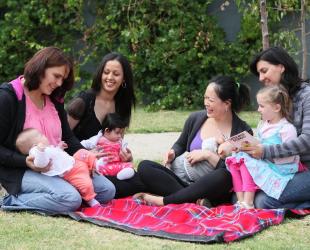
Connect with other mums
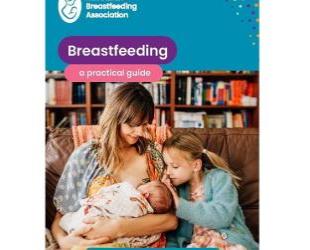
Breastfeeding a practical guide
Your guide to breastfeeding. Over 300 pages of must-have info for the first year of your baby's life.