Formula milk companies want to influence parents' feeding choices. It's time for that to stop.

The Australian Government is planning to introduce mandatory laws to regulate the marketing of infant formula. This is a significant and positive step forward. We need your voice to make sure the Government knows how important this is to you.
MPs who hear directly from constituents now, will be better informed and more confident in championing the strongest possible protections when the new law is debated and voted on.
Takes 2 minutes. Free to use. Powered by Do Gooder

96%
of Australian mums start breastfeeding but many stop earlier than they planned

$55 Billion USD
is the size of the global formula milk industry - backed by huge marketing budgets

51%
of mums in a global study reported seeing formula marketing in the past year
Parents deserve unbiased information about how to feed their baby
Parents want the best for their baby. Formula milk companies know this — and they use it.
Research from the World Health Organization and The Lancet journal shows that formula marketing is one of the biggest hidden barriers to breastfeeding. It's not just the ads you see on TV or Instagram. It's the wording on the tin. The free samples in the hospital bag. The app that asks you to "track your baby's development" — and then recommends a formula product. The conference sponsored by a formula company that healthcare provider attended.
None of this happens by accident. Formula milk is a $55 billion global industry. Companies spend billions each year on marketing strategies designed to create doubt about breastfeeding and position formula as the confident, scientific, modern choice. And it works — even when parents don't realise they're being targeted.
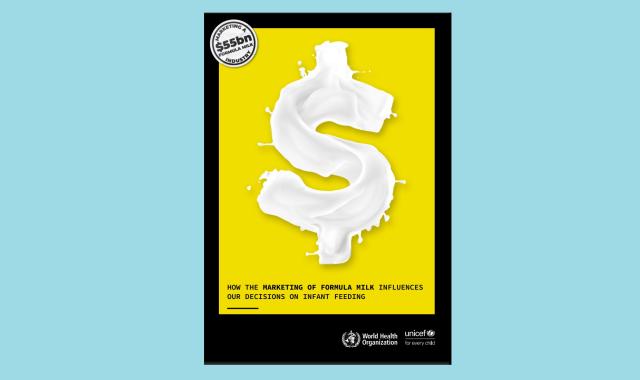
"Formula milk marketing knows no limits. It misuses and distorts information to influence decisions and practices."
WHO & UNICEF, How the Marketing of Formula Milk Influences Our Decisions on Infant Feeding (2022)
How formula marketing gets in the way
A major WHO/UNICEF study and the 2023 Lancet breastfeeding series found that formula marketing affects breastfeeding mums in ways that are hard to see — and hard to resist.
Rollins N, Piwoz E, Baker P et al.(2023) Marketing of commercial milk formula: a system to capture parents, communities, science, and policy. The Lancet, 401, 486-502
It plants seeds of doubt
Marketing uses emotional language to make mums worry their breastmilk isn't enough — and that formula is a safe, science-backed backup. Studies show women who see more formula marketing are more likely to believe formula provides nutrition that breastmilk cannot.
It targets health professionals
Formula companies fund conferences, provide gifts and sponsor research — not out of generosity, but to build trust with the midwives, nurses and doctors you rely on. This can shape what professionals recommend, sometimes without them even realising it.
It follows you online
Digital marketing uses user browsing data to reach parents at vulnerable moments — when a mum searches for feeding advice at 3am, when she joins a parenting group, when she looks up baby products. Companies describe pregnant women as the "holy grail" for formula sales.
It uses toddler milks to advertise infant formula
Because advertising infant formula is already partly restricted, companies market toddler milks using the same branding, colours and imagery as their formula products. Australian and international research shows parents often can't tell them apart — and it's intentional.
It's on special in the supermarket
Price promotions, catalogue deals and shelf placement all influence which formula parents reach for. Studies show that nearly one in three expectant parents reported being influenced to buy formula by in-store price promotions.
It makes parents feel alone in their decision
Formula marketing often frames breastfeeding as isolating, demanding and unfeminist — while positioning formula as the modern, freeing choice. This undermines community support for breastfeeding and makes mums feel that choosing to breastfeed requires justification.
What the Government is planning
The Government has committed to creating new laws to restrict infant formula marketing in Australia. A large public consultation on what the new laws should cover has just closed. The most comprehensive option would put in place the broadest set of protections for families. They would bring Australia much closer to the recommendations of the World Health Organization's International Code of Marketing of Breast-milk Substitutes (the WHO Code). Here's what it would do:
No more formula advertising to the public
Companies would not be allowed to advertise infant formula products — including online, in print, on TV or through social media — to the general public.
Toddler milks would be covered too
The new laws would close the loophole that allows companies to use toddler milk advertising to cross-promote their formula products. Families could trust that what they see on shelves is not designed to blur the lines.
Retailers would also be included
Supermarkets and pharmacies would not be able to use in-store promotions, catalogue features, or special displays to promote formula products. (An exemption for price discounts is under discussion to protect affordability for families who need formula.)
No more gifts or sponsorships to health professionals
Formula companies would not be able to sponsor conferences, provide gifts, or fund professional development for health workers — protecting the independent advice you receive from your midwife or doctor.
No free samples
Formula companies could not hand out free samples to the public or give them away through healthcare settings.
Real penalties for breaking the rules
Unlike the previous voluntary agreement — which had no teeth — the new laws would include civil penalties for companies that breach them. Every company selling formula in Australia would need to comply.

What stronger laws could mean for families
No confusion about toddler milks
Clear regulation means parents can trust that toddler milk packaging is not designed to look like infant formula to build brand familiarity.

FAQs: You might be wondering...
No. These laws regulate marketing, not the sale of formula. Formula will still be available in supermarkets, pharmacies and online. For families who rely on formula, it will still be there. Research shows that strong marketing regulations in other countries have not led to formula becoming unavailable or unaffordable.
Every family's situation is different and formula can be a necessary option for some babies. These laws are about making sure that your choice is genuinely informed rather than the result of commercial pressure. That benefits all families, including those who use formula.
That was the problem with the old voluntary regulations — and it's why mandatory laws with real penalties matter. The new legislation must have penalties for breaches, apply to every company in the market (not just those who sign up), and include an independent monitoring and enforcement process. Evidence from other countries shows that well-enforced national laws do reduce inappropriate formula marketing.
No. Health professionals will still be able to share factual, evidence-based information with parents about formula and how to use it safely. What they won't be able to do is accept gifts, sponsorships or incentives from formula companies — because that is what compromises the independence of their advice. Parents deserve to know that what their midwife or doctor recommends is based on their needs, not a company's marketing strategy.
Tell your MP you support strong Government formula marketing laws
1. Click the button below
You'll be taken to our Do Gooder page to write to your MP
2. Enter your address
Do Gooder automatically finds your local MP so you don't have to.
3. Personalise your message
We've drafted a message to start you off — but your own words are always the most powerful.
4. Send it
Your message goes straight to your MP. It's that simple.
Let your voice count
Parents deserve infant feeding information they can trust, strong formula marketing laws are a vital part of that. Let you MP know how important the Government's proposed new laws are to you.
Hosted securely on Do Gooder. Your details will not be used for any purpose other than sending your message.
Want to make a bigger impact?
Ask your MP or Senator for a meeting
A face-to-face meeting is an excellent way to build a relationship with your local Member of Parliament (MP) and Senator. It gives you the opportunity to discuss issues you feel strongly about and encourage your MP and Senator to act on your concerns. If you have young children, take them along too!
Email or call your MP’s or Senator's office and introduce yourself as a local constituent. Ask for a meeting to talk about the Government's plan to restrict infant formula marketing in Australia.
For ABA volunteers, its important to discuss your plan with your Group Leader or Regional Rep to ensure coordination.
If you don't get a response immediately, be patient. Politicians and their staff are often busy and can take time to respond. If you haven't heard anything after a week or so, you might like to follow-up with a gentle reminder.
Whilst you wait for the meeting date, spend some time researching your MP or Senator so that you can better tailor your conversation points and anticipate their response. You can understand their policy positions, by visiting their website and other sources such as:
Meeting with your MP and Senator is an opportunity to build a relationship with them.
If you're involved with ABA, you can let them know who we are and what we do.
If your MP already supports your issue, consider them a powerful ally and work to maintain a relationship with them.
You could ask them to talk to their colleagues about the new laws and champion them in Parliament.
Get a promise on what action they will take.
The information on this webpage is designed to give you the information you need for your discussion.
Aim to go into your meeting prepared with:
- Your key messages and a few powerful facts and figures to back them up.
- A personal story or two, as appropriate.
- A specific action you will ask them to take.
- Bring along the Briefing document for MPs and Senators
- Provide your contact details for further correspondence.
Go with someone else who shares your interests / concerns such as another ABA member or volunteer. This helps to share the experience and prepare for future contact. If you have young children, them along with you too!
Other tips include:
- You will likely know more about the barriers and supports for breastfeeding mothers in your community than your representative, so do not be intimidated.
- If you are going with others, have each person present a specific point or make a request, and do a rehearsal.
- Whilst one person speak another can take notes.
Things to remember:
- Make your case, get to the point and keep it simple. You may have less time than scheduled because MPs and Senators often change their schedule at short notice.
- Even if your MP or Senator is not personally interested in a certain policy area, it doesn't mean they won't respond to or represent your views. Show them how much it means to you and their interest may increase.
- If your MP asks a question you don't know the answer to don't be afraid to say so. Offer to get back to them with the answer (which is an opportunity to re-engage).
If you are an ABA volunteer, please let us know how your meeting went by filling out the Representing ABA in the community form.