With childhood allergies now more common, it's helpful to know what the latest research says
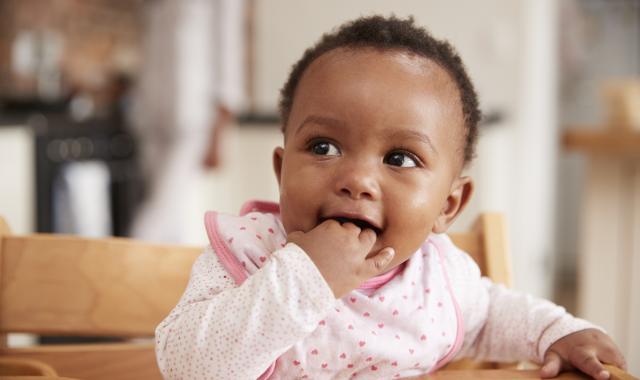
The number of children with food allergies has risen sharply in recent years in developed countries like Australia. Finding out why is the aim of ongoing global research.
The most common foods to cause food allergy in Australia include egg, cows’ milk, peanuts, tree nuts, shellfish, fish, soy, wheat and sesame.
Reducing the risk of allergies
We are still learning about the best way to reduce the risk of food allergy in children.
Current advice can be summed up as follows:1-6
- Try to include common allergenic foods in your diet when you are pregnant and breastfeeding. Avoiding them might increase your baby’s risk of food allergy.
- Offer a variety of foods to your baby from around 6 months of age. Include the common allergens (egg, cows’ milk, nuts, shellfish, fish, soy, wheat and sesame)
- Foods can be introduced in any order, as long as iron-rich foods are included.
- If your baby is breastfed, continue breastfeeding as you introduce solid foods.
- If your baby is having formula, cows' milk-based formula should be used. Formulas based on soy, rice, goat or sheep milk and partially or extensively hydrolysed ('hypoallergenic') formulas are not recommended for allergy prevention.
- All common allergens should be offered in the first year of life, even to babies with high risk of allergy.
- Introducing these foods one at a time (e.g. only one per meal) can help you to identify the cause if your baby has a reaction.
- Offer smooth peanut butter or paste and well-cooked egg soon after your baby starts solid food. Studies show introducing egg and peanut around 6 months cuts allergy risk when compared to waiting to 10 months of age.
- Once a common allergen is introduced, continue to offer it to your baby regularly (at least once a week).
If you have a family history of food allergy
Unless you are allergic to a food yourself, you do not need to avoid eating certain foods during pregnancy or breastfeeding to reduce the risk of allergy in your child.7,8 In fact, eating these foods yourself could help your baby’s immune system learn how to tolerate them.
Even babies with a family history of allergy should be offered the common allergy causing foods before they turn one. Talk to a healthcare provider if you feel unsure how to do this safely.
If your breastfed baby has a food allergy
If your baby shows signs of an allergic reaction to a food, do not offer that food again until you have seen a doctor. Continue to introduce the other common allergy causing foods one at a time.
If your doctor confirms your baby or child has a food allergy, they will need to avoid eating that food. A dietitian can help you to ensure your child still gets all the nutrients they need from other foods.
Children sometimes grow out of food allergies, so ask your doctor if and when you should offer the food again.
Talk to your child health nurse or doctor if you're feeling unsure about introducing certain foods or your baby shows signs of allergy.
Is my breastfed baby reacting to something in my diet?
Most babies can tolerate the foods their mother eats while breastfeeding. Occasionally, a baby may react to food proteins or other food chemicals that pass through breastmilk.
Does it help to start solids earlier?
No, starting solids early (before the recommended age of 6 months) is not recommended to reduce food allergy risk.
It's also important to know that allergy is not the only factor experts thought about when recommending babies begin solids around 6 months.9,10
They also looked at:
- the nutrients babies need to grow and develop well
- how much of these babies store during pregnancy, and how much they get from breastmilk
- whether they can sit, chew and swallow safely
- when their immune and digestive systems are ready to handle other foods
- other risks from foods, such as obesity and infection
Introducing solids from around 6 months, offering a range of common allergy-causing foods before their first birthday and continuing to breastfeed your baby can help to reduce their risk of food allergy.
Further reading
National Allergy Council website Nip Allergies in the Bub:
- Allergic reactions - for more information about signs of allergy and what to do
- Feeding your baby – practical tips for introducing allergenic foods
© Australian Breastfeeding Association July 2026
- Du Toit, G., Roberts, G., Sayre, P. H., Bahnson, H. T., Radulovic, S., Santos, A. F., Brough, H. A., Phippard, D., Basting, M., Feeney, M., Turcanu, V., Sever, M. L., Gomez Lorenzo, M., Plaut, M., Lack, G., & LEAP Study Team (2015). Randomized trial of peanut consumption in infants at risk for peanut allergy. The New England Journal of Medicine, 372(9), 803–813. https://doi.org/10.1056/NEJMoa1414850
- Koplin, J. J., Osborne, N. J., Wake, M., Martin, P. E., Gurrin, L. C., Robinson, M. N., ... & Allen, K. J. (2010). Can early introduction of egg prevent egg allergy in infants? A population-based study. Journal of Allergy and Clinical Immunology, 126(4), 807-813. https://doi.org/10.1016/j.jaci.2010.07.028
- National Health and Medical Research Council. (2012). Infant Feeding Guidelines: Information for health workers. https://www.nhmrc.gov.au/about-us/publications/infant-feeding-guidelines-information-health-workers
- Netting, M. J., Campbell, D. E., Koplin, J. J., Beck, K. M., McWilliam, V., Dharmage, S. C., ... & for Food, C. (2017). An Australian consensus on infant feeding guidelines to prevent food allergy: Outcomes from the Australian Infant Feeding Summit. The Journal of Allergy and Clinical Immunology: In Practice, 5(6), 1617-1624. https://doi.org/10.1016/j.jaip.2017.03.013
- Vale, S. L., Netting, M. J., Hornung, C. J., Smith, J., Roche, I., McWilliam, V., ... & Ford, L. S. (2026). Australasian Society of Clinical Immunology and Allergy (ASCIA) Guideline: Infant feeding for food allergy prevention. Clinical & Experimental Allergy. https://doi.org/10.1111/cea.70217
- Walker, S. V., D'Vaz, N., Pretorius, R. A., Lo, J., Christophersen, C., Prescott, S. L., & Palmer, D. J. (2025). Infant diet recommendations reduce IgE-mediated egg, peanut, and cow’s milk allergies. The Journal of Allergy and Clinical Immunology: In Practice. https://doi.org/10.1016/j.jaip.2025.06.012
- Royal Australian College of General Practitioners (RACGP). (2022). Excluding allergenic foods in maternal and infant diets. https://www.racgp.org.au/clinical-resources/clinical-guidelines/key-racgp-guidelines/view-all-racgp-guidelines/first-do-no-harm/gp-resources/excluding-allergenic-foods
- Kramer, M.S., & Kakuma, R. (2012). Maternal dietary antigen avoidance during pregnancy or lactation, or both, for preventing or treating atopic disease in the child. Cochrane Database of Systematic Reviews, Issue 9, Art. No.: CD000133. https://doi.org/10.1002/14651858.CD000133.pub3
- World Health Organization. (2023). WHO Guideline for complementary feeding of infants and young children 6–23 months of age. https://www.who.int/publications/i/item/9789240081864
- Breen, C., Scarpone, R., Perkin, M. R., & Boyle, R. J. (2025). Food allergy prevention: is earlier complementary food introduction really the optimal approach? Clinical & Experimental Allergy, 55(9), 748-751. https://doi.org/10.1111/cea.70142
Read more about introducing solids
Evidence-led info and practical tips from our Breastfeeding Information Series
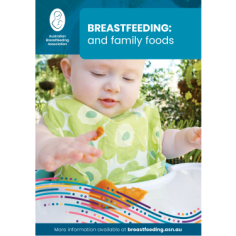
Breastfeeding: and family foods