Breastfeeding helps your baby develop a strong microbiome for lifelong health.

Did you know that your baby’s gut is home to millions of tiny helpers? These tiny organisms, called the gut microbiome, live in your baby’s tummy and play a big part in keeping them healthy. When people talk about 'gut health' they often mean having lots of good bacteria in the gut microbiome.
Breastfeeding is one of the best ways to help your baby build a strong, healthy gut right from the start. A healthy microbiome can help protect against things like allergies, diabetes, and even obesity in later life.1
How your baby gets good gut bacteria
Babies start building their microbiome before they are born. Even the placenta has its own tiny community of bacteria.2 They get their first bacteria in the uterus. During birth and skin-to-skin contact, they pick up even more. Babies born vaginally usually have more types of bacteria than those born by caesarean section.3
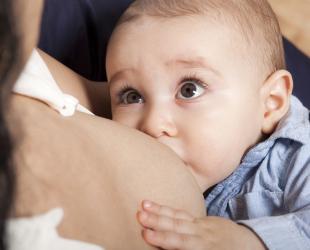
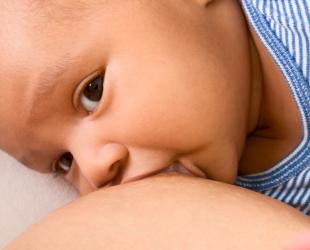
When you breastfeed, good bacteria (probiotics) in your breastmilk, and also from your skin, are passed on to your baby during feeds. These bacteria support your baby to develop a healthy and diverse gut microbiome.4
Breastmilk contains special sugars called oligosaccharides (prebiotics). These feed the good bacteria in your baby’s gut and help them grow. There are about 200 different types of these sugars in breastmilk.5
How your baby's environment shapes their microbiome
From birth onward, your baby's environment and how they are fed both play a big role in shaping their gut microbiome. Everyday experiences, like putting things in their mouth, skin-to-skin contact and being around other people, help your baby pick up new bacteria and build a more diverse microbiome.
When you’re unwell, your body makes special immune factors to help you recover. These protective factors are passed on to your baby via your breastmilk. They support your baby’s immune system and add to the healthy environment in their gut.
How good bacteria and genes work together
Your baby’s gut microbiome can influence which genes are switched on and which are switched off and to what degree.6 This means the microbiome can send signals to your baby’s body, helping certain genes become active or stay quiet. When the right genes are switched on, they can support your baby’s growth, help fight off infections, and keep their body working well.
Scientists are still learning about all the ways the microbiome and genes work together, but it’s clear that breastfeeding plays a very large part in building a healthy gut for lifelong health.
Breastfeeding and family health
Our genes also carry ‘memories’ from past generations. This is called epigenetics. What you do now, like breastfeeding to support your baby’s microbiome and health, may even benefit future generations. Research shows these positive effects can last for generations. Your breastmilk makes a difference for your baby now and may even help their children one day.7
© Australian Breastfeeding Association May 2026
- Kerr, C.A., Grise, D.M., Tran, C.D., Bauer, D.C., Li, D., Hendry, P., Hannan, G.N. 2014, Early life events influence whole-of-life metabolic health via gut microflora and gut permeability. Critical Reviews in Microbiology 41(3), 326–340. https://doi.org/10.3109/1040841X.2013.837863
- Aagaard, K., Ma, J., Antony, K.M., Ganu, R., Petrosino, J., Versalovic, J. 2014, The placenta harbors a unique microbiome. Science Translational Medicine 6:237,65. https://doi.org/10.1126/scitranslmed.3008599
- Azad, M.B., Konya, T., Maughan, H., Guttman, D.S., Field, C.J., Chari, R.S., Sears, M.R., Becker, A.B., Scott, J.A., Kozyrskyj, A.L., on behalf of the CHILD Study Investigators. 2013, Gut microbiota of healthy Canadian infants: profiles by mode of delivery and infant diet at 4 months. CMAJ 85(5),385–394. https://doi.org/10.1503/cmaj.121189
- Jeurink, P.V., van Bergenhenegouwen, J., Jiménez, E., Knippels, L.M.J., Fernández, L., Garssen, J., Knol, J., Rodríguez, J.M., Martín, R. 2013, Human milk: a source of more life than we imagine. Beneficial Microbes 4(1),17–30. https://doi.org/10.3920/BM2012.0040
- Ninonuevo, M. R., Park, Y., Yin, H., Zhang, J., Ward, R. E., Clowers, B. H., ... & Lebrilla, C. B. 2006. A strategy for annotating the human milk glycome. Journal of Agricultural and Food Chemistry, 54(20), 7471-7480. https://doi.org/10.1021/jf0615810
- Kerr ,C.A., Grise, D.M., Tran, C.D., Bauer, D.C., Li, D., Hendry, P., Hannan, G.N. 2014, Early life events influence whole-of-life metabolic health via gut microflora and gut permeability. Critical Reviews in Microbiology 1–15 https://doi.org/10.3109/1040841X.2013.837863
- Tow, J. 2014, Heal the mother, heal the baby: epigenetics, breastfeeding and the human microbiome. Breastfeeding Review 22(1),7–9.