Breastfeeding supports lifelong health for you and your baby

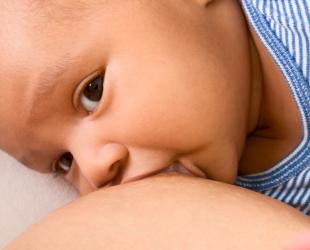
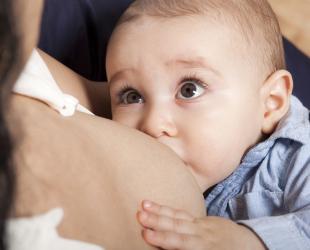
How you feed your baby can make a difference for both of you. Breastmilk is uniquely suited to your baby’s needs.
When babies are breastfed, especially exclusively and for longer durations, they have a lower risk of a range of health problems. Mums who breastfeed, especially for longer, are less likely to experience certain health conditions themselves.
Here’s what the research shows.
For babies:
- Gastrointestinal infections: Babies who don’t receive any breastmilk are much more likely to get tummy bugs and diarrhoea. Even some breastfeeding helps, but exclusive breastfeeding for at least 4 months gives the strongest protection.1,2
- Respiratory infections: Babies who don’t receive breastmilk are much more likely to get chest infections and colds. Exclusive breastfeeding for at least 4 months gives the strongest protection, but even some breastfeeding helps reduce the risk.1,2
- Ear infections: Babies who aren’t breastfed at all are much more likely to get ear infections in their first two years. Breastfeeding, even if not exclusive, helps, but exclusive breastfeeding for 6 months offers greatest protection. As well, the longer you breastfeed, the more protection your baby has.3
- Sudden Infant Death Syndrome (SIDS): Babies who are breastfed have a lower risk of SIDS compared to those who aren’t breastfed.4
- Necrotising enterocolitis and sepsis (in premature babies): Breastfeeding protects premature babies from serious gut and blood infections, including necrotising enterocolitis and sepsis. Babies who receive breast milk have a much lower risk of these life-threatening conditions.5
- Childhood cancer: Babies who aren’t breastfed have the highest risk of childhood leukaemia. Some breastfeeding helps lower the risk, but exclusive and longer breastfeeding gives the greatest protection.6,7
- Dental malocclusions: Babies who aren’t breastfed are more likely to have dental misalignment (malocclusions) as they grow. Breastfeeding, especially for longer, supports healthy jaw and teeth development.8
- Overweight and obesity: Breastfed children are less likely to be overweight or obese in childhood and as adults.9
- Type 2 diabetes: Babies who aren’t breastfed are more likely to develop type 2 diabetes later in life. Exclusive breastfeeding and breastfeeding for longer provide the strongest protection against type 2 diabetes.10
- IQ: Exclusive breastfeeding and breastfeeding for longer provide the strongest support for healthy brain development and higher IQ.11
Just breastmilk makes a big difference
Not breastfeeding at all puts babies at the highest risk for many health problems. Even some breastfeeding is better than none, but exclusive breastfeeding – giving only breastmilk for about the first six months – gives your baby the strongest protection. The longer you keep breastfeeding, the more you lower your baby’s risk of illness. Every extra feed and every extra week makes a difference for your baby’s health.12
For mums:
- Breast and ovarian cancers: Women who haven’t breastfed have an increased risk of breast and ovarian cancer. 13,14
- Type 2 diabetes and high blood pressure: Breastfeeding is linked to a lower risk of type 2 diabetes and hypertension.15
- Heart disease and stroke: Women who don’t breastfeed have a higher risk of heart disease and stroke.16
Research shows that the longer you breastfeed (across all your children), the less risk you face of these health problems. Every extra month of breastfeeding adds to your protection. This is called a dose–response effect.17
What does reduced risk mean?
Health and well-being for babies and mums can be complex. Medical conditions have a number of different causes and contributing factors. So being breastfed doesn’t guarantee that your baby won’t get sick or be affected by the above conditions. Similarly, breastfeeding your baby won’t necessarily stop you from getting sick.
However large studies and systematic reviews continue to confirm that breastfeeding is protective for large populations of people and for a number of different medical conditions. Breastfeeding and being breastfed reduce the risk of infections, obesity, cancers and chronic diseases for both babies and mums.
© Australian Breastfeeding Association December 2025
- Duijts, L., Jaddoe, V. W. V., Hofman, A., & Moll, H. A. (2010). Prolonged and exclusive breastfeeding reduces the risk of infectious diseases in infancy. Pediatrics, 126(1), e18–e25. https://doi.org/10.1542/peds.2008-3256
- Mineva, G. M., Purtill, H., Dunne, C. P., & Philip, R. K. (2023). Impact of breastfeeding on the incidence and severity of respiratory syncytial virus (RSV)-associated acute lower respiratory infections in infants: A systematic review. BMJ Global Health, 8(2), e009693. https://doi.org/10.1136/bmjgh-2022-009693
- Bowatte, G., Tham, R., Allen, K. J., Tan, D. J., Lau, M. X. Z., Dai, X., Lodge, C. J., & Dharmage, S. C. (2015). Breastfeeding and childhood acute otitis media: A systematic review and meta-analysis. Acta Paediatrica, 104(S467), 85–95. https://doi.org/10.1111/apa.13151
- Hauck, F. R., Thompson, J. M. D., Tanabe, K. O., Moon, R. Y., & Vennemann, M. M. (2011). Breastfeeding and reduced risk of sudden infant death syndrome: A meta-analysis. Pediatrics, 128(1), e103–e110. https://doi.org/10.1542/peds.2010-3000
- Miller, J., Tonkin, E., Damarell, R. A., McPhee, A. J., Suganuma, M., Suganuma, H., ... & Makrides, M. (2018). A systematic review and meta-analysis of human milk feeding and morbidity in very low birth weight infants. Nutrients, 10(6), 707. https://doi.org/10.3390/nu10060707
- Amitay, E. L., & Keinan-Boker, L. (2015). Breastfeeding and childhood leukemia incidence: A meta-analysis and systematic review. JAMA Pediatrics, 169(6), e151025. https://doi.org/10.1001/jamapediatrics.2015.1025
- Su, Q., Sun, X., Zhu, L., Yu, M., Liu, J., Wang, D., ... & Zhao, Y. (2021). Breastfeeding and the risk of childhood cancer: A systematic review and dose–response meta-analysis. BMC Medicine, 19, Article 322. https://doi.org/10.1186/s12916-021-01950-5
- Cenzato, N., Berti, C., Cazzaniga, F., Laganà, L., Silvestrini-Biavati, A., & Caprioglio, A. (2023). Influence of the type of breastfeeding as a risk or protective factor for the onset of malocclusions: A systematic review. European Journal of Paediatric Dentistry, 24(4), 329–333. https://doi.org/10.23804/ejpd.2023.2015
- Horta, B. L., Rollins, N., Dias, M. S., Garcez, V., & Pérez-Escamilla, R. (2023). Systematic review and meta-analysis of breastfeeding and later overweight or obesity expands on previous study for World Health Organization. Acta Paediatrica, 112(1), 34–41. https://doi.org/10.1111/apa.16460
- Horta, B. L., & de Lima, N. P. (2019). Breastfeeding and type 2 diabetes: Systematic review and meta-analysis. Current Diabetes Reports, 19(1), Article 1. https://doi.org/10.1007/s11892-019-1121-x
- Horta, B. L., Loret de Mola, C., & Victora, C. G. (2015). Breastfeeding and intelligence: A systematic review and meta-analysis. Acta Paediatrica, 104(S467), 14–19. https://doi.org/10.1111/apa.13139
- World Health Organization, & United Nations Children’s Fund. (2003). Global strategy for infant and young child feeding. World Health Organization. https://www.who.int/publications/i/item/9241562218
- Collaborative Group on Hormonal Factors in Breast Cancer. (2002). Breast cancer and breastfeeding: Collaborative reanalysis of individual data from 47 epidemiological studies in 30 countries, including 50,302 women with breast cancer and 96,973 women without the disease. The Lancet, 360(9328), 187–195. https://doi.org/10.1016/S0140-6736(02)09454-0
- Babic, A., Sasamoto, N., Rosner, B. A., Tworoger, S. S., Jordan, S. J., Risch, H. A., ... & Terry, K. L. (2020). Association between breastfeeding and ovarian cancer risk. JAMA Oncology, 6(6), e200421. https://doi.org/10.1001/jamaoncol.2020.0421
- Rameez, R. M., Sadana, D., Kaur, S., Ahmed, T., Patel, J., Khan, M. S., ... & Ahmed, H. M. (2019). Association of maternal lactation with diabetes and hypertension: A systematic review and meta-analysis. JAMA Network Open, 2(10), e1913401. https://doi.org/10.1001/jamanetworkopen.2019.13401
- Tschiderer, L., Seekircher, L., Kunutsor, S. K., Peters, S. A. E., O’Keeffe, L. M., & Willeit, P. (2022). Breastfeeding is associated with a reduced maternal cardiovascular risk: Systematic review and meta-analysis involving data from 8 studies and 1,192,700 parous women. Journal of the American Heart Association, 11(2), e022746. https://doi.org/10.1161/JAHA.121.022746
- Victora, C. G., Bahl, R., Barros, A. J. D., França, G. V. A., Horton, S., Krasevec, J., ... & Rollins, N. C. (2016). Breastfeeding in the 21st century: Epidemiology, mechanisms, and lifelong effect. The Lancet, 387(10017), 475–490. https://doi.org/10.1016/S0140-6736(15)01024-7