Want to help the children? Help the parents.
Babies and toddlers are vulnerable during bushfires, floods, storms and cyclones. We all have a part to play in helping families stay safe during disasters.
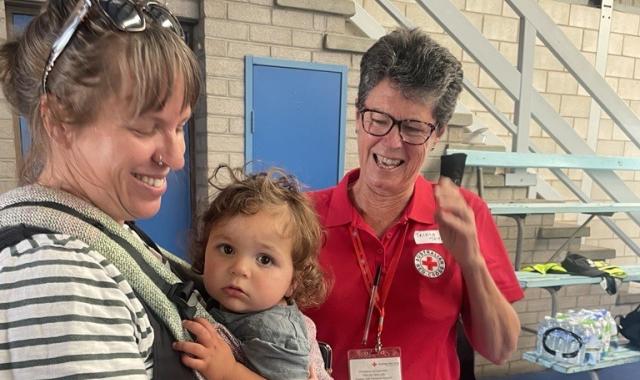
ABA's collection of emergency resources includes information to share with parents and caregivers and a variety of resources to use in your role.
These resources were developed with input from emergency and health organisations as part of ABA’s Community Protection for Infants and Young Children in Bushfire Emergencies project, funded by the Australian Government’s Preparing Australian Communities grant.
Information and resources on this page
Which resources will help me most in my role?
As a midwife, MCHN or health professional, you play a key role in protecting babies and toddlers during emergencies.
This includes supporting breastfeeding as emergency preparedness, encouraging families to plan ahead and promoting safe infant feeding in disasters..
Recommended resources
- ABA's FREE eModule on Disaster support for babies, toddlers and caregivers
- Planning for emergencies: a quick guide for families with babies or toddlers (Downloadable PDF)
- Supporting infant and young child feeding in emergencies fact sheet (Downloadable PDF)
- Infant feeding in emergencies fact sheet series (Downloadable PDF)
- Evacuation kit lists (Downloadable PDF)
- Emergency preparedness posters (Downloadable PDF)
- Managing infant formula procurement and distribution in emergencies: model policies and guidance (Downloadable PDF)
As an evacuation centre manager or worker, you can take simple steps to help keep babies and toddlers safe.
Supporting parents and meeting the unique needs of young children can make a big difference to evacuated families.
Recommended resources
- ABA's FREE eModule on Disaster support for babies, toddlers and caregivers
- Supporting families with babies or toddlers in evacuation centres infographic (Downloadable PDF)
- Guide to supporting safer sleep for babies in evacuation centres (Downloadable PDF)
- Scenarios to include in evacuation centre training exercises (Downloadable PDF)
- Evacuation and recovery centre signage (Downloadable PDF)
- Supporting infant and young child feeding in emergencies fact sheet (Downloadable PDF)
- Managing infant formula procurement and distribution in emergencies: model policies and guidance (Downloadable PDF)
As an emergency responder, you may support families with young children both in the community and during emergencies.
You can help by encouraging parents to plan for their baby’s needs and connecting them with support when it's needed most.
Recommended resources
- ABA's FREE eModule on Disaster support for babies, toddlers and caregivers
- Planning for emergencies: a quick guide for families with babies or toddlers (Downloadable PDF)
- Supporting infant and young child feeding in emergencies fact sheet (Downloadable PDF)
- Infant feeding in emergencies fact sheet series (Downloadable PDF)
- Evacuation kit lists (Downloadable PDF)
If you work in early childhood education or child-focused community services, you likely support young families every day.
You can help by encouraging emergency planning and supporting parents with babies or toddlers during recovery.
Recommended resources
- ABA's FREE eModule on Disaster support for babies, toddlers and caregivers
- Planning for emergencies: a quick guide for families with babies or toddlers (Downloadable PDF)
- Evacuation kit lists (Downloadable PDF)
- Mother-baby area guide for Australia (Downloadable PDF)
Babies and their caregivers have ongoing needs during the recovery stage of an emergency.
Simple, practical support can help parents care for their children and reduce the impact of trauma on babies and toddlers.
Recommended resources
- ABA's FREE eModule on Disaster support for babies, toddlers and caregivers
- Supporting families with babies or toddlers in evacuation centres infographic (Downloadable PDF)
- Evacuation and recovery centre signage (Downloadable PDF)
- Supporting infant and young child feeding in emergencies fact sheet (Downloadable PDF)
- Mother-baby area guide for Australia (Downloadable PDF)
- Managing infant formula procurement and distribution in emergencies: model policies and guidance (Downloadable PDF)
Complete the FREE eLearning Module
In just 15–20 minutes, learn simple and practical ways to support babies, toddlers, and their caregivers during emergencies. The module covers key topics including vulnerability, emergency planning, evacuation support and recovery. Perfect for anyone involved in emergency response, health, early childhood, welfare or community services.

Help parents plan ahead to protect their babies and toddlers
Emergencies can happen any time. Planning ahead helps parents keep young children safe.
Encourage parents to:
- Pack an evacuation kit with everything their baby or toddler needs for at least 3 days
- Plan to leave early
- Stay with family or friends if possible, instead of going to an evacuation centre
Resources to share:
- Fact sheets with practical advice on feeding and caring for babies in emergencies
Evacuation kit list to help parents pack based on their child’s age and feeding needs
- Posters for health workers or maternity services to promote breastfeeding as part of emergency planning
Your role in supporting families
You can help by:
- starting conversations about emergency preparedness
- encouraging families to develop a household emergency plan
- helping parents think about the specific needs of their children
- sharing trusted information and resources
- encouraging families to prepare emergency kits before they are needed
Breastfeeding in emergencies
Expressed breastmilk feeding in emergencies

Cup feeding in emergencies
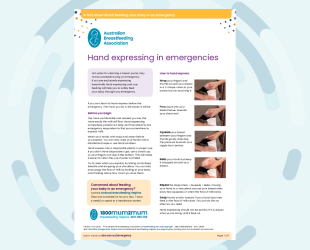
Hand expressing in emergencies
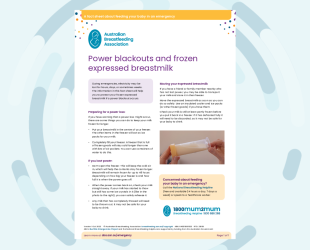
Blackouts (power outages) and frozen breastmilk

Formula feeding in emergencies
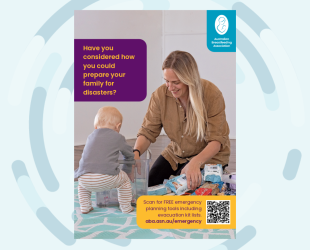
Posters for self-printing
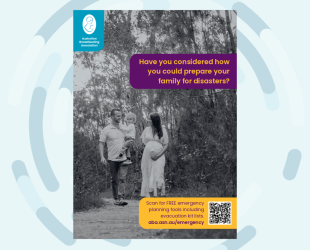
Posters for professional printing
Support parents with young children in evacuation centres
Evacuation centres can be tough for families, especially mums with babies, toddlers or who are pregnant. Mothers who evacuate alone may need extra practical or emotional support. Your help can make a big difference.
How you can support families in an evacuation centre
- Identifying families with babies and toddlers as early as possible
- Checking what support and supplies they need
- Paying attention to caregivers who are on their own
- Providing access to safe, child-friendly area
- Clearly signposting where families can get help
- Reducing the need for caregivers to queue where possible
- Helping caregivers meet their own needs, such as accessing food, rest or bathroom facilities
- Providing reassurance, practical support and clear information
Mother-Baby Areas (MBAs)
What are Mother-Baby Areas?
Mother-Baby Areas (MBAs) are safe, welcoming spaces that support pregnant women, mothers, babies and toddlers after an emergency or disaster.
- Provide a place to rest, connect and access support
- Support breastfeeding, infant feeding and child care
- Offer emotional and practical support for families
- Help connect families with local services and resources
Why are they important?
Babies and toddlers are especially vulnerable during emergencies and depend on consistent care and support.
- Help families recover and rebuild connections
- Support the health and wellbeing of mothers and children
- Reduce stress and isolation after a disaster
- Can be established quickly as part of emergency recovery efforts
Guide to supporting pregnant women and parents in relief and recovery centres
Learn how to meet the needs of pregnant women and families with young children in relief and recovery centres using clear, practical steps.
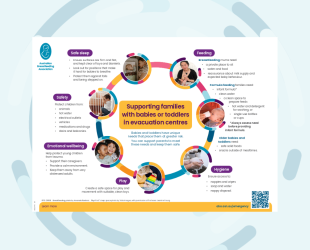
Evacuation centre infographic
Learn simple ways to support parents and protect infants in evacuation centres and other disaster settings
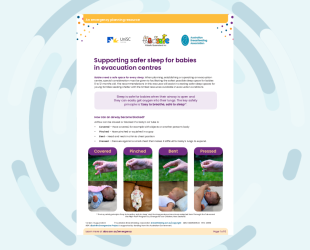
Support safer sleep for babies
Babies need a safe space for every sleep. This resource, co-developed with KidSafe QLD and the University of the Sunshine Coast, shows how to support safe sleep during emergencies.
Training exercise scenarios
These scenarios in training or simulations to check if local evacuation plans meet the needs of parents with babies and toddlers.
Signage pack
Print and display signs to help parents find support, feeding spaces and baby care areas in evacuation centres.
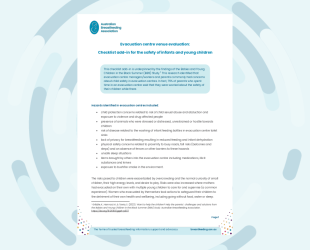
Evacuation centre venue checklist
Use this checklist to assess whether a venue is suitable for babies and young children before setting up an evacuation centre.
Managing infant formula in emergencies
ABA’s policy and guidance on formula use, donation and distribution, endorsed by 27 children’s health and emergency organisations in Australia and New Zealand
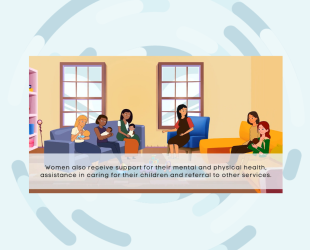
Mother-baby area animation
A short video explaining what mother-baby areas are and how they protect infants and toddlers after emergencies.

Watch the BiBS Study Webinar
Join our expert panel as they explore key findings from the BiBS study "Want to help the children? Help the parents."
Explore the evidence
Read the full findings and recommendations from the Babies and Young Children in the Black Summer (BiBS) Study.
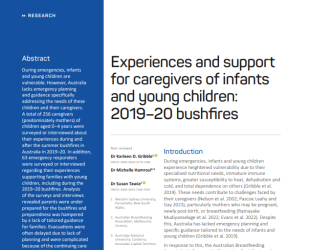
Read our publication
Experiences and support for caregivers of infants and young children: 2019–20 bushfires featured in the July 2024 edition of the Australian Journal of Emergency Management