A little planning can make a big difference. Find out how to prepare for emergencies and keep your baby fed and safe.
Emergencies such as bushfires, floods, cyclones, storms and extended power outages can happen with little warning.
This page explains how to prepare and how to feed and care for your baby if disaster strikes.
If an emergency is happening now
Emergencies can happen suddenly and can be frightening for families. Focus on the basics first:
- Stay with your baby whenever possible.
- Leave early if emergency services advise you to.
- Take your emergency kit if you have one prepared.
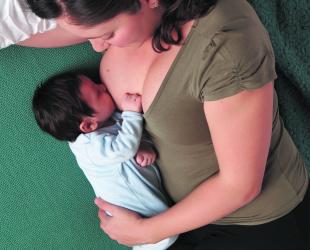
- Keep feeding your baby. Continued feeding helps keep your baby nourished, hydrated and comforted.
This video explains how emergencies can affect breastfeeding and what changes you might notice in your baby's feeding and behaviour.
The value of breastfeeding in emergencies
- Breastmilk provides a safe source of food and water for babies during emergencies.
- It helps protect babies from infections, which are more common in disaster situations.
- Continuing to breastfeed is a simple and powerful way to be prepared during emergency seasons.
- As long as you and your baby are together, breastfeeding offers a steady supply of nourishment.
- Breastfeeding can also bring comfort and reassurance to your baby during times of stress and disruption.
- Knowing your baby has safe food and comfort can give you peace of mind in uncertain times
Preparing for an emergency
Being prepared can help you respond more quickly and reduce stress during an emergency
Six steps every family can take
- Plan to leave early.
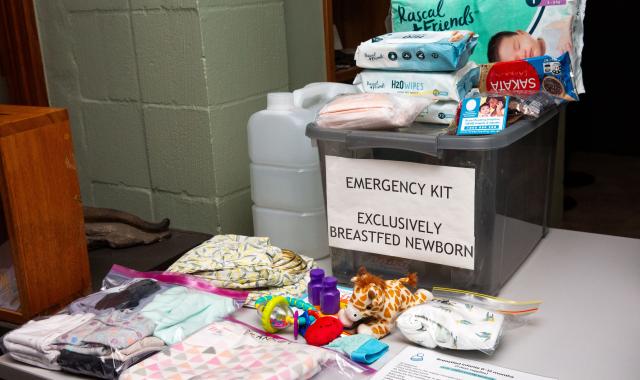
- Pack an evacuation kit for you baby (3 days’ worth)
- If you can, arrange to stay with family or friends, rather than a shelter
- Decide how you will get there.
- Tell someone when you’re leaving and when you arrive
- Always have a back-up plan
Download our one-page emergency planning guide to learn six steps every parent can take.
Why pack an evacuation kit?
- In an emergency, you may need to leave quickly. You might not have clean water or power.
- Pack your baby’s kit ahead of time and update it often.
- Include everything your baby needs for 3 days including nappies, wipes, clothes, food and feeding supplies.
- Store items in a plastic box with a lid. You can use the lid as a clean surface to prepare feeds.
Prepare for an emergency based on how your baby is fed
In an emergency, you may need to leave quickly. You may not have access to clean water or electricity. Pack your baby’s kit ahead of time and update it often.
Include everything your baby needs for at least 3 days, including:
- nappies and wipes
- clothing
- food and feeding supplies
- medicines your child needs
- comfort items and activities.
Store supplies in a plastic box with a lid. You can use the lid as a clean surface to prepare feeds and meals.
The supplies you need and the challenges you may face in an emergency can be different depending on how your baby is fed.
Choose the information that best matches how your baby is fed:
- No feeding gear is needed, just water for yourself and breast pads (if used).
- Even in hot weather, breastmilk gives your baby all the fluid they need.
- Your baby doesn't need extra water. Giving water to a young baby can be harmful.
- Emergencies can be very stressful. Stress won’t stop milk supply, but it may slow milk flow.
- Your baby may seem fussy at the breast and take longer to feed. Encourage your baby to keep sucking until your milk flows. There are also other simple ways to help your milk to flow.
- Call a breastfeeding counsellor if you need some reassurance about your milk supply. They can provide you with information and support to help you manage breastfeeding through the emergency.
Many mums in Australia use an electric breast pump to express breastmilk.
- In an emergency, power and hot water may not be available.
- You may not be able to clean your pump or bottles properly.
- If you learn to hand express, your baby can continue to receive your breastmilk in an emergency
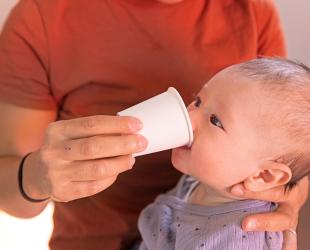
- You can feed expressed milk to your baby using a cup.
- Call a breastfeeding counsellor, they can help talk and guide you through this.
Mixed-feeding
- Formula feeds can be more difficult in an emergency, especially if there is no electricity or clean water.
- If you are mixed feeding (your baby is having some breastfeeds and some formula) you may consider returning to only breastfeeding them.
- More frequent feeds at the breast will increase the amount of breastmilk you make.
- Chat to a breastfeeding counsellor for more practical tips to help you increase your supply.
If your baby is fully formula-fed, pack your emergency kit as though you will be without power or water.
- Without plenty of hot water, it's hard to clean bottles safely.
- For this reason, it's best to pack single-use feeding items (one clean bottle, teat or cup for each feed)
- Sterilise and dry each bottle fully, then seal it in a ziplock bag.
- Store formula and bottled water in case shops are closed or supplies run out.
If your child is over 6 months and eating solids, pack some safe suitable solid foods in your kit.
- Pack easy-to-eat solid foods.
- If no food is available, babies can return to milk-only feeds.
- Bring disposable bowls, spoons and a cup for water.
- Add small toys or activities to keep them calm and occupied.
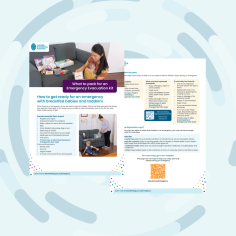
How to pack an Evacuation Kit - Downloadable Resource
Emergency Evacuation Kit Guide for Families
Download this simple guide to help you pack an evacuation kit with essential items you'll need in an emergency for infants and young children
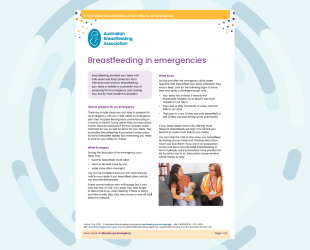
Breastfeeding in emergencies
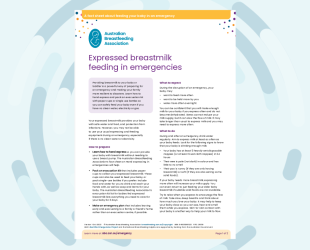
Expressed breastmilk feeding in emergencies

Cup feeding in emergencies
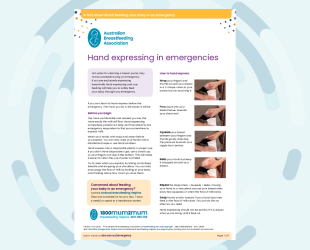
Hand expressing in emergencies
Blackouts (power outages) and frozen breastmilk

Formula feeding in emergencies
Need help? Call the Breastfeeding Helpline
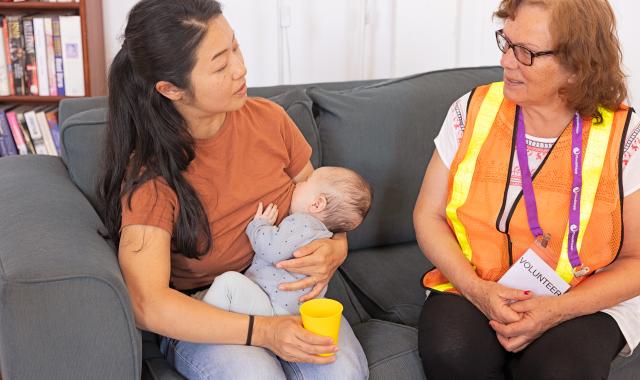
ABA volunteers are able to offer information and support in emergencies, no matter how your child is fed. To speak to a breastfeeding counsellor, call the Breastfeeding Helpline at any time on 1800 686 268.
Are you involved in emergency response, recovery or planning?
Information for emergency workers and volunteers
Guidance and resources to support breastfeeding families and infants safely and effectively in emergencies