When bottle feeding isn’t safe you can feed your baby by cup
Breastfeeding is the safest way to feed your baby in an emergency. For babies who are fed expressed breastmilk, infant formula or both, cup-feeding can be a safer option than using a bottle.
In an emergency, clean water, electricity and facilities for washing feeding equipment may not be available. Bottles and teats can be hard to clean properly.
Babies of any age can learn to drink from a cup.
What sort of cup should I use?
Use the cleanest cup available to you. A small cup may be easier for a young baby but any clean cup will do. Disposable paper or plastic cups are ideal in an emergency. Use a new one for each feed if possible.
Open cups are the safest option because they are easier to clean well. Cups with lids, spouts or straws may be harder to clean.
Tips for safe cup-feeding
- Stay with your baby while they are drinking.
- Only cup-feed your baby when they are fully awake and alert.
- Keep your baby upright while feeding.
- Don’t lie your baby back. This can cause choking or spluttering, and they might breathe in some milk.
How to cup-feed
These tips can help you cup-feed your baby, whatever their age. If someone is available to help you while you're learning, their support can be useful.
- Half fill the cup with expressed breastmilk or formula.
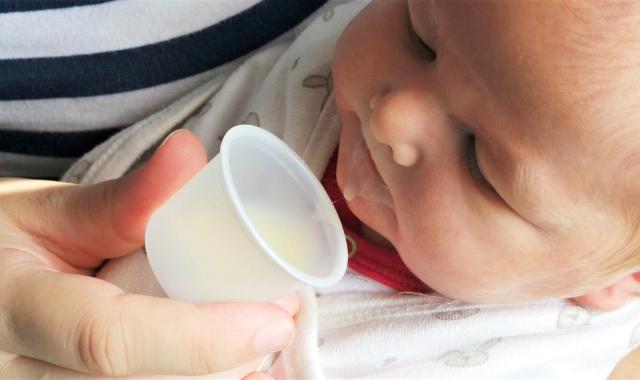
- Sit your baby upright on your lap and hold them securely. It may be helpful if you can wrap them to keep their arms out of the way. A towel or similar can help with any spills.
- Hold the cup so it rests lightly on your baby's lower lip and just reaches the corners of their mouth.
- Tip the cup slightly so the milk reaches the edge. Start with a tiny sip to encourage feeding.
- Don’t pour the milk into your baby's mouth; tip the cup just enough for your baby to sip or lap the milk.
- Keep the cup in position if your baby pauses. Let them set the pace.
- Follow your baby’s cues. They should be in control of how much milk they take at a time.
- When your baby has had enough, they may close their mouth, pull away or push the cup away.
Cup-feeding may seem slow and messy at first, but it often becomes easier with practice.
© Australian Breastfeeding Association July 2026