Practical tips for holding your baby and helping them attach for a comfortable feed.
The early days of breastfeeding are a time of learning together. Holding your baby in a way that feels comfortable and supports good attachment can make feeding easier and more enjoyable.
There’s no single 'right' way so try a few positions to see what works for you both. You might hold your baby in different ways at different times or as your baby grows. The most important thing is that you and your baby feel comfortable and relaxed.
Make yourself comfortable
In the early days, breastfeeding may take time. Choose a comfortable place to feed and keep what you need within reach. When you’re relaxed, your milk flows more easily, helping your baby feed more effectively.
Choose your space and position
You can breastfeed while sitting, reclining, or lying down. Choose whichever feels best for you. Pick a spot where you feel safe, relaxed, and free from distractions.
Gather what you need
Breastfeeding can make you thirsty, so it’s helpful to keep a glass of water or a drink bottle nearby. You might also want a snack, your phone, TV remote control or a book within reach. Setting up before you begin means you can settle in without interruptions.
Wear comfortable clothing
Wear clothes that make feeding easy and comfortable. Tops that unbutton to the waist or open easily can help. In the early days you might prefer to take off your top and bra or have them well open so nothing gets in the way.
Support your body
Whichever position you use, make sure you're comfortable with your back supported. If you’re sitting up, a footstool or firm cushion under your feet can help you feel more stable as you breastfeed.
Pillows or cushions can be a helpful support for your back and arms. A pillow on your lap may help bring your baby’s nose level with your nipple, but take care it doesn’t bring baby up too high – or too low. It can be uncomfortable to be leaning over to reach your baby.
Pillows work for some mums, but for others, they can make it harder to keep your baby close and against your body. If you do use a pillow, continue to hold your baby with your arms or rest your baby on your body, rather than letting them lie directly on the pillow.
If you’re lying down, extra pillows behind your back or under your shoulder can make you more comfortable.
Relax your shoulders and avoid leaning forward
Holding your baby securely, close to your body, means that when you relax and lean back, your baby comes with you. After your baby starts feeding, take a moment to take a deep breath and drop your shoulders to help you relax.
It’s easy to tense up without noticing, so try to keep relaxed and avoid leaning forward, which can strain your back and neck. A semi-reclined position can help you stay comfortable
Your baby’s instincts
From birth, babies have instincts that help them find the breast and begin feeding. You might notice your baby:
- sticking out their tongue
- turning their head from side to side
- wriggling or moving towards the breast
You might like to encourage your baby to use their instincts to seek out the breast and attach for a feed.
Whatever way your baby finds the breast, holding them close in a comfortable position helps them feed well.
Hold your baby close
Finding a comfortable position that works for you and your baby can take a little trial and error. You might use different holds at different times, or as your baby grows.
Here are some common breastfeeding positions. Try a few to see what feels best for you and your baby. You might find one that becomes your favourite, or you may switch between holds depending on the situation.
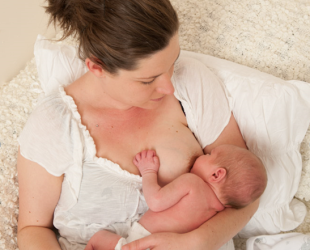
Cradle hold
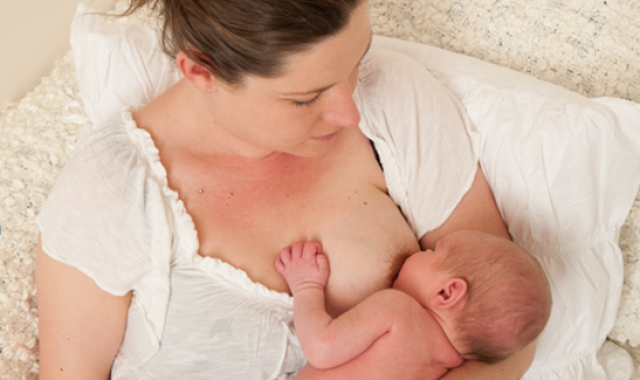
Hold your baby with their head at your breast, supported along your forearm. The front of their body is against your body and their legs are tucked in close, helping them feel secure.
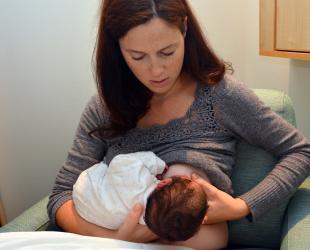
Cross cradle hold
Support your baby with the arm opposite to the breast you’re feeding from. This hold lets you use your free hand to guide or shape your breast and help your baby take a large mouthful. Once your baby is feeding, you can switch to the cradle hold for comfort.
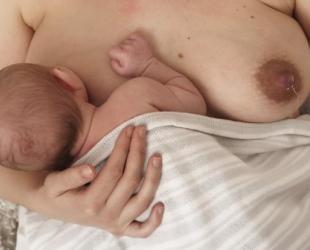
Laid-back or semi-reclined
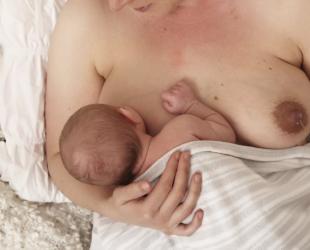
Lean back with your baby resting on your chest. This position is relaxing and lets your body support your baby’s weight. It’s a good position for your baby to use their instincts to find the breast.
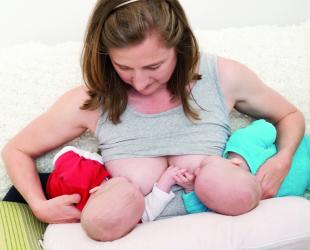
Underarm / Football / Twin hold
Your baby faces your body with their legs tucked under your arm at your side. This position is helpful after a caesarean or when feeding twins. Pillows can help support your baby in this hold.
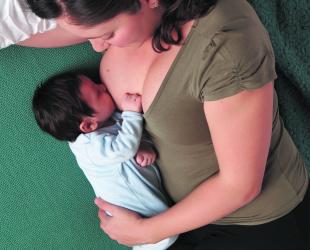
Side-lying
Lie down with your baby close beside you. This position can take practice and may be easier as your baby gets older.
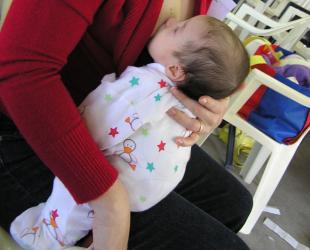
Straddle hold
Hold your baby upright, sitting on your lap or straddling your leg. Some babies prefer being upright, especially if they have trouble lying on their side or if you have a fast milk flow.
Support your baby to attach well
Whichever position you choose, helping your baby to latch well is key to comfortable and effective feeding. When your baby takes a large mouthful of your breast this helps them feed well and makes feeding comfortable for you.
Get your baby ready
Your baby will attach and feed more effectively if they’re calm and alert. If your baby is upset or crying and won't latch on, try holding them skin-to-skin on your chest, gently stroking their back. Or let them suck on your finger for a few moments. If your baby is sleepy, unwrapping them or removing clothes, leaving only a nappy often wakes them.
Hold your baby close with their arms free.
Wrapping them tightly might keep their hands out of the way, but it can make it harder to bring their body in close for a good latch. Babies naturally like to have their hands up near their face and resting on your breast.
Position your baby facing you
Their chest and tummy should be against your body. No matter which position you choose, your baby’s head, neck, and body will be in a straight line. Their head needs to be at the same level as your breast and their nose near your nipple.
Support your baby’s neck and shoulders
Avoid holding the back of their head. Your baby needs to be able to tip their head back when attaching. With their neck tipped back, baby’s jaw naturally drops and it’s easier for them to open their mouth wide. Babies also have a reflex to push back if you hold the back of their head. This can make attachment more difficult.
Encourage a fully open mouth and deep latch:
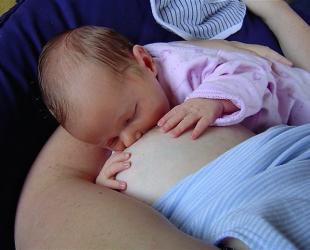
Aim your nipple towards the roof of your baby’s mouth. Their chin should touch your areola first, well below your nipple. This helps your baby take in your nipple and a good part of your breast before closing their mouth. It all happens quickly!
Brush your baby’s mouth with your nipple and the underside of your areola. This encourages your baby to open their mouth fully, like a yawn. You may need to do this a few times while your baby is still learning.
When your baby’s mouth is fully open and their tongue comes forward over their lower gum, move them quickly to the breast.
Shape your breast if it helps. Some mothers find that shaping their breast allows baby to take in more breast. Keep your fingers well back so as not to interfere with your baby's latch. Wait till your baby has started to suck well before carefully letting go.
If attachment isn’t comfortable, try again. If your baby doesn’t get enough breast in their mouth, or it doesn’t feel right as they start to feed, try again. Break the suction and detach your baby by placing your little finger into the corner of their mouth, between their gums.
Not sure about your baby’s latch?
Watch mums attach their babies using different positions in this video from Global Health Media.
Use the timings below to jump to the sections you’re most interested in:
0:00 Introduction
0:45 Positioning for a good latch
2:00 Feeding in a semi-reclined position
3:50 Using the cross cradle hold
5:05 Cradle hold
6:00 Underarm hold
7:20 Side-lying position
8:00 Positions for feeding twins
8:40 Summary checklist for positioning and attachment
Links to more videos about positioning
Laid-back breastfeeding – Suzanne Colson
Can a change in position help relieve nipple pain? - Nancy Mohrbacher
What feeding positions work if I'm large breasted? - Dr Theresa Nesbitt and Nancy Mohrbacher
How can gravity, gaps & gaze simplify early breastfeeding? - Dr Theresa Nesbitt
What adjustments make early breastfeeding easier? - Dr Theresa Nesbitt and Nancy Mohrbacher
© Australian Breastfeeding Association August 2026
Learn more about getting breastfeeding started
Online interactive session free for Virtual Village members
Newborn Virtual Village - Comfortable attachment

Evidence-led info and practical tips from our Breastfeeding Information Series
Breastfeeding: an introduction