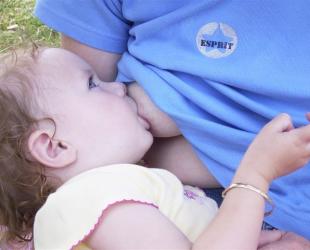
Nearly all Australian mums start breastfeeding, but many stop sooner than planned.
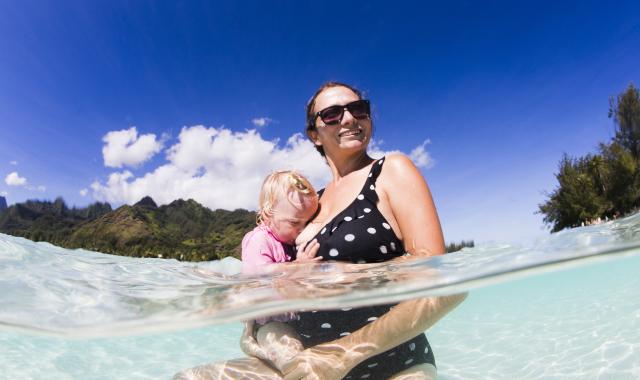
The World Health Organization (WHO) recommends exclusive breastfeeding for the first 6 months. After this, breastfeeding continues alongside suitable family foods for up to 2 years and beyond.1
Exclusive breastfeeding means your baby has only breastmilk. This includes no other food or drink, not even water.
In Australia, the National Health and Medical Research Council (NHMRC) recommends exclusive breastfeeding for around 6 months. After this, breastfeeding can continue alongside solid foods until 12 months and beyond, for as long as you and your child want to keep going.2
Breastfeeding rates in Australia
In Australia, many families start breastfeeding, but rates drop earlier than recommended.
Most mums want to breastfeed. The 2010 Australian National Infant Feeding Survey (the most recent national data of this kind) found that 96% of mothers begin breastfeeding.3 However, numbers fall quickly in the early weeks.
- By around 3 months (less than 4 months), 39% of babies are exclusively breastfed
- By around 5 months (less than 6 months), 15% are exclusively breastfed
This suggests that many families introduce solids before 6 months.
Looking at babies receiving any breastmilk:
- 69% are receiving some breastmilk at 4 months
- 60% at 6 months
- 28% at 12 months
- 5% are still breastfeeding at 2 years
Breastfeeding in Aboriginal and Torres Strait Islander communities
Across Australia, many Aboriginal and Torres Strait Islander families continue a strong culture of breastfeeding. The 2018-19 National Aboriginal and Torres Strait Islander Health Survey showed that 87% of children aged 0–2 years had been breastfed.4
In some regions, breastfeeding rates are very high. For example, in Queensland, 97% of Aboriginal and Torres Strait Islander children aged 0–2 years have been breastfed, compared with 64% in Victoria.4
Breastfeeding is also more common in remote areas, where 92% of children have been breastfed, compared with 84% in major cities.4
These differences highlight the importance of place and community. Breastfeeding practices are shaped by culture, connection to family and Country, and the supports available locally.
Looking at how breastfeeding continues over time adds another part of the picture.
The 2010 Australian National Infant Feeding Survey found similar rates of exclusive breastfeeding in the first month for babies of Aboriginal and Torres Strait Islander and non-Indigenous mothers (59% and 61%).3
However, some differences are seen over time. While breastfeeding rates decline for all babies, the drop is steeper for some Aboriginal and Torres Strait Islander families.
- 15% of babies had stopped breastfeeding by 1 month
- By around 3 months (less than 4 months), 19% are exclusively breastfed
- By 6 months, 7% are exclusively breastfed
- By 12 months, 4% are still receiving breastmilk
Breastfeeding in culturally and linguistically diverse (CALD) groups
Breastfeeding experiences can vary across cultures in Australia. In some communities, strong breastfeeding traditions have changed over time.
The 2010 survey found that mothers born overseas start breastfeeding at similar rates to Australian-born mothers. However, by 1 month:
- 58% of babies of mothers born overseas are exclusively breastfed
- compared with 62.5% of babies of Australian-born mothers
Some families may find it harder to continue breastfeeding while settling into life in a new country. Support can vary. For some, being away from family makes things harder. For others, different expectations or advice from family members can create tension.
When traditional post-birth practices aren’t available, this can also affect how long breastfeeding continues.
Other groups who may face challenges
Some groups of mums are less likely to breastfeed or to continue breastfeeding. The 2010 survey also found this included mums who:
- are younger
- are experiencing disadvantage
- have lower levels of education
- smoke daily
- had obesity before pregnancy
© Australian Breastfeeding Association June 2026
- World Health Organization statement 2011, Exclusive breastfeeding for six months best for babies everywhere, Geneva: World Health Organization. https://www.who.int/news/item/15-01-2011-exclusive-breastfeeding-for-six-months-best-for-babies-everywhere
- National Health and Medical Research Council 2012, Infant Feeding Guidelines, Canberra: National Health and Medical Research Council www.eatforhealth.gov.au
- Australian Institute of Health and Welfare 2011, 2010 Australian National Infant Feeding Survey: Indicator Results. Canberra: AIHW. http://www.aihw.gov.au/publication-detail/?id=10737420927
- Australian Institute of Health and Welfare (AIHW). Aboriginal and Torres Strait Islander Health Performance Framework: 2.20 Breastfeeding practices. https://www.indigenoushpf.gov.au/measures/2-20-breastfeeding-practices