You can build a milk supply for your child, whether you’ve breastfed before or not.

It’s possible to start breastfeeding even if you haven’t given birth. You can also restart breastfeeding after weaning.
There are two main ways to bring in a milk supply:
Induced lactation means building up a milk supply if you haven’t been pregnant or given birth.
Relactation is when you re-build your milk supply at any time after having been pregnant. You can relactate for a baby you have given birth to or for another baby.
In both situations, your breasts need to be stimulated to start making milk. If you’ve been pregnant or breastfed before, you might find it easier to make milk, as pregnancy changes your breasts and prepares them for breastfeeding. But everyone’s experience is different, and it’s possible to make milk even if you haven’t been pregnant.
Why you might want to relactate or induce lactation
- You weaned earlier than planned.
- Your baby isn’t doing well on formula.
- Your child is sick and could benefit from the immune support provided by breastmilk.
- You are a family member (eg aunt or grandmother) caring for a baby.
- You want to donate breastmilk for a friend or relative.
You are adopting a child.
You are in a same-sex relationship and are the non-birthing parent.
- Your baby will be born via surrogacy.
Getting started: building or rebuilding your milk supply
Whether you’re starting to make milk for the first time or hoping to rebuild your supply, the next steps focus on how to encourage your body to produce milk. Every journey is unique, and there’s support available at each stage.
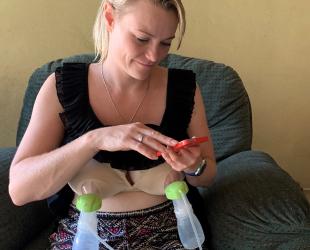
Expressing milk is the first and most important step in making breastmilk or rebuilding your milk supply. Regular expressing stimulates your breasts and encourages milk production.
Once your breasts start making milk, you can try feeding your baby or child at the breast. This is an exciting step, but it can take time and patience.
Helping your baby to breastfeed
- You might find it helpful to read about positioning and attachment so you can help your baby latch on comfortably.
- Keep your baby close to you. Using a baby carrier can help them breastfeed more often while you go about your day.
- Offer the breast as often as you can. The more they suckle, the more milk you’ll make.
- Try to trigger your let-down reflex before offering the breast, especially if you already have some milk.
- Sleeping close together can make night feeds easier, and night feeds are great for building your milk supply.
- Avoid dummies or anything else that might make your baby suck less at the breast. Offer the breast for comfort and settling instead.
- If your baby or child doesn’t want to suckle straight away, don’t worry. Many need time to get used to it. Keep trying gently and never force them onto the breast.
Helping your baby stay at the breast
- Spend lots of time holding your baby skin-to-skin. This helps release hormones that support milk production.
- Offer the breast when your baby or child is relaxed, happy, or sleepy.
- If you’re using bottles, try paced bottle feeding and a slow flow teat to make it more like breastfeeding.
- Putting a bottle teat filled with milk over your nipple may help get your baby used to taking milk in this way. A nipple shield can also help as a step between bottle and breast.
Using a supply line
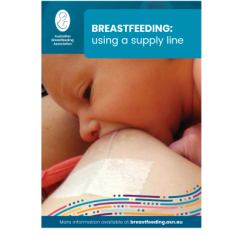
A supply line is a device that lets your baby get extra milk while breastfeeding. It has a container for milk and a thin tube that carries milk to your nipple. When your baby suckles, they get both your milk and the extra milk from the supply line. This can help your baby stay interested in the breast and encourage your body to make more milk.
Will it work for me?
Relactation and induced lactation are different for everyone. No two families or situations are the same, and the journey to breastfeeding is unique for each child. You’ll approach this in your own way, with the resources and support that suit you.
Success can depend on several things:
- Age of your child: Newborns have instincts to help them attach. If your child is older, they may need more time to learn or remember.
- Previous experience: If your baby or child has breastfed before, they may remember quickly. If not, gentle practice and patience help.
- Time since last breastfeeding: If you weaned recently, your breasts may start making milk again more quickly. If it’s been a while, your breasts will need time to rebuild milk-making tissue. But they will remember how to make milk and you remember how to breastfeed!
- Reason for weaning: If you stopped breastfeeding due to challenges, you might need extra support to work through those issues.
- Support and time: Having support, knowing how breastfeeding works, and having time to express and feed all help.
Medications can sometimes help increase milk supply. These options only work if milk is being removed from the breast – by your baby or by expressing. Talk with your health practitioner about medications.
For some, it can be difficult to build a full milk supply. Mixed feeding still provides the emotional bond you and your child develop through breastfeeding. Breastfeeding is about more than the milk itself. The close contact and bond between you and your baby or child is important for their mental, emotional, and social development.
Getting support and what to read next
Relactation and induced lactation can feel like a big process, and you don’t have to do it on your own. You can talk with an ABA counsellor on the National Breastfeeding Helpline for personalised support, encouragement, and help to think through your options. ABA counsellors can support you no matter where you are on your journey.
You may also find it helpful to read our other articles on relactation:
- Expressing to relactate or induce lactation – practical guidance on expressing to start or rebuild your milk supply.
- Breastfeeding your adopted child – information specific to adoptive families.
- Co-feeding and induced lactation – support for non-birthing parents planning to breastfeed.
These articles can be read in order, or you can choose the one that best fits your situation right now.
© Australian Breastfeeding Association June 2026
Read more about relactation and induced lactation
Evidence-led info and practical tips from our Special Situation Information Series
Breastfeeding: relactation and induced lactation
More info and helpful tips from our Special Situation Information Series
Breastfeeding: using a supply line