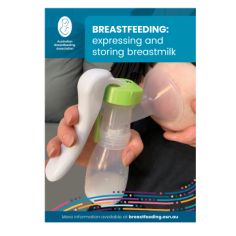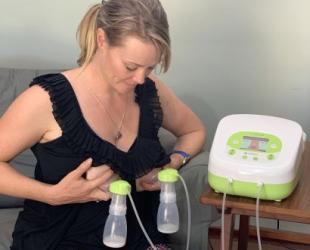
Expressing milk is the first step to relactate or induce lactation. Here’s how to start.
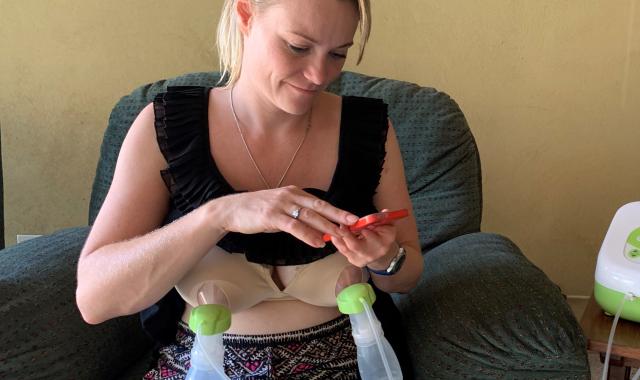
For most people, relactating or inducing lactation starts with expressing. If your baby or child isn’t able to breastfeed yet, or you’re preparing before they arrive, you can use a breast pump or hand express to build up a milk supply.
Using an electric pump with a double kit is the most effective way to express milk. Pumping both breasts at once saves you time and helps your body make more milk. It also boosts your prolactin levels. This is the hormone that builds milk-making tissue. This can mean more let-downs and milk with higher energy content than pumping one breast at a time.
Read more on choosing, hiring and using an electric breast pump.
Pumping to start making milk
- Try to pump at least 6 to 8 times a day, including once at night.
- Short, frequent sessions work better than long ones.
- Start with 5 to 10 minutes on low suction, then slowly increase to 15 to 20 minutes of expressing.
- Use hand expressing and breast compressions.
Techniques for more effective expressing
If you’ve only been pumping and aren’t getting much milk, or your supply isn’t increasing, there are some extra techniques you could add in.
Encouraging the let-down reflex
Once your breasts start making milk, you might notice the let-down reflex – a tingling or tightening feeling – that helps milk flow. You can encourage your let-down by using warmth (like a warm cloth or shower), relaxing, and developing a regular expressing routine. Taking slow breaths, listening to calming music, or thinking about your baby can also help.
Breast compressions
Gently squeezing and compressing your breast can help release milk. You can also use compressions after pumping or between pumping sessions. Find out more.
Hand expressing
Hand expressing after a pumping session helps remove small amounts of milk that the pump can’t. It takes practice, but it’s very effective. Some people use hand expressing alone to build their milk supply.
Breast massage
Combining hand expression with breast massage can help your milk flow. Start by gently massaging your whole breast, moving your hand downward toward your nipple. Then express milk by hand, massage again, and repeat as needed. Find out more about ‘hands-on pumping.’
These extra techniques encourage your breasts to make more milk. The more milk that’s removed, the stronger the signal to produce more milk.
Signs it’s working
The first changes you might notice are in your body. Your breasts may feel warmer, tingly or get bigger or heavier. In anything from a few days to a few weeks after starting, you may be able to express some drops of milk. Sometimes, changes in hormones can cause a brief dip in mood just before your first milk appears. If you feel a bit down, it could be a sign that a breakthrough is close.
Your milk won’t ‘come in’ like it does for a parent who has just given birth. The change in hormone levels after birth means that a lot of milk is produced quickly. Instead, when you are inducing lactation or relactating, small amounts of milk are produced at first and then your milk supply increases gradually.
© Australian Breastfeeding Association June 2026
Read more about bringing in a milk supply
Evidence-led info and practical tips from our Special Situation Information Series
Breastfeeding: relactation and induced lactation
All you need to know about pumping and feeding your milk to your baby
Breastfeeding: expressing & storing breastmilk