
Baby carriers come in many different styles. Finding one that suits you and your baby can make everyday life a little easier.
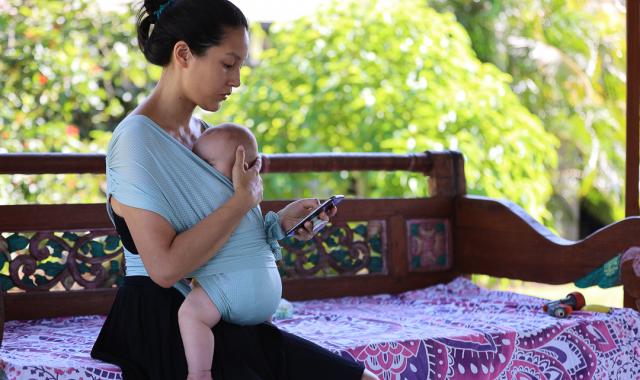
A baby carrier can help you keep your baby close while you get on with everyday life. Many parents find that babywearing helps settle their baby, makes it easier to respond to feeding cues and leaves their hands free for other tasks.
There are many different carrier styles available. The best choice for your family will depend on your baby's age, your comfort and how you plan to use it.
Whatever carrier you choose, make sure it meets Australian safety standards and can hold your baby in a safe, upright position with their face visible and airway clear.
The following overview introduces some of the most common carrier styles. You may also come across newer designs that combine features of different carrier types, sometimes called hybrid carriers.
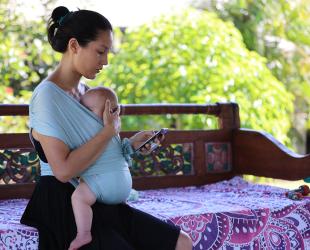
Stretchy wraps
Stretchy wraps are long pieces of soft, stretchy fabric that wrap around you and your baby.
Many parents like stretchy wraps for newborn babies because they create a snug, close fit. The wrap is usually tied on first, then your baby is placed inside.
Stretchy wraps are generally most suitable for newborns and younger babies. As your baby grows heavier, you may find a woven wrap or another carrier style offers more support.
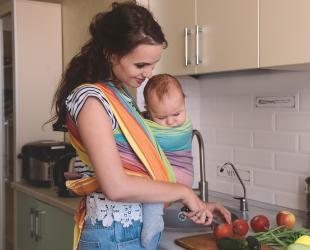
Woven wraps
Woven wraps are made from non-stretch fabric that is wrapped and tied around you and your baby.
They can be used in different ways and often support babies from birth through to toddlerhood. Woven wraps allow a range of carrying positions, including front, hip and back carries.
While they can take a little longer to learn, many parents appreciate their flexibility and long-term use.

Soft structured carriers
Soft structured carriers are carriers with shoulder straps and a waistband that fastens using buckles. They are often quick to put on and adjust, making them a popular choice for everyday use. Many can be adjusted as your baby grows.
Some are suitable from birth, while others may require a newborn insert or be designed for older babies. Always check the manufacturer's recommendations.

Ring slings
Ring slings are made from woven fabric threaded through two rings to create an adjustable loop.
They are worn over one shoulder and can be adjusted quickly, making them popular for short trips and quick ups and downs.
Because the weight is carried on one shoulder, some parents find them more comfortable for shorter periods of carrying.
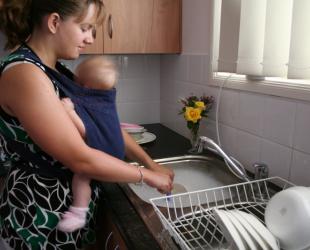
Mei dais
A meh dai combines a fabric panel with long straps that tie around the wearer.
Many parents find they offer some of the flexibility of a wrap with a simpler structure. The straps can be adjusted in different ways to support both the wearer and the baby.
Meh dais can often be used from birth through to toddlerhood.
What makes one carrier different from another?
There isn't a single "best" baby carrier. The right choice depends on your baby, your lifestyle and what feels comfortable for you.
As you compare different styles, you may like to think about:
How long do you want to use it?
Some carriers are designed mainly for the newborn months, while others can be adjusted as your baby grows and may be used into toddlerhood. If you're hoping to use a carrier for several years, look for one that can adapt as your baby gets bigger.
Who will be using it?
Will the carrier be shared between parents, grandparents or other carers? Some styles are quick to adjust between different body shapes, while others may take a little longer to fit.
How do you plan to use it?
You might want a carrier for short trips to the shops, settling your baby at home, bushwalks or everyday use with older children in tow. Some parents find different carrier styles suit different situations.
Would you like to breastfeed in the carrier?
Some parents like the option of breastfeeding while using a carrier. Carriers that can be adjusted easily may make this simpler, although many mums find it easier once breastfeeding is well established.
What will feel comfortable for you?
The way a carrier distributes your baby's weight can affect comfort, especially if you're carrying your baby for longer periods. You may notice that one style feels better on your shoulders, back or hips than another.
What climate do you live in?
Different fabrics and carrier styles can feel warmer or cooler depending on the weather. If you live in a hot climate, breathable fabrics may be important for both you and your baby.
What's your budget?
Baby carriers are available at a wide range of price points. Some families choose one carrier that meets most of their needs, while others use different carriers for different ages and stages.
Safety considerations when choosing a carrier
A baby carrier should support your baby in a safe, comfortable position from the start. If possible, try a carrier before buying or ask for help with fitting.
When trying a carrier, check that:
• your baby can be carried upright against your body
• your baby's face remains visible
• your baby can breathe easily
• your baby's legs and thighs are well supported
• the carrier can be adjusted to fit both you and your baby comfortably.
Some carriers are suitable from birth, while others require a newborn insert or are designed for older babies. Always check the manufacturer's recommendations.
Avoid products shaped like a loose pouch, bag or cocoon. These may allow a baby to slump into a position that can affect breathing. Carriers should support your baby in an upright position with their airway clear.
See our article Using a baby carrier for information about safe positioning, feeding in a carrier and the T.I.C.K.S. guidelines.
Can I try a carrier before buying?
If possible, try a few different carriers before deciding. A carrier that feels comfortable for one person may not suit another. What works well with a newborn may feel different once your baby is bigger.
Some babywearing groups, retailers and libraries have carriers available to try before you buy.
Getting help with fit
Learning how to position your baby comfortably and safely can take practice.
If you're unsure about using a carrier or getting the right fit, a trained babywearing educator or consultant may be able to help.
Further reading and support
Australian Babywearing Association
ACCC Safety Guide: Baby carriers, wraps and slings guide
The T.I.C.K.S. Rule for Safe Babywearing | UK Sling Consortium
Baby Carriers & Other Equipment | International Hip Dysplasia Institute
Using slings and baby carriers | Red Nose Australia
© Australian Breastfeeding Association July 2026