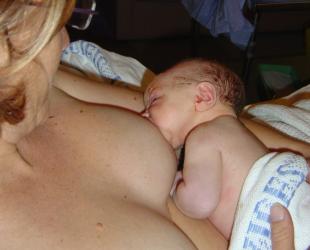
Hard, swollen breasts? Find out more about engorgement and how to relieve the pain

In the first couple of days after birth, your breasts produce small amounts of colostrum and are usually soft. After this, you will notice they become larger and may feel heavy, warm, and a bit uncomfortable.
This is a sign that your breastmilk supply is increasing and the tissue in your breasts is filling with milk, blood and other fluids that help milk production.
For some mums, this shift is quick. You might wake up with your breasts suddenly feeling much fuller. For others, it’s more gradual. This stage is often called your milk ‘coming in’ and it usually happens anywhere from day 2 to 5.
Sometimes this increase in blood and fluids can be a bit too much. Breasts can become inflamed1 and feel hard, swollen and tender and the milk may not flow well. Your nipples may be stretched and flattened, making it harder for baby to attach. This is called engorgement. It usually happens in both breasts at the same time and can involve the whole breast, even under your armpit.
Engorgement isn’t something you can predict or prevent – some mums experience it and others don’t – but it usually doesn’t last long.
Relieving engorgement
It can be very uncomfortable and even painful but fortunately there are some things you can do to help.
- Breastfeed frequently – as often as your baby needs.
- Take off your bra before breastfeeding or keep it very loose.
- Help your milk flow: Apply gentle warmth just before feeds or lightly stroke your breasts towards the nipple.
- Use cool packs between feeds to reduce inflammation.
- Wake your baby for a feed if your breasts become full and uncomfortable, especially during the night.
- If necessary, hand express for comfort after feeds.
- Common anti-inflammatory or pain relief medications can help. Talk to your midwife, doctor or a pharmacist about options.
- If your engorgement is severe and these tips don't help, ask your midwife or a lactation consultant for support.
Helping your baby attach
If your breasts are swollen and your nipple is flatter, it can help to soften the area around your nipple.
Try expressing some milk by hand or with a pump.
Use a simple technique called ‘reverse pressure softening’.
Reverse pressure softening2 can be used to push back the fluid that has built up behind and around your nipple and relieve the pressure. The breast tissue then becomes softer, allowing your baby to attach more easily. There are a few different ways you can reverse the pressure.
Read the following descriptions and watch the video below to see the technique in action.
Reverse pressure softening
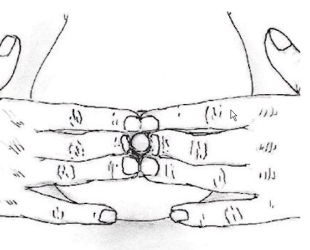
2-handed 1-step method
With fingernails short and fingertips curved, push in with each one touching the side of the nipple. Hold for 1-3 minutes or more until the tissue softens.
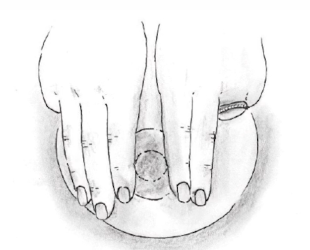
2-handed 2-step method
Use 2 or 3 straight fingers on each side, first knuckles touching the nipple. Push in and hold for 1-3 minutes or more. Repeat above and below the nipple.
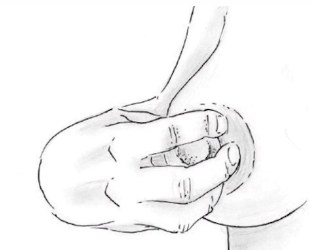
1-handed 'flower hold'
With fingernails short and fingers curved, push in around the nipple in a circle. Hold for 1-3 minutes or more. A hand mirror may help you see your areola more easily.
If your baby older than 6 weeks
You may get symptoms similar to engorgement if your breasts become very full, such as when your baby goes longer between feeds, sleeps for longer, or weans quickly. You can relieve overfull breasts by feeding your baby or hand expressing some milk to soften your breast.
If your breasts continue to fill up quickly after feeds, it may take a little longer for them to match your baby’s needs. You may have an oversupply but again, there are ways to manage this.
- Mitchell, K. B., Johnson, H. M., Rodríguez, J. M., Eglash, A., Scherzinger, C., Zakarija-Grkovic, I., Cash, K. W., Berens, P., Miller, B., & Academy of Breastfeeding Medicine (2022). Academy of Breastfeeding Medicine Clinical Protocol #36: The Mastitis Spectrum, Revised 2022. Breastfeeding Medicine, 17(5), 360–376. https://www.bfmed.org/assets/ABM%20Protocol%20%2336.pdf
- Cotterman, K. J. (2004). Reverse pressure softening: A simple tool to prepare the areola for easier latching during engorgement. Journal of Human Lactation 20(2), 227–237. https://doi.org/10.1089/bfm.2022.29207.kbm
Illustrations by Kyle Cotterman.
© Australian Breastfeeding Association January 2026
Whether you're preparing to breastfeed or already started the journey
Learn how to prevent engorgement
Breastfeeding Preparation Session - online and interactive

Your guide for navigating the first 72 hours with your newborn. Free for Virtual Village members.
The first 72 hours - eModule

Online interactive session free for Virtual Village members
Newborn Virtual Village - Comfortable attachment