Australian law protects your rights to breastfeed or express at work.

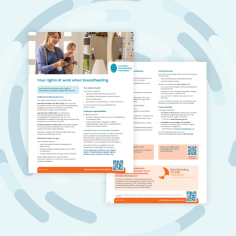
Download our Your rights at work when breastfeeding PDF handout
You have the right to breastfeed, express and store breastmilk at work. Breastfeeding is a protected ground under Australian discrimination law. If your workplace doesn't provide suitable facilities or allow breaks to breastfeed or express, this may be discrimination and may also breach work health and safety laws.
Key federal legislation
- Sex Discrimination Act 1984: It's unlawful to discriminate against someone because they are breastfeeding, pregnant or a parent.
- Fair Work Act 2009: It's unlawful to discriminate against employees who are breastfeeding. This includes expressing breastmilk and breastfeeding for as long as you choose. An employer cannot set a time limit for you to stop breastfeeding.
- Gender Equality Act 2012: This law promotes gender equality and workplace inclusiveness. It doesn't mention breastfeeding directly but it supports employees with family responsibilities and fair conditions for all genders.
State and Territory anti-discrimination legislation
Each state and territory also has its own laws that protect you from discrimination:
- ACT: Discrimination Act 1991
- NSW: Anti-Discrimination Act 1977
- NT: Anti-Discrimination Act 2011
- QLD: Anti-Discrimination Act 1991
- SA: South Australia Equal Opportunity Act 1984
- TAS: Anti-Discrimination Act 1998
- VIC: Equal Opportunity Act 2010
- WA: Equal Opportunity Act 1984
Australian Human Rights Commission
Working Parents: A quick guide to your rights
A quick guide to the rights and protections available to working parents in Australia
Fair Work Ombudsman
Returning to work from parental leave
Find out what you’re entitled to when you go back to work after parental leave
Workplaces have a positive duty
What is positive duty
Under the Sex Discrimination Act 1984 (Cth), workplaces now have what is called a positive duty.
This means every organisation, no matter its size, must take active steps to prevent sex discrimination, sexual harrassment and related unlawful behaviour. This shifts the focus from just responding after something goes wrong, to preventing it before it happens.
This includes taking active steps to prevent:
- discrimination on the grounds of sex at work
- sexual harassment at work
- sex-based harassment at work
- Workplace environments that are hostile on the grounds of sex
- related acts of victimisation.
How does positive duty work?
- Positive duty shifts responsibility away from the individual employees having to enforce their rights. Instead, employers must actively create safe, respectful and inclusive workplaces for all employees.
- Organisations must be proactive in preventing sexual harassment
Australian Human Rights Commission
The positive duty in the Sex Discrimination Act
This page explains the positive duty that all organisations must take active steps to prevent sexual harassment and sex discrimination at work.
Discrimination
Types of discrimination
Direct Discrimination happens when you are treated unfairly because you are breastfeeding, pregnant or a parent.
- Example: Not being promoted because you are breastfeeding.
Indirect Discrimination happens when a rule applies to everyone but unfairly disadvantages you.
- Example: A rule that all staff must work night shifts, even when other shifts are available that would allow you to continue breastfeeding.
Examples of possible discrimination
It may be discrimination if you:
- Aren't provided with a private, suitable space to breastfeed or express
- Cannot adjust work breaks so you can express milk
- Are forced onto night shifts when other shifts are available
- Are told to stop breastfeeding before returning to work
- Are given a time limit (for example, 3 months) for how long breastfeeding will be supported
- Miss out on promotion or training opportunities because you are breastfeeding
Fair Work Ombudsman
Protection from discrimination at work
This page outlines how the Fair Work Act protects employees from discrimination at work and what actions employers are not allowed to take
Where to get help
If you think you are experiencing discrimination, there are organisations that can help. These organisations can help ensure workplaces follow the law. They provide free information about your rights and may assist with resolving workplace issues.
Australian Human Rights Commission
The Commission handles complaints about discrimination under federal law. They can look into your concerns and help you and your employer talk through the issue and try to reach an agreement
Call 1300 656
Fair Work Ombudsman
The Ombudsman provides free advice about workplace rights and can help if your employer is not meeting their legal obligations.
Call 13 13 94
State and territory commissions
Each state and territory also has their own commission you can contact:
National Breastfeeding Helpline
Information and support from qualified breastfeeding counsellors.
Our qualified counsellors know that breastfeeding may not always be easy. We provide information about breastfeeding, support families to overcome common hurdles and reassure parents right through their breastfeeding journey.
Call 1800 686 268
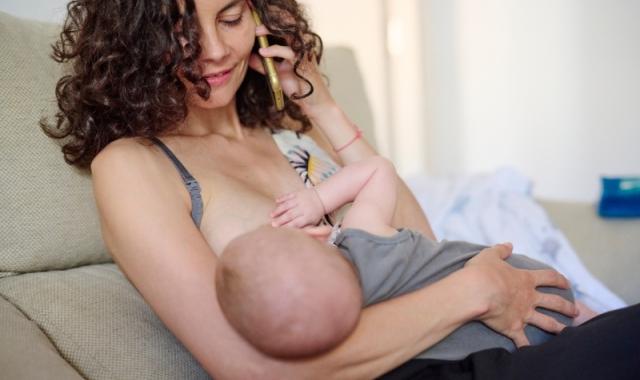
Discover Breastfeeding Friendly Workplaces accreditation
Create a workplace where breastfeeding employees feel supported. Learn how to become a accredited as Breastfeeding Friendly Workplace with ABA.
© Australian Breastfeeding Association February 2026