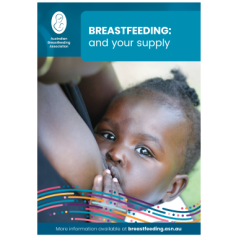
Making more milk than your baby needs? Oversupply can be managed with a few simple strategies

It’s common in the early weeks of breastfeeding to make more milk than your baby can easily manage. For most mums, milk supply settles down after about six weeks to match your baby’s needs.
But sometimes you might keep making too much, even as your baby gets older.
Signs you may have an oversupply
Your baby is over 6 weeks and you notice quite a few of these signs:
- Your breasts seem to fill quickly after a feed.
- Your breasts soften with a breastfeed but are often very lumpy and tight.
- Your baby is still often satisfied with just one breast at a feed.
- Your baby gains weight more quickly than expected.
- Your baby has more than 6 heavy, wet nappies in 24 hours.
- They have frequent poos, at nearly every feed and sometimes more often.
- Baby' poos may be frothy, explosive or green.
- Your baby gags or gulps with the flow.
Your baby may also be windy, very fussy and cry a lot. This can be true for many babies so it’s the above signs that more clearly show an oversupply.
Ways to help your supply settle
If you are still making much more milk than your baby needs, small changes can help your body adjust. The aim is to reduce how much extra milk your body is being asked to make, while meeting your baby’s needs.
Some mums also find they naturally make more milk. You’re not doing anything wrong. It’s just how your body responds.
You might like to try some of these suggestions:
- Offer one breast at each feed.
- If your baby wants to feed again soon, offer the same breast again. This gives your body a signal to slow milk production.
- If you are feeding on both sides, let your baby finish the first breast before offering the second. Switching sides early can increase supply.
- Try spacing breastfeeds at least 2½–3 hours apart during the day. In between feeds, hold your baby in a carrier or settle your baby in other ways, such as suggested below
- Avoid expressing more milk than you need to, as this tells your body to keep making extra.
- If you’re expressing to build a stored supply of milk, check how often you’re doing this. Expressing more than your baby needs can keep your supply higher.
- Use simple ways to catch leaking milk, like a cloth, breast pad or container. Avoid using a silicon milk catcher, which removes larger amounts of breastmilk than would naturally leak.
- If you’ve been using medicines or herbal products to support supply, speak to your doctor about stopping these.
Supporting your baby's needs
Find other soothing options
When there is a lot of milk, some babies take in more than they need at a feed. This can lead to tummy pains and they may want to suck more often just for comfort.
If your baby has a strong need to suck at the breast for comfort , it can signal your body to keep making extra milk.
Try other soothing options, such as holding, rocking, carrying, or offering something else to suck, like a clean finger with short nail or a dummy.
Help your baby manage a fast flow
Try different feeding positions or letting the initial milk flow into a cloth before latching your baby.
Read more about fast flow.
Take care of wind
Some babies may swallow more air when feeding with a fast flow and can seem windy or uncomfortable. You might find it helps to pause for a burp during or after feeds, or hold your baby upright. A warm bath, gentle massage or soft tummy movements like cycling their legs can also help.
Read about windy babies.
Helping your breasts feel more comfortable
When your breasts fill quickly or become overfull, they can feel tight, heavy and uncomfortable. These ideas may help ease the pressure:
- If at any time your breasts feel overfull, express just enough breastmilk to relieve the discomfort.
- It’s okay to wake your sleeping baby for a feed if your breasts are uncomfortable.
- Check your breasts for tenderness or any firm or lumpy areas and treat for breast inflammation.
About lactose overload
Some babies who take in large amounts of milk may develop symptoms sometimes called lactose overload.
You might notice things like frequent green, frothy or explosive poos, wind, especially if combined with lot of discomfort or crying between feeds.
Not all babies who take in large amounts of milk have these symptoms. If your baby is mostly settled and feeding well, lactose overload is unlikely to be a concern.
Getting support
Oversupply can feel overwhelming, but with a few adjustments, you can help your baby feed more comfortably and keep your breasts healthy. If you need support, reach out to an ABA breastfeeding counsellor on the National Breastfeeding Helpline.
© Australian Breastfeeding Association June 2026
Read more about too much milk
Evidence-led info and practical tips from our Breastfeeding Information Series
Breastfeeding: and your supply