Discover how breastfeeding and your period can affect each other – and what to expect.

Breastfeeding can affect your menstrual cycle, and your period can affect breastfeeding too.
Read on for answers to the most commonly asked questions about periods and breastfeeding.
When will my period return?
Most mums don’t get their period for months after giving birth. Breastfeeding hormones can stop you from ovulating (releasing an egg) so your period stays away. The time it takes for your period to come back is different for everyone. Some mums get it as early as 3 months, others after 2 years. In Australia, the average is around 9 to 10 months.1
Your period may return sooner if:
- your baby starts to breastfeed less or for shorter times, especially if this happens suddenly
- you start giving formula top-ups
- your baby sleeps longer or through the night
- your baby starts solids
Changes to your cycle
When your period does return, it might not be the same as before. Some mums have longer, heavier, or more painful periods, while others find their periods improve. It is common for the first few periods to seem different (lighter, heavier, shorter, longer or irregular). They may settle after a few months or continue to be different for longer.
If you notice big changes or have concerns, talk to your doctor.
Your period questions answered
It’s possible, but very unlikely if your baby is under 6 months and only breastfed.2 Your period coming back means you’re fertile again. But you can release an egg about two weeks before your first period, so there’s a small chance you could get pregnant even if your period hasn’t returned. Learn more about getting pregnant while breastfeeding.
Some mums find their nipples feel more sensitive at certain times in their cycle. This can make breastfeeding less comfortable for a few days each month, but it’s usually mild and short-lasting.
If your nipples are sore, check your baby is attached well. Try distracting yourself while feeding and see our first aid tips for sore nipples. Talk to your doctor about treatment options if sensitive nipples, tender breasts or other symptoms of premenstrual syndrome (PMS) are affecting breastfeeding.
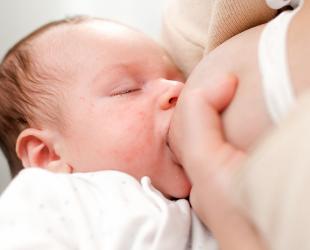
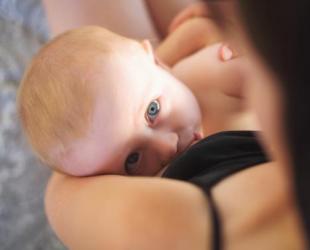
Some women notice changes in the way their baby breastfeeds around the time of their period or when they ovulate. A baby may seem fussy when they feed, want to breastfeed more often, or even refuse the breast at times.This could be due to differences in the flow and taste of breastmilk.3
These changes are usually temporary. Shorter, more frequent feeds may help. If your baby refuses the breast, try some of our tips for encouraging your baby to feed.
It’s unlikely. If your baby acts differently at the breast, it’s probably due to taste or flow changes, not supply. If your baby feeds less often for several days, your supply may drop, but it will increase again when they return to their usual pattern.
In the meantime check your baby is getting enough breastmilk and find ways to boost your supply if needed.
Still feeling unsure?
A chat with a breastfeeding counsellor can help you to work out if any breastfeeding challenges are related to your period.
© Australian Breastfeeding Association January 2026
- Gross, B. A., & Burger, H. (2002). Breastfeeding patterns and return to fertility in Australian women. Australian and New Zealand Journal of Obstetrics and Gynaecology, 42(2), 148–154. https://doi.org/10.1111/j.0004-8666.2002.00148.x
- Pérez, A., Labbok, M. H., & Queenan, J. T. (1992). Clinical study of the lactational amenorrhoea method for family planning. Lancet, 339(8799), 968–970. https://doi.org/10.1016/0140-6736(92)91538-j
- Hartmann, P. E., & Prosser, C. G. (1982). Acute changes in the composition of milk during the ovulatory menstrual cycle in lactating women. The Journal of Physiology, 324, 21–30. https://doi.org/10.1113/jphysiol.1982.sp014098