One-sided breastfeeding? Yes you can and here’s how to manage it well.

If you’re feeding from one breast – by choice, necessity, or because your baby prefers it – you might wonder if you’ll make enough milk. The good news is yes, you can.
But one-sided breastfeeding can mean different things. This article explains both situations.
- Feeding from one breast only – when you can only use one side, either temporarily or long-term.
- Feeding from one breast per feed – which is common in the early days.
Feeding from one breast only
There are many reasons a mum might feed her baby on only one side. Sometimes it’s a necessity, sometimes it’s temporary and sometimes it becomes the long-term plan.
- Past breast surgery: Procedures may have removed breast tissue or damaged milk ducts, making that breast unable to produce milk.
- Physical limitations or discomfort: An injury or condition may make feeding on one side difficult or painful.
- Persistent breast or nipple issues: Ongoing problems can lead you to wean from one side.
- Baby preference: Some babies strongly favour one breast, leading to the other reducing in supply.
- Medical advice: You may be asked to stop feeding from one breast due to surgery, treatment, or a condition affecting that side.
Each breast works separately
Breastfeeding is based on supply and demand. Each breast responds separately to how often it’s used. The more your baby feeds from one side, the more milk that breast will produce. This is why one breast can provide a full supply. Just as mums of twins make enough milk for two babies, your body adjusts to meet your baby’s needs. Over time, the less-used breast will gradually make less milk and may stop altogether.
If it’s a temporary situation, support is available to help your baby return to the other breast. If it’s long-term, rest assured that one-sided breastfeeding can work beautifully. An ABA breastfeeding counsellor or a lactation consultant can give you information and suggestions to manage both situations.
I need to stop breastfeeding from one breast
If a medical or physical condition means you must stop feeding from one side, you’ll need to reduce the feeding or expressing on that side to stop milk production. It’s better for your breasts to do this as gradually as you can to avoid inflammation or mastitis. But there are times when it needs to be done quickly.
My baby prefers one side
It’s common for breasts to differ in size, shape, and milk flow.
Your baby might prefer:
- A faster or slower let-down
- A particular nipple shape
- A specific head position
You might also notice:
- More milk on one side
- Different let-down speeds
- Nipple shape differences
- Your own preference for holding baby on one side
Can I even things out?
Yes, you can try to encourage feeding from the less-preferred side:
- Offer that side first at each feed.
- Return baby to that side more often.
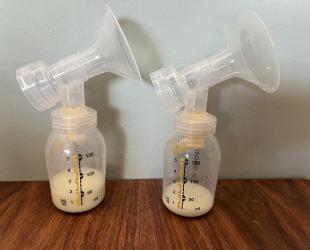
- Pump on that side to remove more milk.
- Try some different holds to find one that’s more comfortable for your baby to feed on that side. For example, if you usually feed on the ‘good’ side using the cradle hold, try then sliding baby across to feed on the other side in the underarm hold.
Will my breasts look lopsided?
The breast that produces more milk will likely be larger than the other until you finally wean on both sides. Some mums are very self-conscious about this and worry that it will be noticeable to others. Wearing looser fitting tops, especially in woven rather than knit fabrics, may help hide the imbalance. You could also look at using a bra filler to make that breast appear a similar size.
Feeding from one breast per feed
In the early weeks, many babies are satisfied feeding from just one breast. If your baby is well attached and sucking effectively, they’ll feed for as long as they need and either come off on their own or fall asleep after getting all they need from one breast. When they wake or next show feeding cues, you can offer them the other side.
If your baby comes off after a feed but seems to want more, offer them the other breast.
You might hear advice to put your baby back on the first breast to “drain it fully.” The truth about breasts is that they’re never empty. Your baby feeds until they’re either satisfied, or until the flow has slowed to the point that they decide to stop feeding. If your baby comes off but wants to continue feeding, they’ll get more milk if you switch sides.
If you’re not sure whether your baby has fed enough on the first breast, it’s still okay to switch them to the other. If they’ve been feeding for a long time and then come off, it’s probably time to change sides.
One breast per feed to reduce milk supply
Feeding on one side per feed can be a helpful way to reduce milk supply. Mums who have an oversupply might use this as a way to manage the difficulties they may have with too much milk.
In this situation, one-sided feeding is usually only until the oversupply settles and then you can go on to feed from both breasts at most feeds.
Still feeling unsure?
One-sided breastfeeding can raise questions. If you’d like support, reach out to a qualified breastfeeding counsellor or lactation consultant. You’re not alone, and help is available.
© Australian Breastfeeding Association January 2026