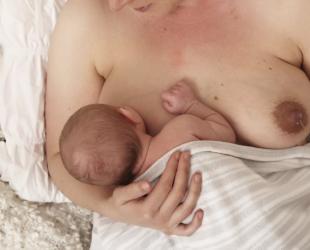
Learn what happens when your baby latches to the breast and how to tell if it’s going well

Learning to breastfeed can take practice. At first, it might feel like there are so many things to think about, holding your baby and helping them attach. Be reassured, with time and patience, it will become easier and quicker.
If feeding doesn’t feel comfortable, it’s often because your baby isn’t attached well. This page explains what might be happening, what to look for and how you can adjust things for a more comfortable feed.
How babies breastfeed
Breastfeeding is different from sucking on a bottle or straw. To get milk from the breast, your baby needs to take your nipple and a good amount of breast into their mouth. Having a large mouthful of your breast allows your nipple to move to the back of your baby's mouth, where the hard and soft palate meet. Your baby’s tongue moves forward over their gums, then cups below the nipple and areola. The tongue and jaw move together to gently squeeze and draw milk from your breast.
If your baby doesn't have a large amount of breast in their mouth, your nipple may not be far enough back. It can then be squashed against the hard palate. This often causes nipple pain and damage and means your baby may not be able to get as much milk from the breast.
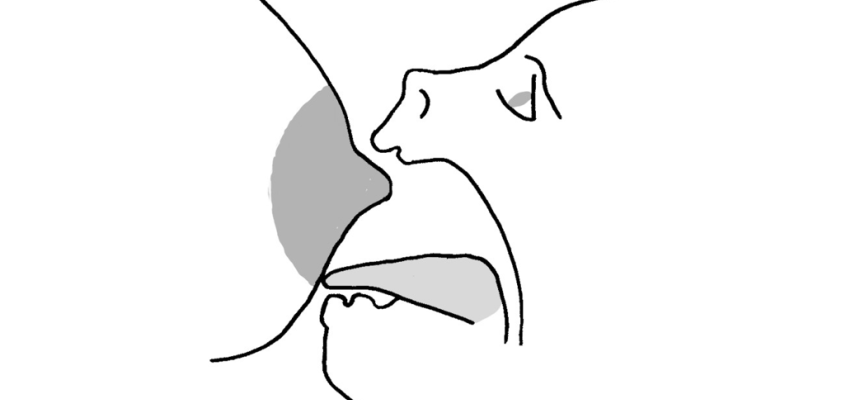
Your baby's mouth is wide open with tongue down and forward. Your nipple is aimed at the roof of baby's mouth. The first point of contact is baby's lower jaw or chin on your areola.
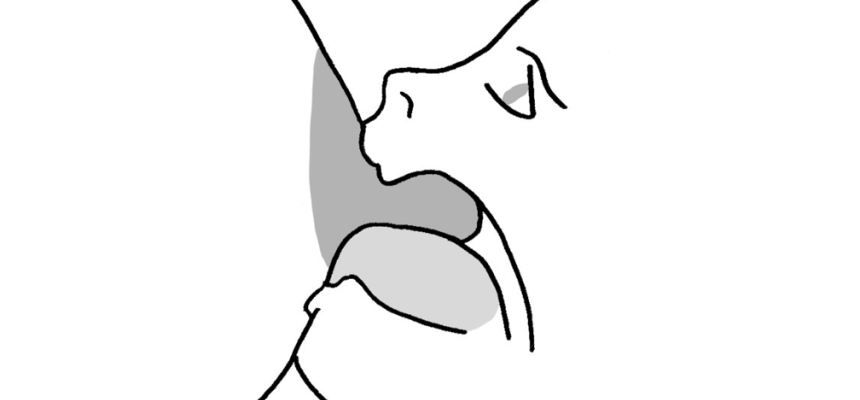
Your baby has a large mouthful of breast. Baby's tongue is forward over the gum, the lower lip is rolled out, the chin is pressed into the breast.
How you can know if your baby is latched well
- Your baby’s mouth is fully open, like a yawn, with a large mouthful of breast.
- Their chin is pressed into your breast, near the edge of your areola.
- Their nose is clear or just touching your breast.
- Their lower lip is turned out (sometimes you can’t see it). The upper lip just rests in a neutral position.
- Their tongue is forward over the lower gum (You may not be able to see this but that's okay. Be guided by how it feels.)
- More areola is visible above the top lip than below the bottom lip. Often you can't see the lower lip as it's hidden in the breast.
- While they're feeding baby’s cheeks look full and rounded, not sucked in.
- Breastfeeding isn’t painful. There may be some sensitivity due to hormonal changes, but it shouldn't hurt.
- You can see your baby sucking and swallowing in a steady rhythm.
Signs your baby may not be well attached
It hurts when your baby feeds.
You hear clicking or slurping sounds.
Baby’s cheeks are hollowed, sucked in or dimpled as they suck.
Baby frequently slips off the breast.
Baby's sucking pattern is fast and continuous throughout the feed, without swallows and natural pauses.
If you notice these signs, gently take your baby off and try again. Place a clean finger in the corner of their mouth and between their gums to break the suction.
Steps to help your baby to latch well
Start by making yourself comfortable in whatever position you choose - sitting, lying down, or leaning back. Being well supported can make it easier for your baby to attach well. Read more about breastfeeding positions.
Hold your baby close
Unwrap your baby and hold them facing you. Your baby's chest should touch your body and their head should tilt slightly back so their nose is level with your nipple. Avoid holding the back of their head. Support their neck and shoulders instead.
Encourage a big open mouth
Gently brush your baby’s mouth with your nipple and the underside of your areola. Wait for a big, yawn-like opening. When this happens, their tongue will come forward over the lower gum. If you're holding your breast, make sure your fingers are well back from your nipple, so as not to get in the way of your baby taking a large mouthful.
Bring baby to the breast
When your baby opens wide, aim your nipple at the roof of their mouth and bring them in quickly. Their chin should touch your breast first, well below the nipple, so they can take in a large mouthful of breast.
Check for comfort
Feeding should not hurt. If feeding feels sharp or pinching, gently break the suction by placing a clean finger in the corner of their mouth and try again.
Adjust if needed
Small changes can make a big difference. Hugging the lower half of your baby’s body closer can help their chin press into your breast. Check there’s no bunched clothing or an arm between you and your baby.
If your breasts are engorged
Hard, full breasts are difficult for some babies to take into their mouth. Soften your breast before feeding by hand expressing a little milk or use reverse pressure softening.
How you hold your baby can make a big difference. Find tips on positioning and more guidance on supporting your baby to attach well.
See babies attaching and feeding well in this video by Global Health Media.
Use the timings below to jump to the sections you’re most interested in:
0:00 Introduction
1:20 Good attachment
1:50 Shallow attachment
2:20 Steps to help baby attach deeply
3:30 Feeding when baby is ready – feeding cues
3:40 Positioning for good attachment
5:50 Other helpful tips
6:20 Signs of good attachment
7:20 Signs of baby drinking well
7:50 When breastfeeding hurts
9:00 Establishing a good supply
9:45 Summary checklist
Links to further videos about positioning and attachment
Can a change in position help relieve nipple pain? - Nancy Mohrbacher
What feeding positions work if I'm large breasted? - Dr Theresa Nesbitt and Nancy Mohrbacher
How do I get my baby to open wide? - Dr Theresa Nesbitt and Nancy Mohrbacher
How can gravity, gaps & gaze simplify early breastfeeding? - Dr Theresa Nesbitt
What adjustments make early breastfeeding easier? - Dr Theresa Nesbitt and Nancy Mohrbacher
Find out more about getting breastfeeding started
Online interactive breastfeeding preparation session for expectant parents
Breastfeeding Preparation Session

Your guide for navigating the first 72 hours with your newborn. Free for Virtual Village members.
The first 72 hours - eModule

Online interactive session free for members
Newborn Virtual Village - Comfortable attachment

© Australian Breastfeeding Association December 2025