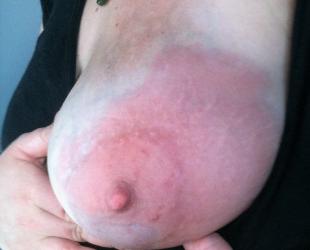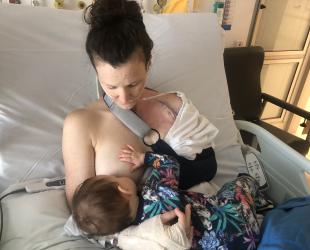
A breast abscess can be treated and you can keep breastfeeding while you heal.
A breast abscess is a pocket of pus (infected fluid) that forms in the breast, usually when mastitis isn’t treated early or doesn’t respond to treatment.
An abscess can be very painful and uncomfortable, but with the right care, you’ll recover and you can keep breastfeeding your baby while you heal.
What to expect if you have a breast abscess
If you are diagnosed with a breast abscess your doctor will talk with you about the best treatment.
- The infected fluid might be drained from the abscess using a needle and syringe (sometimes with ultrasound to guide the needle). This is called needle aspiration.
- Sometimes, the abscess needs to be drained with a small operation in a day clinic or hospital. This is called incision and drainage. A drain may be left in place for a while, or the wound may be left open to drain naturally.
- You’ll be given antibiotics to help clear the infection.
Can I keep breastfeeding?
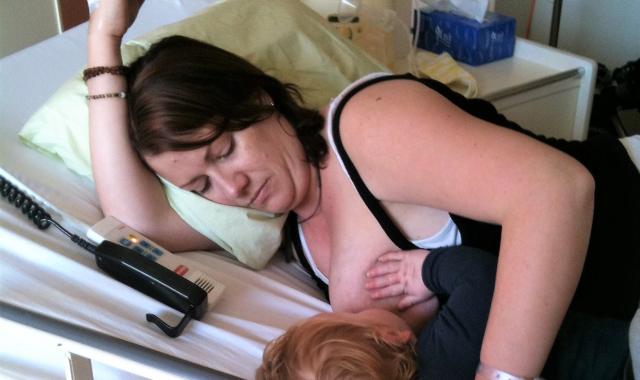
Yes! Having a breast abscess doesn’t mean you have to stop breastfeeding. In fact, it’s important to keep feeding from the affected breast if you can. Breastfeeding is safe and recommended during treatment.
If your baby can’t feed from that breast (for example, if there’s a drain near your nipple), you can express your milk until the drain is removed.
Some people worry that milk leaking from the wound will stop it from healing. This isn’t true. Your breastmilk actually contains immune factors that help healing and protect against more infection. It might be a bit messy if milk leaks from the drain so talk to your doctor about ways to manage this.
Your breast may take a little while to feel normal again after treatment, but it will gradually heal as you keep breastfeeding.
Bartick, M., Hernández-Aguilar, M. T., Wight, N., Mitchell, K. B., Simon, L., Hanley, L., Meltzer-Brody, S., & Lawrence, R. M. (2021). ABM Clinical Protocol #35: Supporting breastfeeding during maternal or child hospitalization. Breastfeeding Medicine, 16(9), 664–674. https://doi.org/10.1089/bfm.2021.29190.mba
Irusen, H., Rohwer, A. C., Steyn, D. W., & Young, T. (2015). Treatments for breast abscesses in breastfeeding women. The Cochrane Database of Systematic Reviews, 2015(8), CD010490. https://doi.org/10.1002/14651858.CD010490.pub2
The Royal Women's Hospital. (2023). Infant feeding - Mastitis and breast abscess - Guideline.
Totadri, V.M., Vetri, R., Sainath, S. (2024). A comparative study of drainage of breast abscesses by conventional incision and drainage vs ultrasound-guided needle aspiration/re-aspiration in a tertiary health care centre. European Journal of Breast Health, 20(3), 194-198. https://doi.org/10.4274/ejbh.galenos.2024.2024-3-2
WA Women and Newborn Health Service. (2023). Obstetrics and gynaecology clinical practice guideline - Breast inflammation and infection: Mastitis and breast abscess. Government of Western Australia, North Metropolitan Health Service.
The information on this website does not replace advice from your health care provider.
© Australian Breastfeeding Association January 2026