Cup-feeding is an easy way to feed your baby, even a newborn.
Cup-feeding is a safe and practical way to give your baby breastmilk when breastfeeding or bottle-feeding isn’t possible or convenient.
There are many reasons you might choose to cup-feed your baby:
You're giving your baby small amounts of breastmilk or colostrum.
You and your baby are separated for some time.
You nipples need time to heal.
Your baby is refusing to breastfeed.
Your baby has a minor cleft of lip and/or palate.
You need to give top-ups of expressed breastmilk or formula.
You usually use bottles but you can't safely clean feeding equipment (for example, if you have no power or clean water). Cups are easier to clean than bottles and teats.
What sort of cup should I use?
Small, open cups are safest and easiest to clean. For older babies, sipper lids and straws can work, but they’re harder to clean well if you don’t have access to hot water.
How to cup feed your baby
Gather your equipment
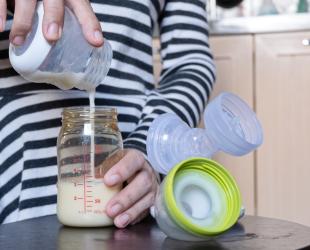
- You’ll need a small cup or medicine glass, expressed breastmilk (EBM), a bib for dribbles, and a well-supported chair and table.
- Half-fill the cup and keep extra milk nearby for refills.
Hold your baby
- Make sure your baby is fully awake, calm, and alert. Put the bib on your baby and sit with them on your lap.
- Hold your baby upright, supporting their shoulders and neck, or use the crook of your arm. You may need to gently keep their hands away from the cup.
- Avoid lying your baby back, as this can cause choking or spluttering.
Offer the cup
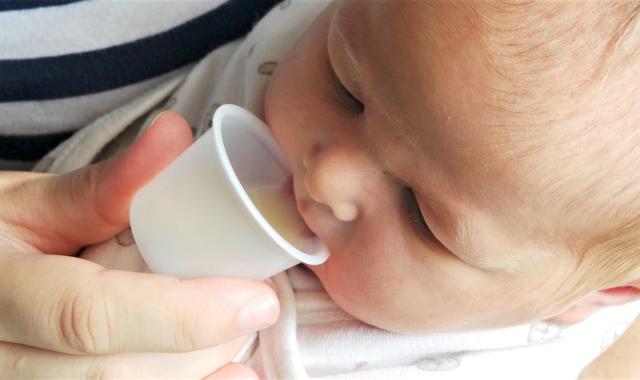
- Hold the cup so it just touches your baby’s mouth, reaching the corners and resting lightly on the bottom lip.
- Tip the cup just enough so your baby can lap up the milk with their tongue. Do not pour milk into their mouth.
- Keep the cup in a tilted position and let your baby set the pace. Only take the cup away if your baby pulls back.
Cup-feeding may seem slow and messy at first, but it gets easier with practice.
Getting help
If you’re new to cup-feeding, ask a child health nurse or lactation consultant to watch and guide you. It may feel awkward at first, but with support and practice, cup-feeding becomes easier.
Older babies and toddlers
Older babies and toddlers may also take expressed breastmilk from a cup. There are many types—sippy cups, no-spill cups, and cups with straws. Try different options to see what works best for you and your child.
© Australian Breastfeeding Association November 2025