Thinking about formula? Here’s what you need to know to make informed, confident choices.
If you’re thinking of introducing formula to your baby, you might be wondering how to choose the right one and how to prepare it safely. With so many options and lots of marketing, it can feel confusing.
Here are some key points to help you make the best choice for you and your baby.
Choosing a formula
- All infant formulas sold in Australia meet strict national standards.
- There’s no evidence that one brand or type is better than another. Choose what you can afford.
- For babies under 6 months, use a ‘starter’ or ‘first’ formula.
- Between 6 and 12 months, you can keep using starter formula or switch to a ‘follow-on’ formula.
- After 12 months, your baby doesn’t need formula or toddler milk.
- A formula with lower protein may help reduce the risk of your baby becoming overweight.
- Claims about formulas being better for development or reducing colic, reflux, or allergies aren’t strongly supported by evidence.
- If you’re unsure, ask your child health nurse, pharmacist, or healthcare provider for advice.
Preparing formula
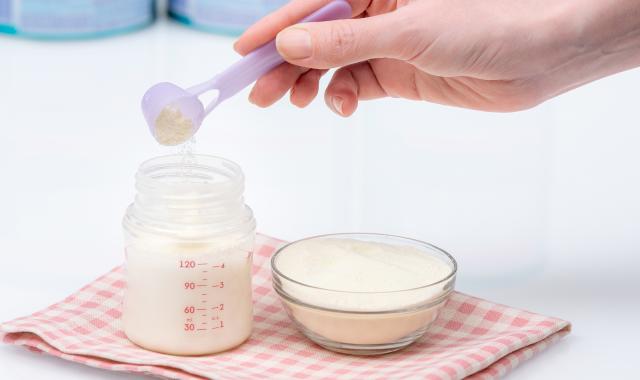
- Always follow the instructions on the formula tin to know how much powder and water to use. Directions can vary between brands.
- Clean and sterilise all feeding equipment using a steriliser or boiling water.
- Powdered formula isn’t sterile and can occasionally contain bacteria. Making up feeds using freshly boiled water that is still hot (over 70 °C) will help to kill any germs. Allow the formula to cool to a safe temperature before feeding it to your baby.
- We have extra information for when you can't boil water or there is a ‘do not drink water’ notice.
Feeding your baby formula
- The amount of formula your baby needs depends on their age, size, and what else they’re eating.
- Formula tins provide guidelines, but feed your baby according to their needs.
- Bottle feeding can sometimes lead to overfeeding, as babies may take in more milk more quickly. Using paced bottle-feeding can help.
- Don’t mix expressed breastmilk and formula in the same bottle. If your baby has both, offer breastmilk first, then formula if needed.
Can I keep breastfeeding?
Absolutely. Combining breast and formula feeding is called ‘mixed feeding’. You can continue breastfeeding for as long as you and your baby want.
Here are some helpful links for more information. These articles explain how to safely sterilise equipment, prepare formula, and reduce any risks to your baby:
- How to prepare formula for bottle-feeding at home (World Health Organization)
- Infant formula: making, storing and transporting it (Raising Children)
© Australian Breastfeeding Association May 2026
Related articles