Ready to take gentle steps towards more breastfeeding and fewer top-ups?

If you’ve fallen into the ‘top-up spiral’ – giving your baby more and more formula top-ups - you’re not alone. Many mums find themselves here and wonder how to get back to full breastfeeding.
With the right support, you can boost your milk supply and reduce formula supplements.

Getting started
Before you start, it’s important to seek help from your child health nurse or a lactation consultant. ABA counsellors can also offer support along the way.
How quickly you can reduce formula depends on:
- what led to you using formula
- your baby’s age
- how much formula your baby is having.
The aim is to gently shift from formula to more breastfeeds, so your baby continues to get enough overall. The more you can boost your milk supply, the less formula top-ups your baby will need. The more milk that’s removed from your breasts, the more milk you will make.
Gradually replace formula with more breastfeeds
If your baby is breastfeeding well, here are some ways to feed more and offer less formula when you do need to top-up:
- Offer more frequent feeds. Your baby may only be satisfied for a short time after a feed, but the more often they feed, the less topping-up they’ll need.
- After your baby has fed from both breasts, instead of offering formula, do a ‘top-up’ with the breast – offer both sides again. Your breasts are always making milk. You don’t have to wait for them to ‘fill up’.
- Many mums feel the breastfeeds go better in the morning. Try only breastfeeding for these feeds and leave the formula top-ups until later feeds when your baby isn’t satisfied with the breast. As your milk supply increases, you’ll find you can get further through the day before you have to supplement with formula.
- Try offering a little less formula than before in the top-ups – just enough to satisfy your baby. They may be ready for another breastfeed sooner, but more frequent feeds will boost your supply. As your supply increases, you can keep reducing the amount of formula in the top-ups.
Express milk if needed
If your baby isn’t breastfeeding well or isn’t taking the breast at all, you’re probably already pumping. To help your supply grow, you’ll need to express more often. You can then give your baby expressed milk as a top-up instead of formula.
Even if your baby is feeding at the breast, you may have been advised to express as well. Generally, babies will remove more milk from the breast than a pump, so think about whether to breastfeed rather than pump (it’s more effective and less time-consuming)
Learn more about effective pumping from our articles Expressing – the Basics and Using a breast pump. You may also find breast compressions help you get more milk.
Top up with expressed milk
Expressing milk helps boost your supply and also gives an alternative to formula for your baby’s top-up feeds.
If you have expressed milk, use this in place of formula to top-up your baby. This may help to satisfy them for a short time until they’re ready for another breastfeed.
Check your baby’s output and growth
Your baby’s wet and dirty nappy count can help you to know if they’re getting enough milk. Regular check-ins with your child health nurse are important to track your baby’s growth as you reduce formula feeds.
If your baby is doing well, you can reduce formula by another small amount every few days. Always follow the advice of your health professional.
If your baby’s weight gain or nappy output drops, don’t reduce more formula but stay at the same level for a while, or go back to the previous amount before trying again.
If you need more support
A child health nurse or a lactation consultant can monitor your baby and support you as you reduce formula feeds. They may ask you about:
- how much formula your baby is having
- number of breastfeeds and expressed milk feeds
- number of wet and dirty nappies
- your baby’s behaviour after feeds
- the kind of breast pump you’re using.
This information will help you and your support team make a plan that works for you and your baby.
© Australian Breastfeeding Association March 2026
Find out more about increasing your supply
Evidence-led info and practical tips from our Breastfeeding Information Series
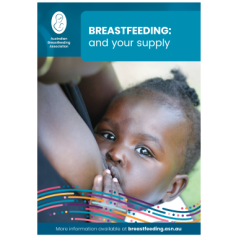
Breastfeeding: and your supply