Discover gentle ways to help your baby take breastmilk feeds.

In situations where your baby or toddler will be fed your expressed breastmilk, you’ll need to decide the best way for this to happen.
Depending on your situation, you might use a bottle, cup, supply line, or even a spoon or syringe. Each option works a little differently and babies may have their own preferences.
Some breastfed babies take time to get used to expressed milk, especially from a bottle. Even though the milk is the same, feeding away from the breast can feel very different. Your baby may need to learn new mouth and tongue movements.
It can feel worrying if your baby doesn’t accept expressed milk at first. You’re not doing anything wrong. Many babies need time, patience and practice.
Sometimes, having someone else offer the milk can help. Your baby may find it easier if you’re not nearby, as they expect to feed from you at the breast.
Helping your baby take expressed milk from a bottle
Timing tips
Choosing the right moment to offer expressed milk can make feeding smoother.
- Offer expressed milk as soon as your baby shows feeding cues, rather than waiting until they’re very upset.
- Try different times of the day. For example, just after waking, when sleepy, or between regular feeds when they’re not so hungry.
- Some babies find it comforting to cuddle clothing that smells like their mum during a feed.
Drinking from a bottle
Some babies need a little time to work out what to do with a bottle teat.
- Try gently squeezing the teat at first so a little milk flows into your baby’s mouth at first.
- Stroke the teat downward on your baby’s lips to encourage them to open their mouth.
- Experiment with different teats. The shape, size and flow rate can vary.
- Younger babies often prefer a slower flow, while older babies may be comfortable with a faster flow.
- Warming the teat can help if it feels cold.
- Some babies find comfort in holding or smelling clothing that smells like you during a feed.
- Using paced bottle feeding can support your breastfeeding relationship.
Different feeding positions
- Sometimes trying a different position can help. Babies may associate lying down with breastfeeding and feel unsure about a bottle in that position.
- You could try holding your baby more upright, perhaps sitting facing you. Some babies prefer to face outward while sitting on their caregiver’s lap.
- Gentle movement can also soothe some babies. Rocking your baby or walking around while feeding may help them relax.
Other ways to offer expressed breastmilk
If a bottle doesn’t suit your baby or you prefer not to use one, there are other ways to feed your expressed milk.
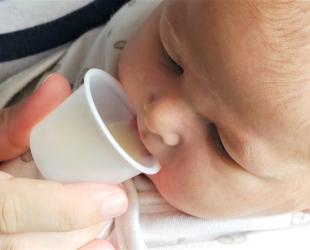
- A small cup (possible for young babies)
- A spoon or syringe (useful for small amounts, such as colostrum)
- A supply line at the breast
- A straw or sipper cup (for older babies)
- For babies over 6 months, you can also offer expressed breastmilk in foods.
Why choose another method?
- When learning to breastfeed: Feeding methods without teats can help avoid confusion while breastfeeding is being established.
- To avoid bottle preference: Some babies find bottles easier and may become unsettled at the breast.
- For small amounts: Spoons or syringes can work well for newborns.
- In emergencies: Cups can be easier to keep clean when safe water or sterilising isn’t available.
- To support milk supply: A supply line lets your baby feed at the breast while receiving extra milk. It provides comfort, connection and familiarity with the breast.
Finding what works for you
Every baby is different, and it can take time to find what works for you both. It’s okay to try a few different approaches.
If you’d like more support, an ABA breastfeeding counsellor can help you explore options and find a way that feels right for you and your baby.
© Australian Breastfeeding Association June 2026
Read more about preparing and feeding expressed breastmilk