Breastfeeding your premature baby may take time, support and practice.
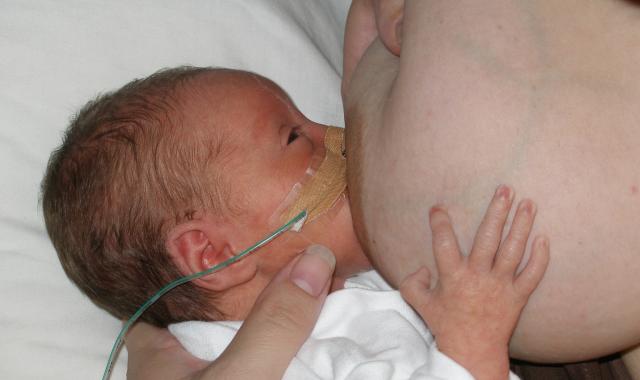
Breastfeeding can take extra time and practice if your baby is premmie, very small or has health concerns.
It can feel like a lot at first. With support, time and practice, many mums and their babies learn these skills together.
Breastmilk supports your baby's growth and development
Breastmilk is the normal food for all babies. It supports growth and development. It’s especially important for babies born early, as their bodies are still developing.
Breastmilk for premature babies has some special qualities. It:
- has more protein, fat and important minerals to support growth
- contains immune factors that help protect your baby from infection
- protects premature babies from serious gut and blood illnesses including necrotising enterocolitis and sepsis
- is gentle on your baby’s tummy and easy to digest
- produces very little waste, which can help protect immature kidneys
Even small amounts of breastmilk are valuable. If you’re only making a little, your baby is still getting important nutrients and protection.
The first milk you make (colostrum) is very concentrated. Even tiny drops can support your baby’s immune system and gut development.
Support from your baby’s care team
In most neonatal units, staff understand how important breastmilk is. They will usually encourage you to provide your own milk if you can.
Providing breastmilk can be one way to feel involved in your baby’s care.
Breastmilk is so important for premature babies that some hospitals have human milk banks. This makes sure that our most at-risk infants receive donor human milk as the next best thing after their mother's milk. If you can’t breastfeed or express, ask if your hospital has a milk bank.
Skin-to-skin (kangaroo care)
Skin-to-skin contact (often called kangaroo care) means holding your baby against your bare chest. Many families find this helps them feel closer to their baby.
Your baby may be placed inside your clothing, wearing only a nappy and sometimes a hat. A wrap can help keep them secure.
Some hospitals support skin-to-skin even when a baby needs medical equipment. Staff can guide you on what’s possible for your baby.
Skin-to-skin contact may help your baby to:
- feel calm and cry less
- keep their temperature, breathing and heart rate steady
- practise feeding behaviours
- stay close to you and build connection
It may also help you increase your breastmilk supply.
If your hospital doesn’t routinely offer this, you could talk with staff about when and how you might be able to hold your baby. You, your baby and your milk supply will all benefit if you can have as much skin-to-skin contact with your premature baby as possible.
Breastfeeding your premature baby
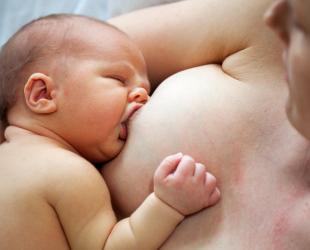
Breastfeeding can be a gentle way for premature babies to feed. They can take their time at the breast, often with short bursts of sucking followed by rests.
Even very small babies may cope well with longer periods at the breast without becoming distressed. While they are there, they can stay warm and settled, and their breathing and oxygen levels can remain steady.
Time at the breast is also about more than feeding. Your baby is close to you, with touch, smell and eye contact. Many mums notice this helps them feel more connected.
Because of this stop–start way of feeding, your baby may need plenty of time at the breast. Unless there is a medical reason to limit feeds, you can let your baby take the time they need.
As your baby grows and becomes stronger, their sucking and feeding will usually become more effective.
- Spend time holding your baby in a feeding position, even before they are ready to breastfeed.
- Try different ways of holding your baby to find what feels comfortable and supportive.
- Encourage your milk to start flowing before a feed, for example with gentle hand expressing or warmth.
- If your baby isn't feeding at the breast, start expressing milk as soon as you can after birth.
Hospital staff and a lactation consultant can help you work out what suits you and your baby.
If your baby isn’t ready to breastfeed yet
Some babies need time before they can feed at the breast. In the meantime, your expressed breastmilk can be given in different ways. Some babies will be tube-fed. Others can be taught to suck using a lactation aid, finger feeding or a cup.
Talk with your baby’s care team about the options and what might work best for your baby.
Your feelings
Having a premature baby can feel overwhelming. Things may not be how you imagined. You might feel shock, worry, sadness or frustration. You may also feel separated from your baby or unsure of what’s happening. These feelings are common.
Some mums go home before their baby is ready. This can be especially hard. Travelling back and forth, or being far from the hospital, can add to the stress.
If you’re finding things difficult, you’re not alone. Support from family, other parents and trained counsellors can help.
One mum's memory of that time
All the time my baby was in hospital I didn't feel part of reality. I was expected to carry on life as if it was normal but all the time I was away from the hospital, there was a part of me in the special care nursery with my baby.
When you go home
Going home can bring both relief and new worries. You and your baby are getting to know each other in a new way.
Taking things slowly can help. Your baby may still need frequent and sometimes long breastfeeds. This is part of how your supply adjusts to meet their needs.
You might find it helpful to:
- rest when you can
- accept help with meals or housework
- keep expressing if your baby isn’t yet feeding fully at the breast
- stay connected with other parents of premature babies
Your local ABA group and trained breastfeeding counsellors can offer information, encouragement and shared experiences.
Getting support
Many parents find it helpful to talk with others who understand. You could connect with:
- your local ABA group
- ABA breastfeeding counsellors
- support groups, such as Miracle Babies for families of premature babies
You don’t have to work this out on your own.
The information on this website does not replace advice from your health care provider.
© Australian Breastfeeding Association June 2026
The information in this article has been informed by current research and clinical guidance. The following references may be helpful if you would like to learn more.
Baley, J., & Committee on Fetus and Newborn. (2015). Skin-to-skin care for term and preterm infants in the neonatal ICU. Pediatrics, 136(3), 596–599. https://doi.org/10.1542/peds.2015-2335
Bergman, N. J., Linley, L. L., & Fawcus, S. R. (2004). Randomized controlled trial of skin-to-skin contact from birth versus conventional incubator for physiological stabilization in 1200- to 2199-gram newborns. Acta Paediatrica, 93(6), 779–785. https://doi.org/10.1111/j.1651-2227.2004.tb03018.x
Miller, J., Tonkin, E., Damarell, R. A., McPhee, A. J., Suganuma, M., Suganuma, H., ... & Makrides, M. (2018). A systematic review and meta-analysis of human milk feeding and morbidity in very low birth weight infants. Nutrients, 10(6), 707. https://doi.org/10.3390/nu10060707
Noble, L. M., Okogbule-Wonodi, A. C., & Young, M. A. (2018). ABM Clinical Protocol #12: Transitioning the breastfeeding preterm infant from the neonatal intensive care unit to home, Revised 2018. Breastfeeding Medicine, 13(4), 230–236. https://doi.org/10.1089/bfm.2018.29090.ljn
Wang, Y., Zhao, T., Zhang, Y., Li, S., & Cong, X. (2021). Positive effects of kangaroo mother care on longterm breastfeeding rates, growth, and neurodevelopment in preterm infants. Breastfeeding Medicine, 16(4), 282–291. https://doi.org/10.1089/bfm.2020.0358
WHO Immediate KMC Study Group, Arya, S., Naburi, H., Kawaza, K., Newton, S., Anyabolu, C. H., Bergman, N., Rao, S. P. N., Mittal, P., Assenga, E., Gadama, L., Larsen-Reindorf, R., Kuti, O., Linnér, A., Yoshida, S., Chopra, N., Ngarina, M., Msusa, A. T., Boakye-Yiadom, A., Kuti, B. P., … Massawe, A. (2021). Immediate "kangaroo mother care" and survival of infants with low birth weight. The New England Journal of Medicine, 384(21), 2028–2038. https://doi.org/10.1056/NEJMoa2026486
World Health Organization. (2022). WHO recommendations for care of the preterm or low birth weight infant. https://www.who.int/publications/i/item/9789240058262
Resources to support you
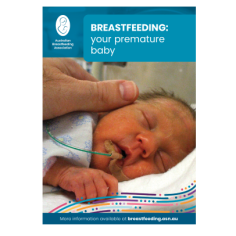
Breastfeeding: your premature baby
35+ pages of helpful info and practical tips from our Breastfeeding Information Series
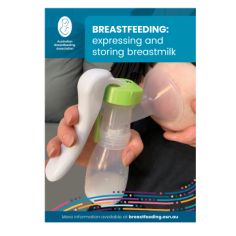
Breastfeeding: expressing and storing breastmilk
25+ pages of helpful info and practical tips from our Breastfeeding Information Series