Information to help you navigate your feeding choices through cancer treatment.

Facing a cancer diagnosis while breastfeeding can bring a wave of emotions and practical challenges. You might feel overwhelmed by decisions, worried about your health and your baby’s needs, and unsure about what comes next. It’s okay to have questions and concerns.
While cancer and its treatment can affect many parts of life, this article focuses on breastfeeding – helping you understand your options, what to expect, and where to find help. Whatever your choices or circumstances, you’re not alone. There is information and support available to guide you in making the decisions that are right for you and your family.
Can I keep breastfeeding?
It’s common to worry about whether you can keep breastfeeding after a cancer diagnosis, especially if your baby is very young. Many mums feel anxious about how treatment might affect their ability to feed and comfort their baby.
Whether you can continue breastfeeding depends on several factors, including the type of treatment and your health. Some treatments, such as chemo, mean you’ll need to pause or stop breastfeeding, while others may allow you to continue.
If breastfeeding is important to you at this time, explain this to your healthcare team. Specialist breastfeeding and medicines information services can provide you or your doctor with up-to-date advice on the safety of medicines and treatments during breastfeeding. You may find it helpful to ask for a referral to a lactation consultant who can support you with feeding options during treatment.
Whatever comes next, remember that breastfeeding is only one aspect of mothering. You can still stay close and connected with your baby through cuddling, talking and simply being together.
How cancer treatments affect breastfeeding
It’s not recommended to breastfeed while receiving chemotherapy. Chemotherapy medicines can pass into your breastmilk and may harm your baby. You will need to wait until the medicines are completely cleared from your body before restarting. Check with your healthcare team about when (and if) it’s safe to resume breastfeeding.
If you received chemo while pregnant, it may affect your ability to make a full milk supply. Good information and support from a lactation consultant or breastfeeding counsellor can help you to maximise the amount of milk you make. If your healthcare team say it’s safe to breastfeed, you may choose to feed your baby a combination of your breastmilk and donor milk or formula.
Whether you can breastfeed during radiation therapy depends on the type and location of radiation. Breastfeeding may be possible, even if radiation is to your chest area, so check with your doctor.
If you have breast cancer and the radiation is directed at your breast, it may reduce or stop milk production on that side. Feeding from the treated breast can sometimes cause problems like infection or skin changes.
Breastfeeding is generally not recommended while taking targeted therapies or endocrine (hormone) therapy. These medicines can pass into breastmilk and may be harmful to your baby. Some hormone therapies are taken for several years, but in some cases it may be possible to pause therapy if you wish to become pregnant and breastfeed. Talk to your doctor about your options.
There is limited information, but most immunotherapy drugs are not recommended while breastfeeding. These medicines may affect your baby’s immune system. Always discuss with your oncology team.
In most cases, you can resume breastfeeding after surgery as soon as you are awake, stable, and able to hold your baby. General anaesthetic and sedation medicines used during surgery leave your system quickly. There is usually no need to express and throw away your milk (‘pump and dump’).
If you are having breast surgery (such as a lumpectomy or mastectomy) you will likely be asked to wean from the affected breast before the surgery. This helps make the breast easier to operate on and more comfortable for you during recovery. If only one breast is affected, you can continue to feed your baby on the other breast during the weaning and following the surgery.
Feeding after breast surgery
Your feeding options after surgery will depend on the type of operation.
- Lumpectomy
Many women are still able to breastfeed after a lumpectomy. Milk production from the operated breast may be reduced depending on the location of the tumour, amount of tissue removed, and whether you have received radiation. However, you will still be able to breastfeed from the unaffected breast, and in some cases, partially from the operated side. - Mastectomy
A mastectomy removes all breast tissue on the affected side, meaning you will not be able to breastfeed from that breast. However, breastfeeding from the remaining breast is usually possible, as each breast works independently. Many mothers successfully breastfeed from one side only.
Most pain relief medicines used after surgery can be taken while breastfeeding but check with your healthcare team.
Breastfeeding and your care
- Ensure everyone in your cancer care team knows you are breastfeeding or wish to breastfeed, so they can help you understand your options. They may be able to recommend medicines and treatment options that are safe while breastfeeding.
- If you need more guidance about feeding during treatment, a lactation consultant can help you understand what’s possible, how to protect your milk supply, and how to manage any temporary pauses in breastfeeding.
- If you need to stop breastfeeding for a while, you may be able to express to maintain your supply. If you are having chemo, you will need to throw away the milk until it’s safe to resume breastfeeding. Cancer Council NSW have tips on how to discard your milk safely.
- If you need to wean, you may be able to express and collect some milk until it’s time for your treatment to begin.
- If you’re asked to stop breastfeeding, even for a short time, it’s understandable to feel sad or disappointed. Support is available to help you work through your feelings.
- If you’re unsure about the advice you receive, or if something doesn’t feel right, it’s okay to seek a second opinion. Your peace of mind matters.
Scans and imaging
If you need scans or imaging as part of your diagnosis or treatment, you may wonder how these tests might affect breastfeeding. The good news is that you can keep breastfeeding as normal with most common scans, but there are a few situations where you may need to take extra care.
- Always tell your doctor and the radiology team that you are breastfeeding. They can help plan the safest scan for you and your baby.
- You may be asked to feed or express milk just before your scan. Removing most of the milk from your breast can help the radiologist to get a clear image.
- Ask if you need to pause breastfeeding or discard milk after your scan, and for how long. If your radiologist is unsure, ask them to check with a medicines information service.
- Read more about the imaging you require at Inside Radiology, the website of The Royal Australian and New Zealand College of Radiologists.
Hospital stays
If you need surgery, tests or treatment as an inpatient, you may spend a few days in hospital. Planning ahead can help you keep breastfeeding or maintain your milk supply.
- Let hospital staff know you’re breastfeeding. This should be written on your treatment form and told to all staff involved in your care.
- Ask if your baby can stay with you in hospital. Many hospitals support keeping mothers and breastfed babies together, but arrangements may vary.
- If you’ll be separated from your baby, you’ll need to express milk regularly to maintain your supply and keep your breasts comfortable. Consider taking your own breast pump to the hospital.
- You may be able to ask for support from a hospital lactation consultant if you have questions about expressing or continuing your supply.
- If you know about your hospital stay in advance, you may be able to build up a small store of expressed breastmilk. But this may not be practical if you have many other things to organise before your stay.
Maintaining milk supply
If you’re separated from your baby for treatment or hospital stays, or if you need to pause breastfeeding for a while, you may worry about your milk supply. It’s normal for supply to dip during times of severe illness, stress, or changes in feeding, but there are steps you can take to help maintain it as much as possible.
- Express as often as your baby would normally feed.
- Use a good quality, double electric pump. If you don’t already own one you may be able to hire a pump.
- Learn to hand express for times when you can’t or don’t wish to use a pump.
- Store expressed milk safely for later use, if possible.
Feeding from one breast
If you have surgery or treatment affecting only one breast, you may be able to continue breastfeeding from the other side. Each breast works independently, and many mums successfully feed their baby from just one breast.
- Offer the unaffected breast at each feed. Your milk supply will increase in that breast to meet your baby’s needs.
- Only express from the affected breast if it becomes too full and uncomfortable. The supply in that breast will slowly decrease.
Stopping breastfeeding
Some women will choose to pause breastfeeding or fully wean during cancer treatment. This can be a difficult and emotional time for both you and your baby, especially if you’d planned on breastfeeding for some time yet.
- Stopping suddenly: Leaving milk in your breasts will cause your supply to gradually decrease over time. But if you need to stop breastfeeding quickly, you may experience full or uncomfortable breasts. Hand express just enough milk to stay comfortable. This will reduce the risk of breast inflammation which can lead to mastitis. Your doctor may also recommend a medicine to help to stop your milk supply.
- Managing emotions: It’s normal to feel sad, disappointed, angry or even guilty about stopping breastfeeding, especially if it happens sooner than you wanted. Remember, breastfeeding is just one part of caring for your baby, and you’re doing your best in a challenging situation.
Feeding baby: If your baby is under 12 months, you will need to replace breastfeeds. Depending on your situation, this might be formula, cow's milk or donated breastmilk.
It can take time for a breastfed baby to learn to accept a bottle. Another trusted carer may have more success with this, at least at first. If your baby is over 6 months, they may be able to use a cup instead. Friends or family who are breastfeeding may be able to support you by donating their expressed breastmilk or directly breastfeeding your baby.
- Offering comfort: Your baby may seek extra cuddles and closeness while they adjust to stopping breastfeeding. Another family member may be able to hold baby skin-to-skin or use a baby carrier to provide this comfort if you are unable to. Some parents also offer a dummy for extra sucking comfort.
For gentle weaning strategies, tips on managing your milk supply, and support for you and your child during this transition:
Depending on your baby’s age and your situation, it may be possible for you to start breastfeeding again after your treatment. If this is your goal, read more about your options.
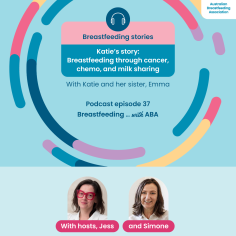
Listen to one mum share her story of navigating breastfeeding and relactation following her cancer diagnosis.
Ep 37 - Breastfeeding stories ... breastfeeding through cancer, chemo, and milk sharing
Emotional support
Breastfeeding during or after a cancer diagnosis can be emotionally challenging. It’s normal to feel a range of emotions, from sadness and frustration to relief or pride in what you’ve achieved.
Remember:
- Your feelings are valid, whatever they are.
- Support is available—reach out to a breastfeeding counsellor or your healthcare team if you need to talk.
- You are doing your best for your baby and yourself.
You're not alone. Whatever your breastfeeding journey looks like during or after cancer, there is support and information to help you make the choices that are right for you and your family.
Further information
- Breastfeeding and cancer treatment - Pregnancy, birth and baby
- Medicines and breastfeeding - HealthDirect
- Inside Radiology - The Royal Australian and New Zealand College of Radiologists (RANZCR)
The following studies, protocols and guidelines were used to inform the writing of this article.
- Johnson, H. M., Mitchell, K. B., & Academy of Breastfeeding Medicine (2020). ABM Clinical Protocol #34: Breast cancer and breastfeeding. Breastfeeding Medicine, 15(7), 429–434.
- Johnson, H. M., Miller, M. E., & Mitchell, K. B. (2025). Oncolactation for patients with breast cancer: Executive summary from the American Society of Breast Surgeons. Annals of Surgical Oncology, 32(12), 8720-8727.
- Partridge, A. H., Niman, S. M., Ruggeri, M., Peccatori, F. A., Azim Jr, H. A., Colleoni, M., ... & Pagani, O. (2023). Interrupting endocrine therapy to attempt pregnancy after breast cancer. New England Journal of Medicine, 388(18), 1645-1656.
- The Royal Australian and New Zealand College of Radiologists. (2018). Iodinated Contrast Media Guideline (v2.3).
- Bartick, M., Hernández-Aguilar, M. T., Wight, N., Mitchell, K. B., Simon, L., Hanley, L., Meltzer-Brody, S., & Lawrence, R. M. (2021). ABM Clinical Protocol #35: Supporting breastfeeding during maternal or child hospitalization. Breastfeeding Medicine, 16(9), 664–674.
- World Health Organization and UNICEF. (2003). Breastfeeding and maternal medication: Recommendations for drugs in the eleventh WHO model list of essential drugs.
- Mitchell, K. B., Fleming, M. M., Anderson, P. O., Giesbrandt, J. G., & Academy of Breastfeeding Medicine (2019). ABM Clinical Protocol #30: Radiology and nuclear medicine studies in lactating women. Breastfeeding Medicine, 14(5), 290–294.
- National Institute of Child Health and Human Development. (2006-). Drugs and Lactation Database (LactMed®).
The information on this website does not replace advice from your health care providers.
© Australian Breastfeeding Association February 2026