Ep 37 - Breastfeeding stories ... breastfeeding through cancer, chemo, and milk sharing
In this episode, Katie shares her story of breastfeeding through cancer treatment, supported by her sister Emma and their local community.
December, 2025.

Podcast episode
Podcast information
Links to resources and information discussed in this episode:
- Position Statement on Donor Milk
- Donor milk
- Medicines info lines
- Relactation and induced lactation
- Using a supply line
- Expressing to relactate or induce lactation
- Breastfeeding your premature baby
- Increasing your supply
- Breastfeeding and medicines
- When you or your baby need to go to hospital
Breastfeeding support:
- National Breastfeeding Helpline - 1800 mum 2 mum (1800 686 268) - Open 24/7
- LiveChat
- Find your local ABA group
Credits: This episode is presented by Jessica Leonard and Simone Casey, with guests Emma and Katie. Audio editing and show notes by Jessica Leonard. Transcription by Leanne Matthews.
Produced by, Simone Casey, Jessica Leonard, Jennifer Hurrell and Eleanor Kippen. We thank Emma and Katie for generously sharing their story with us.
Ep 37 - Breastfeeding Stories ... Breastfeeding through Cancer, Chemo, and Milk Sharing
Katie - And I walked in the back gate and I was just like, it’s not okay. And the first thing I asked is “if I can’t feed my baby, is there any way that you would be able to help me?” Like, I couldn’t finish the sentence before Emma had said yes.
Emma - Yeah, I jumped in. I was like “of course. Like, absolutely I would, because Katie and I would do anything for each other”
<music>
Jessica - Welcome to breastfeeding with ABA, a podcast brought to you by volunteers from the Australian Breastfeeding Association. Breastfeeding with ABA is a podcast about breastfeeding made by parents for parents. In this episode, we’re talking to sisters Emma and Katie, who were pregnant at the same time, and find out what happened when Katie was diagnosed with cancer. My name is Jessica and I’m a Breastfeeding Counsellor with the Australian Breastfeeding Association and a mum of two teenage children. My pronouns are she / her.
Simone - I’m Simone and I’m a volunteer Breastfeeding Counsellor with the ABA. In my paid work, I’ve had a few careers, one as a journalist and the other as a lactation consultant, working privately in the community as well as at an inner city Melbourne hospital. I’m also mum to three children, one teenager and two young adults.
Jessica - I’d like to start by acknowledging the traditional custodians of the lands we’re recording on. Simone and I are on the lands of the Wurundjeri people of the Kulin nation, and today’s guests, Katie and Emma, are joining us from the Gumbaynggirr nation. We thank the traditional custodians for their ongoing care of this country, and acknowledge the long history of oral storytelling on this country, and of women supporting each other to learn to feed their babies.
Simone - We’ll start with you, Emma. Welcome to the podcast, can you tell us a little bit about you and your family?
Emma - Thank you for having us. So I’m Emma and I’m the youngest sibling in my family. I’m a primary school teacher and I’m a mum. My husband, Brendan and I have a three and a half year old son, Charlie, and a one year old daughter, Lucy. And we also live with our furbaby, our dog Fozzie. And we’re lucky enough to live next door to my mum and dad and my ninety year old grandma.
Jessica – Katie - welcome to the podcast. Can you tell us a bit about your family?
Katie - Yeah, sure. Thank you so much for letting us be part of your podcast and to let us share our story with your listeners. So my name’s Katie, I’m a mum to three beautiful children Phoebe, five, Theo, three, and George, eleven months. I live with my amazing husband in a little cottage in Sawtelle, in sunny Sawtelle, like all of you. We live around the corner, around the corner from my mom and dad and my grandma and Emma. So she’s next door and we’re around the corner, and my brother and sister in law only live four minutes down the road. So we’re all very, very close to each other. I’m actually a teacher at the same school, at the same school as Emma. We don’t really seem to be able to do many things apart these days, do we? And Emma’s always been my bestie and changed my life, changed my life with, with especially this in particular, what we’re talking about today. So very, very, very blessed to be able to sit here with you.
Emma - Yeah, we’re very lucky to be best buds. And we do everything together.
Simone - So, Emma, let’s start with you. I want to take you back to 2024, and you and your sister were both pregnant at the same time. Talk me through what that was like for you guys. Was it a really good experience being pregnant at the same time?
Emma - Well, it’s not the first time that we’ve been pregnant together. So we were pregnant together in 2021 with our boys, Charlie and Theo, and that was really fun and really special because that was my first baby. I’d been an auntie to Katie’s eldest baby, and I was so excited to be a mum. And we knew our babies were going to grow up together. So it was really exciting and we felt really good. This pregnancy was quite different because from the start, during my pregnancy, Katie experienced a miscarriage and then also her mother in law passed away to ovarian cancer. So that was really like a really tricky part of our pregnancy journey was that Katie had had these kind of really hard experiences, and then we were finally pregnant together. But it wasn’t the same joy that we experienced the first time, because it was kind of, I guess I was second guessing a lot of things that in my first pregnancy I was like, oh yeah, I’m doing a great job and everything’s normal. But everything had seemed normal for Katie, and then she’d had a miscarriage and it was kind of just it changed a little bit. And then also Katie was quite sick a lot of her pregnancy, and we put it down to kind of pregnancy. But as we find out, it wasn’t just pregnancy sickness. And so the fun of our first pregnancies together wasn’t quite the same this time around. Of course, like, it’s very special being pregnant with your sister and knowing that you’re going to have these babies that will grow up together. But it was just a different experience and I know ..
Katie – It was special.
Emma - Still really special, but it was, it’s interesting having two very different um, perspectives, and also I found out that I was having a girl, which was just so wonderful after I’d had a boy. So then I knew I was going to have a boy and a girl, and Katie was going to have another boy. So it was kind of fun in that we were like, oh, we’re not having both the same this time. We’re having a boy and a girl, and it was lovely to know they’d grow up together. But being pregnant together this time around was kind of hard.
Jessica - Um, so, Katie, what was the pregnancy like for you?
Katie - Well, it was such a joy to be pregnant after experiencing a loss. And it was quite quick, actually, like that, I was pregnant again, so that was beautiful. And I guess one of the other really special things was that I just found out that I was pregnant in the last few weeks of my mother in law becoming very, you know, before she passed with ovarian cancer. And so we got to tell her, which was beautiful, so that was a really special part of it. But yeah, it was certainly different. All my pregnancies have been very different, but this one I was managing anxiety from the previous miscarriage, grief from losing my mother in law and you know, my husband managing that as well, and our children. And I was just really sick. I remember being so tired, like I would get up from bed and just have to sit down, and I couldn’t work out what was going on. I was like, I’m tired, but I’m like, mega tired. I had the nausea from pregnancy anyway, I’ve always had morning sickness and I waited until kind of like nearly until I was twenty weeks. I’m like, oh man, I’m still getting morning sickness. But I suppose then I started to experience some other symptoms. I had a rash, which I put down to pregnancy as well. You get a rash when you’re pregnant, you know all the things, you’re just putting it down to that. So I was really tired, I had this rash. Then a very strange symptom, I remember having this conversation with Emma. I said you know, when you’re like, because we, we just, you know, consult on all things. I was like “you know, when you’re in bed and you just feel like you’re suffocated from from laying down when you’re pregnant?”, she’s like, “not really no, I don’t I don’t really know”. And you know, I can’t breathe I can’t breathe okay. And I said, and you know, when you’re putting your clothes on and it’s really like you feel like you can’t breathe or you’ve got your hands above your head. No, I don’t know what you’re talking about. So I’d had tightness in my throat, and of course, I put that down to heartburn, which I’d had really badly in my other pregnancies as well. So I went to the doctor and really led her like I was like, “it’s heartburn, don’t worry”, like just I just need to manage the heartburn. So of course she’s not going to be going, you know what, why would we need to investigate it further? So just went on and it was getting more difficult. Like I was really struggling with this, like putting my hands above my head. It felt really challenging. I was struggling with my singing as well, with both singers. Um, and I was singing at mass for our school and, um, I was really struggling with that. And again, I thought it was just because I was pregnant, because you get puffed and all those things. I went to my obstetrician at thirty four weeks and I mentioned this, this feeling, this pressing on my throat, it’s very strange. She said, let’s just check your thyroid, let’s just see how you go. And so she asked me to have a blood test as well, so I went and had a blood test that afternoon, and on the Monday I’d had a scan of my thyroid, and two days later I got a call from the clinic where my GP works, and they said, “oh, you know, like, can you come in, you know, when it’s convenient?” And I thought, it’s my iron. Like I went, oh, I’ve got low iron because everyone has low iron when they’re pregnant, I’m sure. Um, and I’m a bit of a dog with a bone. So I was like, I need to know, let’s go in straight away. So I went in that afternoon and my GP is very like straightforward, like he tells things how it is. And he got very like sort of softly spoken and calm. And he said like, there are some things that we found and this report isn’t clear basically. And he didn’t lead me to anything. He just said, we need to investigate and we need to investigate now. And he gave me the reports, he called radiology and he was like, this person needs a biopsy as soon as we can get it. And that wasn’t booked for like weeks, like we couldn’t get because we live in a regional town. So it’s not like you can just go to like anywhere and you can get it whenever you like. And he put his hand on my hand and he just said, um, “I’m so sorry that I had to give you this news”. And I was just numb. I was so numb, I walked out of there, I don’t remember, I think he bulk billed me, I just don’t even remember. And then I walked outside and I called my mom and she said, oh you know, “how did you go?” Because she was a little bit nervous because what did you say?
Emma - So mom had talked to me about Katie during her pregnancy because she’d been so sick. And I was like, oh, you know, she’s been sick for her other pregnancies. And this time she’s got two very busy little people, and I’m sure she’ll be okay, she just needs to sleep, like she just stays up all night getting prepped for the next day. She just needs to sleep and we can help her, she’s all right, we’ll get there. And even though, like, by this stage, I had my little beautiful baby Lucy, and I was like, it’s okay. You know, I’m on maternity leave and we’re all helping each other, and it’s going to be okay. But mom, she said, she’s like, I just don’t feel good. And she talked to me a lot about it. She’s like, I don’t, I don’t think everything’s okay.
Katie - Yeah. And so I went, yeah, she was right. Mother’s intuition doesn’t really go away, does it? So she said as I went outside and I called her and she said, how did you go? And I just said, it’s not okay. And, um, that we went home. Um, and the first thing I did was I came in…
Emma - to my house
Katie - I … because there’s because sorry so I say came home, I I call home I’ve got three homes my house, Emma’s house and mum’s house. So came home to my grandma’s house, which was next door to Emma’s. And I walked in the back gate and I was just like, “Em, it’s it’s not okay. Like, we don’t know what’s going on, but it’s not okay”.
Emma - and I’m, I’m not a worrier, and I was like, oh, I’m sure it is. I’m sure you’ll be okay. And Katie’s like, no, I’m I’m really not. Yeah, and it kind of got me worried. But I was still kind of like, no, no, it’s fine, it’s fine.
Katie - And the first thing I did was I asked, like I said, if I cannot feed George, oh did I say George? No, I did. I said ‘my baby’. Because I was keeping his name a surprise. I said, “if I can’t feed my baby, is there any way that you would be able to help me?” Like I couldn’t finish the sentence before Emma had said yes.
Emma - Yeah, I jumped in. I was like, of course, like, absolutely I would, because, you know, Katie and I would do anything for each other. But I still was like, yeah, that’s not really going to happen. Like, I think she’s okay. I was in such denial for a long time, but yeah, it was, it was an interesting thing because in that moment, I felt just so like, yes, yes is the answer. But I remember when we were pregnant, oh no when we had our first babies. Sorry, not our first babies - my first baby and your second. Katie had said something about one day she said, “oh would you ever breastfeed each other’s babies?” And I was like, oh that’s a bit weird, because... What, and I was like, no, I was like, oh, maybe if I had to, but, you know, probably not. Like she’s like, oh you know, if one of us went back to work and the other one had to, would you do it? And I’m like, oh, I don’t know. But then it was funny because, yeah, when she said it this time around, it was like just yes. It was not even a thought. I think it’s just getting like growing and changing as a, as a mother and kind of having more experiences. And I was like, yeah, that would be fine. Yeah, that’s a very normal thing to do. So yes, so that was a beautiful, like a beautiful conversation.
Katie - And even in that moment, you just saying, literally you saying that, made me go “it’ll be all right, like it’s going to be okay”. And then I made a call to my midwife who spoke to my obstetrician, and she said “don’t worry, I’m on this” and the next day I was in to get…
Emma – Biopsy
Katie - Biopsies, MRIs, consulted with the hematologist. They were checking George, he was absolutely fine. Happy days for that boy, he was just sitting in his nice little bubble. So it was very, very fast. The hematologist said, he said “I think that we’re dealing with lymphoma” and having a word to help, to guide, it was really helpful. I don’t know what you guys are like, but I am like the Google like, right, I’m googling this now. So, you know, I got on and in some ways it helped, but some ways it didn’t, because there were some things that were obviously very scary, some things that were like, oh, it’s okay, like you should be fine. And my obstetrician, I’ll never forget, I was with the hematologist, they were together and um, he said, I think they both said, “I think given the nature of what’s happening, you need to have George as soon as we can have him”. At that point, I was thirty five weeks.
Emma – and tracking very well …
Katie - Oh, he was fine. Hell, he was a healthy, healthy baby. Yep. And I was I was okay, but because the cancer, it was stage two, which means it was in my lymph nodes in my neck and in my chest as well. They said we’re just not comfortable with the symptoms you’ve explained. We want to have him here as soon as we can. And I’ll never forget my obstetrician when he said it was lymphoma. She goes, “oh, don’t worry about that, you’ll be you’ll be back for another baby with me soon enough”. And again, you’re sort of thinking, oh my gosh, how could she say it? But it was so, for me, I took that in the best way, I was like that for her to say that, that’s, I’m so pleased. So that was good for her to say that and very calming. Then we went home and we had to decide whether we were going to have a caesarean or a vaginal birth. I have had both. My daughter was a breech, she was a caesarean. And then I had a VBAC for my son. And I originally just went, caesar, do it this way. And my midwife, who is, oh, I can’t speak enough of her - incredible. She came to my house and she just said, you can do either. But I know that you can do a vaginal birth if that’s what you want. Because she knew that’s what I fought for that for Phoebe when I had a caesarean. And unfortunately, it didn’t happen that way. But she said, you can do this, and it was such a good decision because it was a beautiful birth. Everything went really well. He did need to be in special care for about ten days, because he was actually born at thirty six and four, and he went into special care for a little while, but he was fine, like it was all in the realm of like normal things that would happen. And the cancer clinic is literally - you walk from the cancer clinic to the hospital where we live. I went to get my diagnosis and I walked over to get induced the same day. I didn’t go into labour that day, went home. But, but it’s just the biggest events of your life falling in the same time. So the diagnosis was Hodgkin’s Lymphoma, stage two. It was what the hematologist had hoped for. He said that would be the best case scenario, and thank goodness that’s what it was. Although cancer is no fun, that one was the most favorable of what it could be.
Simone - So yeah, I was really interested to hear how the conversation came up about milk sharing. It seems like Katie probably thought of it as a very reactionary thing that was very, very important to you, and one of the first questions that that you asked your sister. So do you want to just elaborate a little bit more about that conversation you had with each other, and I guess, why it was important to you and what your thought process was.
Katie - Yeah. So like you said, that was a very knee jerk response from me that that was as soon as I had heard that I knew something was wrong. And your thoughts go with your children in all cases of everything. And that was the first thing I went. Well, I had a very scary thought of, I didn’t know what was going to happen to me, but then what’s going to happen with George and breastfeeding? And we had that initial conversation that we talked about, and then when we had the plan. So we had to wait for the results, which was anyone who’s ever had to wait for results that they knew were going to be bad would understand that it is the worst time, the worst thing to wait for. But we got through that and once we had the plan, so we knew that I was going to have chemo and I was going to have radiation, we obviously made a plan for what breastfeeding was going to require, but ..
Emma - if I butt in here. Katie and I both really love breastfeeding. Katie - when she had her first, I couldn’t believe it because I hadn’t had any babies yet. And Katie’s ‘want’ to breastfeed was so like ingrained, I just couldn’t believe it. As like someone who wasn’t a mother. I’m like, why is she so, like, she just really wants to do this. She’s putting such pressure on herself. Probably partly because you’ve had the caesarean. Katie had a little bit of trouble with, like milk supply and a few things, and she was pumping and doing the what is it, the triple feeding and things. And I was I remember thinking like, gosh, is it is it really, is it really all ..
Katie - is it worth it?
Emma - Is it worth it like, you know, it’s it’s taking its toll on her body and things. And then she obviously got into the rhythm and it was, it was beautiful. And then when I had my son I was like, oh, right, I get it. And I was very fortunate, I had a very easy journey with both of my children with breastfeeding, but I kind of got that connection and why she had been so wanting to do it with her first, and she did - she was amazing. And then with her second, she had a really beautiful experience as well and without all the other things that came with the first, so she was really excited when she was pregnant again. Katie and I both knew that breastfeeding our babies together and sitting and watching our children play was something we’d really kind of talked about, like, you know, oh, we’ll be sitting here and breastfeeding our little babies and we’ll be watching the cousins play, and it’ll be such a beautiful thing. And it just, when all this happened, Katie’s like, well that’s, it’s not going to look like that anymore. And yeah, so what’s our plan going to be. Yeah.
Katie - And we sat and we, we spoke to the midwife, delivered both of our babies. And I consulted with lactation consultants about what would we need to do. And the plan basically was that I would feed George and pump as much as I could for three weeks, because I wasn’t starting treatment until three weeks after he was born, and they didn’t want to delay. Like, I think they, they sort of toss up sometimes, like, is this urgent? And I needed it urgently. But they, I was so lucky to be able to have three weeks to be able to bond with him like that. And it was in a way, it was amazing that he was my third, so I knew what I needed to do.
Emma - I started pumping the day that you asked me before we even started. I’ve never been a big pumper because I’ve had oversupply, so I don’t want to create any more milk usually than what I already had. It was, you know, I was always leaking through all my clothes and things. So I when she asked me, I was just, my my supply was just stabilizing. So it wasn’t absolutely crazy anymore. And so when she asked me, I thought, oh, I better just give pumping a go. And just in case, I started pumping that night and then just gradually was building up from there. And we started with a freezer stash from then.
Katie - So Emma had collected milk. I was collecting milk, obviously only tiny bits in those early days and feeding just as much as I could too, but he was a little bit. He had to go under the blue, the blue light for a little while. So it was, come on, mate, like, we’ve got three weeks and he got limited time, so I got in as much as we can. And then the plan was the week before I started chemo, I started pumping like one less pump every day to gradually wean down to no pumps. And then what I my intention was I would feed him the last feed and then just pump to express, because I didn’t want to get engorged or get mastitis anything ..
Emma - during chemo.
Katie - During chemo. So that was after the like the last time I was able to feed him. And Emma was just pumping probably three times a day.
Emma - Yeah.
Katie - Emma is .. Emma and I at opposite ends of the spectrum with milk. I have to work very hard to get just the right amount, and Emma has an oversupply. So Emma would pump for ten minutes and get three hundred mls. So I, so I go, that’s great. It was the best match, the match made in heaven because she was pumping and feeding as well. But her pumps would give her so much. Emma was pumping and feeding George as well. How many times were you feeding George a day?
Emma - Are we talking about during chemo?
Katie - Yeah.
Emma - Yeah, I reckon about twice a day. And then pumping about three times a day. Yeah.
Katie - And then, uh, we were obviously getting in bottles as well. At this stage, he wasn’t having any formula. But we did introduce formula like a once once a day formula.
Simone - He was about three weeks old at this point, you’re saying at this point.
Katie - Yes. Yeah.
Simone - When you breastfed him for the last time before going into the chemo, and then I guess, had Emma had a little bit of a practice.
Emma - Yeah.
Simone - Feeding before that, when you’d sort of decided to do it.
Emma - So Katie wanted to make sure that he, he would, he would latch and he did. And then, you know, we thought it was only fair to do a little swap. So Katie also breastfed Lucy before she started chemo. Sorry, I shouldn’t say ‘only fair’, it was just it seemed like a nice thing to do. We just did a little.
Katie - I just wanted to feed as much as I could.
Emma - Yeah. So yeah, he had latched on, but then obviously we wanted to make sure you had as much milk with Katie as he could before she started chemo, so I didn’t do it a whole lot.
Katie - It was kind of like just a test run.
Emma - Just a test run.
Katie - Yeah, he’s got this, cause Emma’s got a very strong let down as well.
Emma - I forgot about that. It was tricky because my baby Lucy at the time, by the time he was three weeks, she was three months. And I have a very strong letdown that she had kind of figured out how to manage. And he is a little three week old, is really struggling a little bit on that one, but he got there. We had to be kind of tactical with and usually feed him once she’d already had a feed, so it wasn’t that huge hit of milk guzzling and things, but it was interesting during our journey, like he was a bit on and off because he’d have to come off and have a little break. But yeah, we did have a practice. And then at three weeks when Katie started chemo, yeah, it was about twice a day breastfeeding him directly and then bottle top ups for the others because I also had Lucy to feed as well.
Jessica - What was a normal day like for both of you at that point in time?
Katie - Normal got a bit blown out of the water didn’t it?
Emma - Yeah. Katie and her family moved in with mum and dad and nanny next door for a little bit of extra support during this time, which was great because I lived next door to them, so it was very easy logistically.
Katie - It was pure tribal living and we’ve always been very it takes a village and we’re very close, so it worked well.
Emma - What would your day look like?
Katie - Depending on what cycle, like where I was in my chemo, it would look different. I did my best to feed George like bottle feed him as much as I could. When I had started this, my goal was, I’m going to pump the whole way through chemo and I’m going to express what did I say? I did like ‘pump and dump’. What did I say?
Emma - ‘Express and dispose of’?
Katie – I suppose it’s the same. But yeah, so I was that was my goal, I was like, yep, I’m going to pump and I just won’t use that milk. And I’ll keep my supply going and I’ll meet him when I finish my chemo.
Emma - I might just chime in here. I don’t know if people know that when you have chemotherapy because I didn’t know this, everything that comes out of your body is toxic. So that includes your breast milk. So Katie wasn’t able to salvage any of that breast milk during that time.
Katie - It was really sad to watch that milk go, but because my body was under such stress, I actually couldn’t get a let down. And I was so engorged in that first few days because you’re also in a world of discomfort from chemotherapy. So I had to ring the lactation consultant we’ve known for a long time. And she said, I think you’re best to just hand express. I think that’s going to be what you can do for now.
Jessica - So I’m going to jump in here with some breastfeeding biology. So the letdown reflex is something that some people say to them feels like tingling or pins and needles. But for other people, they don’t notice any physical signs of the letdown except for their baby’s sucking pattern changing from very fast sucking to get the letdown happening to slower, more rhythmic sucking once the milk is flowing. So it’s an automatic response that happens when your baby latches on at the breast and nerve endings in your nipples send signals to your brain. So your brain responds by getting your pituitary gland to release a hormone that’s been storing called oxytocin. And oxytocin is the same hormone you get a rush of when you give a baby a cuddle and just feel warm and nice, especially if your skin to skin with your baby. So it helps you relax, it helps you feel good, and it helps you bond with your baby. So we love oxytocin. And the other hormone that joins the party is prolactin. So that works on the milk making tissue called alveoli in your breast, and it tells them to make milk. And when our friend oxytocin works on your alveoli, it makes your milk ducts widen, and it also makes the cells around the alveoli squeeze the milk down towards the nipple. So that’s how it works when everything’s going well. But when you’re stressed or in pain or anxious, your body releases stress hormones. So while those stress hormones are there, they can stop the oxytocin from doing its job as well. Now, when you’ve got a new baby in the house, there’s usually at least some level of stress because it can be really hard. But thankfully, we know there’s lots of good and easy ways to try to get your milk flowing. So a lot of it’s about finding a way to relax that suits you. So it could be setting up a relaxing spot where you go to feed your baby, taking a few slow, deep breaths and don’t so much massage your breasts, but really softly and gently stroke them with your hand before a feed. So think like as gentle as if you are patting a cat. So for most people, if you think there’s something happening with your letdown, it’s something we can talk through with you on the National Breastfeeding Helpline and give you some suggestions that might work for you. For Katie, she switched to hand expressing a small amount because she was trying to reduce her supply as low as she could because she didn’t want the changes in breast size to affect where the radiation was going. But she wanted to keep making a really small amount of milk, so it would be easier for her to build her supply back up when she finished her treatment. So it always comes down to what your goals are and we love talking that sort of stuff through on the helpline. So if you need to get in touch, details are in the show notes. Back to Katie.
Katie - So I did, so I just just hand expressed a little bit to relieve some of the engorgement. And I don’t really get engorged, like that’s just not my experience of breastfeeding. Eventually it came to the point, probably like a week later, that I would just express twice once in the morning, in the shower, and once at night time. I was so strict with sticking to that because I knew I want to relactate, and because I’ve done a lot of research, I wanted to lactate, and if I can keep a little bit of a flow, it is going to be phenomenally easier for me to do it. So I stuck with that plan. There were times I did end up in hospital once and I had like a cannula and it was a little challenging to do, but I still did it. Um, so that was what I was doing every, every day for the whole time I was on chemo. There were days where I couldn’t even hold George. I couldn’t pick him up because I was so, so sick. And I just would say to James, can you just lay him in the bed with me when he’s asleep, like, that’s the the best I can do. And the kids would sometimes, like, come and lay with me because the chemo is challenging for anyone. Postpartum is challenging for anyone. Putting those things together is like your body just doesn’t know what to do. And I did my best to manage it as best I could, but I just had days where I couldn’t even pick him up.
Emma - I think during those days where you were really sick too, like the way that we live our lives was really helpful because, yeah, like I would be in there with my children, we’d go next door and we’d be hanging out with, um, Katie’s kids and things. And yeah, we tried to just keep our days for the kids as normal as possible.
Katie - But my husband was off work for the whole time I was in treatment, so that was really helpful. Our grandma, who’s ninety now, would just hold babies, just go and just hold like, here Nanny, do you want to cuddle a baby? So she’d sit on the lounge and cuddle them for hours. Kind of just trade between. We’ve seen George really and Emma held the fort. She was just incredible at like you did it all mate, you did everything.
Emma - But Katie would have, if it was reversed.
Katie - Every single thing. You just did it. And obviously James was off work, which was so.. and in a weird way, he was like, I was so grateful to have that time with the kids, you know, minus having a cancer diagnosis would have been epic. Um, and my mum, who is the most, she’s a saint.
Emma - She’s amazing isn’t she.
Katie – Yeah, it’s how we describe her all the time. She the best mother in the world. Like, as far as mothers go
Emma - She’s a role model.
Katie - She’s just such a an amazing human. And whenever we talk about the way we want to parent, it’s like, oh you’re like mum. Yeah. And she has been a little bit unwell because she has Crohn’s disease. But she got up. She watched me sleeping in those early days because she knew I wanted to be with George, because we’re very into co-sleeping in our house. So he was with me every night, and she watched us sleeping so that he would be safe.
Emma - I don’t know how she I do not know how she did it.
Simone - Emma, what was it like breastfeeding two babies? Were you just breastfeeding on demand all around the clock, or were you like, it sounds like you did a little bit of pumping and bottle feeding so that there was a little bit of bottle feeding going on, but like, how many times a day were you actually breastfeeding in that time?
Emma - I did a lot of sitting down. I’m so lucky, I have the support network of our family, but also my husband was amazing, Bren, and he was doing a lot of our house stuff, holding the fort for my my little people and things, but unfortunately Lucy, she didn’t like bottles, so we tried a couple of times, but she wouldn’t take a bottle easily. And to be honest, I didn’t try that hard. It actually is easier for me to just breastfeed, so I was breastfeeding her on demand. George had a bit more timing about him because he had had his time in special care, which you know, when you’ve got weight gain goals and things like that, you do have more of a timed plan of how it works. It’s funny, it’s all a bit of a blur now, but eventually I would be sitting around and I’d kind of see, like, George would be crying, ready for his feed, and someone would go to get him the bottle and I’d say, just wait. And I kind of have a little bit of a feel. How much milk have I got? Actually, no. I’ll just give him a direct breastfeed and it might save me a pump later. And Katie and I are kind of opposites in that I like to kind of go with the flow, and I’ve had the luxury of always having enough milk. Never had to think about “will I have enough milk for my babies?” I was really mindful of it at the start that Lucy was still putting on weight. I was tracking her and she did plateau for a little while, and so I was like, oh, I better be a little bit careful. And then she kept going up, but she never seemed unhappy or unhealthy or anything. And in the early days, she didn’t really mind sharing milk with George, and she’d kind of look at me feeding George and be like, oh, okay.
Katie - She did, Em did a little bit of tandem feeding, like, it’s not like you fed little bit…
Emma - Yeah, I did a few at the same time. They kind of look at each other like what’s going on here? Like what’s that like they kind of kicked their legs at each other. But mostly it was easier just to feed one at a time. So I did find a lot of my day sitting down breastfeeding babies. But I think that’s, I was so lucky to be able to do that and have everyone in the family picking up the rest of the things after me, like feeding children and playing with toddlers. And I had quite mixed feelings about it because it was like it was really hard to be doing exactly what Katie wanted to be doing, but at the same time, it was like such a beautiful gift to be able to do that. So I just tried my best to just accept.. Mums have trouble sitting, and I was like, you know what? This sitting is very helpful. So I’m just going to sit and I’m just going to enjoy breastfeeding these babies. But in saying that, I paint it as a really beautiful picture. And it was, but it was hard. I had to eat a lot. I still have alarms on my phone to remind me to drink water. And particularly the routine around like the cleaning of pumps and things. It’s not something I’ve ever been familiar with, and some people have a really good rhythm with it. And that was the part that I had so much trouble with, which I think was why I was kind of more drawn to just feeding him when I could, because it just seemed so much easier to me than having to manage all the pumping stuff.
Simone - It sounds like your mom and your grandma are all on board with all this too.
Katie - Absolutely. Yep. Mum was a very good washer of all of the pump gear and the bottles. So was my husband and our grandma, who I think, she got a little bit confused. Which baby was who?
Emma - who, who belongs….?
Katie - Whose baby’s this, it was so confusing for us. She just enjoys cuddling babies. As long as you pass me a baby, as long as she can cuddle a baby, she’s happy. But gosh, she she still has a lot of trouble knowing how many babies each of us have and who’s which baby belongs to who as even though she sees us every day.
Jessica - So how long did this period go on for, with the kind of chemo, and then I think there was radiation perhaps as well.
Katie - Yeah. So in the end, I had six months of chemo, which was eight rounds of chemo. But what really was difficult at the start was, it was obviously things can change during your treatment. And at first there was six rounds. And so I got in my head right, six rounds. I had it on the calendar. This is the date that I can breastfeed. Went back in one day and the hematologist said, I’m thinking we may have to do twelve rounds. And I think of the feeling right now when he told me that, and we thought, I’m not going to be able to do this. That’s because he’ll be twice as old, he’d be, if that was the scenario, he would have been eight months old. And I thought, I don’t even think I’d be able to get him back on to breastfeeding. Fortunately, it ended up being eight, so it was going to be six, he was six months when we when we were able to feed him.
Jessica - And what was the plan for when you were allowed to bring your baby back to the breast?
Katie - Yes. Well, I will add that I do have radiation as well. So I’d had the chemotherapy and I had to wait six weeks after the chemotherapy had finished, after my last round, but my radiation was like three weeks later. I had planned in a very naive, naive way. Well, I’m going to start pumping during radiation and then I’ll be able to meet him exactly where he is, and there we go. And it’ll be happy days. And it’s all, you know, life goes back to semi-normal. And that was definitely not what it looked like. I got a little bit concerned during radiation because they had to do radiation to my chest, which is near my breasts, and I was worried that if I was pumping that obviously if you’re making more milk, sometimes you’re more full, you’re not full, then that could change the trajectory of the radiation therapy. And I thought, I’m too nervous to do that. So I decided not to pump during radiation. So I waited a little bit longer. However, I did keep expressing during just my morning and afternoon express, but once we were ready to go, radiation had finished. I got on the pump like nobody’s business, and I sort of had this idea that George would help me out. Just, just a thought that he would be breastfeeding. But he was very frustrated because you’re going from Emma, who was breastfeeding, who was literally like, they just pop on there and it’s like a leaky tap. And they it was like you really having to work up. And he was bottle fed too, which you don’t have to work as hard for a bottle. So he didn’t take, like I would have hoped.
Emma - Um, that was hard.
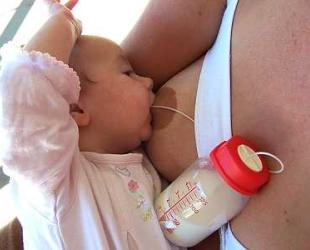
Katie - That was hard. That was really difficult because I didn’t want to give up. I’m like, nope, I’m just going to have it so that I can make enough milk for him and then he’ll want to feed. I did end up as recommended by the lactation consultant. I did buy a feeding line, and you put the milk in the top and you feed just little tiny slip of the tube into the side of the baby’s mouth. But by the time I was using that, I think he was just he was a little too old for it. She’d spoken about it being probably more successful when babies are a bit younger, when they’re not quite as aware of what’s going on. We did try it a few times, but we did struggle.
Simone - That’s a common thing, actually, with a supply line, even just feeling it at the top of their mouth when they’re older, they don’t really like it versus a baby that is very young and sucks anything you put near their mouth.
Katie - No, he and he was six months old, so he didn’t want to do it. And we had a lot of I guess if you want to say rules like we were very tactical when we were doing feeding, we were saying like, okay, if George has a feed with me and he refuses, then we can’t let Emma have a feed with him because then he’s going to do that all the time. So we had funny little sort of ….
Emma – Yeah, because he had a preference for me because of flow and supply and to trying to get him on to Katie. Yeah. It was like, well, if he says no to, if he’s fussy with Katie, we can’t just go, oh, put him on me because then he’s just going to want that more. At one point I was giving him like quite an empty breast, like when he was quite big. Not we’re not talking when he was three weeks old anymore. Like, you know, he was six months or seven months old. And I’d make sure that Lucy really drained me very well and then put him on, so he was having to learn how to how to suck properly, like, yeah, really latch on and suck rather than just relaxing.
Simone - That’s using your experience with both being very experienced breastfeeding mothers. Yeah, probably a first time mum wouldn’t know about that.
Katie - Absolutely. It wasn’t all sunshine and rainbows. Definitely not. But there was a point where I ended up getting a really bad staph infection, and that’s just because the chemotherapy weakens your immune system. So if you get a crack on your nipple or George, who loves to scratch me. Yeah, I ended up getting quite a bad infection. And I actually thought that was going to be the end of the pumping because it was in so much pain.
Emma - and we were going downhill together.
Katie - Yes, we were like, we didn’t want it to be like, we can’t end here.
Emma - It was a couple of months ago now. It’s funny, yeah. Like when you think back, it’s like giving birth. You’re like, oh, that was amazing. At the time it was really hard. But, so Katie had the staph infection and I had a bit of nipple thrush. And then because we were sharing babies, like I think it was like going round and we both had quite bad nipple trauma and were in quite a bit of pain, and it was a bit grim there, but we got through it. So I ended up having mastitis and we ended up getting on top of it. But I’ll tell you what, it was hard.
Katie - and I guess, like you cannot leave it. You have to investigate it because it’s a little problem one day and the next day it’s a big problem, with mastitis.
Emma - And I remember I was sitting there crying one day. Yeah, yeah. As I think Lucy was feeding because she just got in her front teeth and was experimenting and bit me. And I was just I was like, how am I going to do this? And at that point, George wasn’t feeding. He was still pumping at that point. So Katie hadn’t had that moment of him really bonding and latching. And so I was still his boobie and I was like, I don’t know that I can feed two babies, I can hardly feed one. Like I am so sore, and pumping was really hard.
Katie - And this wasn’t even like, that initial stages of breastfeeding. And this is like three babies in, two babies in like we were struggling.
Emma - I had to apologize, not apologize. And I was like, Katie, I can’t use the pump and express. I’m just expressing in the shower because it just hurts. I’m just watching milk go down the drain, but it’s what I have to do to get through this time because I can’t have anything else on my nipples. They are so sore. But yeah, we got through that. But it was hard and we’re lucky we had each other, I guess.
Katie - And that was the point of you saying, like, I’m much more of a planner than Emma. Yeah, so if you look at our text message history, most of it will just be bottle or like a question, are we having bottle or are we doing boobies or ..
Emma – Oh one of the other tricks - so I mentioned that when they were younger they kind of didn’t really notice each other, but as they got older, they kind of get a bit jealous of each other having boobie milk. So yeah, we kind of once Katie was breastfeeding and trying to get George on the boobie, we would see if Lucy would have a go with her, and sometimes he was a bit jealous. She would get it, she would have a go and he’d be looking like, hang on a minute and he’d come over and have a try. So but it also was really good in like helping with Katie’s supply and like you say, having a baby breastfeed as opposed to a pump that does wonders for you.
Katie - And, and I did a lot of like, I put him in the shower with me all the time, because when I was going through chemo, I actually couldn’t even have a shower with him. So when all that was over, I’d get in the shower with him, we’d have a lot of skin to skin. Even like playing on the bed and things and just all sorts of things to try and, like, go ‘this is a good option’. Like we should, we should get back on there.
Emma - And it’s funny, I think Lucy, she didn’t have the pressure of like needing to latch, and she also was only breastfed and hadn’t ever taken a bottle, so it wasn’t quite the same as him trying to latch. So she was actually fairly happy to latch on to Katie, I think, because it wasn’t her bread and butter.
Katie - So I was pumping a lot and not really seeing a lot of change, putting George on, maybe if he was asleep I’d sort of just pop him on really quickly, but he was sort of too sleepy for that, and it wasn’t really working because he would have been getting a few drops anyway. So I spoke to a midwife who had been helping me this whole time, and I got on to a world renowned lactation consultant. Oh my word. This woman, I thought I knew about pumping. She was absolutely instrumental in the journey that we have had. And aside from all the wonderful support that I’ve had from my family, she’s the reason why I’m able to feed where I am now. And she suggested going on some domperidone, which I had been on for feeding anyway, so I knew that I was on a very high dose. So on domperidone I was pumping up to ten times a day, including through the night, power pumping where I could. I had hired a hospital grade pump - that was wonderful. I had a portable pump as well, so it was just pump, pump, pump. That was as much as I could do. And I got to a point because I was consulting with the lactation consultant, and I reckon it was six weeks because the radiation therapy makes you really tired and the symptoms aren’t the same as chemotherapy. So you’re sick and then you’re better, you’re sick and then you’re better. Radiation works so that you’re okay. And as you have more and more and more, because I was having radiation every day, it impacts you more and more. And once you finish, you’re actually impacted more because the effects are still going. So I was incredibly tired. I was getting up at two o’clock in the morning to pump as well, just literally falling asleep on the lounge like slumped. Oh, the pump’s still on like ninety minutes later and I’d gone from making about oh gosh, sometimes it wasn’t five mils in twenty minutes to eventually being able to pump about one hundred millilitres, but that took a long... that was I reckon three months. We were going to move back to our house like around the corner, which is not far, but we couldn’t because there was no way I could manage the pumping and kids on my own. And my husband was there, but he’d started to go back to work a little bit, so Emma and Mum just kept on going, kept things normal, and eventually we’d moved home and we did a little bit of a bait and switch. So a lot of the time Emma would feed George and she’d say, he’s going to sleep quick, come sit next to me. I’ll put him on to you. Sneak him on.
Katie - And that was amazing.
Emma – It was actually, like, biggest hack.
Katie - Yeah. Um, I did it with a bottle as well, sometimes. It was always as he was falling asleep, he really didn’t want to breastfeed when he was really hungry. Understandably, I didn’t have enough. He was hungry. But when we went home, he started, he just sort of, I don’t know, it was like a different environment. And he was like, oh, you’re really the only option I have here, so I think I might, I might have a go with this. And he just started to feed and I, I was it was overnight. Like it just suddenly something shifted and he decided that he wanted to breastfeed. And so I just went from a combo of breastfeeding and pumping and still wanting to do a lot of pumping, because I was so scared to lose my supply after I’d been working so hard. And so he just started feeding and I got this special chair. And my vision had always been to sit in this chair with my little man and breastfeed him, and just everything else slows down and and we got there. That’s where we are, that’s what we’re doing now. He is feeding like, um, oh gosh, probably every two or three hours. This boy loves a good boobie and I’m pumping maybe once in a day if he doesn’t have a big feed. I still keep the pump at night, just in case. But this is kind of only a very recent change, like in the last few weeks, because he’s one in two weeks. Very interestingly, like I would often give him formula to take the pressure off, like we were trying to extend our milk, right, so he would have a formula feed before he went to bed, where he didn’t wake up. And now that he is breastfed, my my he wakes up a lot …
Emma - Just for a little snack.
Katie - Little snack every.. but anyway, that’s it’s the most beautiful thing. And in that first little bit of time when he really started to feed, I just, I think I cried every time. Sorry. It’s a bit emotional. I think I cried every time I fed him because we did it like, yeah, we did it. It was so hard. But we got there and I said to the lactation consultant, I just want bonding. And we got it. It was amazing. I said to Em, like, people wanted to help. And I had the most wonderful, you know, people making meals, taking our kids to play, people coming over to do art with them, the most generous, beautiful things. But the one thing that I wanted was for my child to be fed. And I got the next best thing.
Simone - And there was some donated milk in the mix too, wasn’t there? How did that come about?
Katie - Just through this journey, we found the most beautiful community of women in all places. Like it makes me teary. Sorry.
Emma - We had our cousin. She was, she was actually tandem feeding her two children. So she had a two year old and a baby, and she decided to tandem feed, which was something I remember thinking, oh gosh, I I’d love the idea of tandem feeding, but I think it’d be really hard on your body. I don’t think, I don’t think I’m cut out for that. Um, so I was always, you know, like, really admiring her for that. And then here I go, tandem feeding. But she was out west and she would drive it, keep it cold in the car, fridges and things and bring it out to us. And then because we’re of the age where we have lots of friends who are having babies at the moment, we would kind of be going like, oh, “how’s your supply at the moment? Do you have any do you have any leftovers you could spare?” And like we tried to be mindful of the fact that we didn’t want to take any milk that babies needed from a freezer stash, but if you had any milk that was maybe, you know, in that range of just about to go to waste, you know, a lot of people had milk in their freezer that they end up throwing out because it’s…
Katie - time frames
Emma - or, or, you know, putting it in a bath or something like, we would really love that milk. So we got quite a freezer stash, and we became a bit paranoid about losing power and having it all melt or something. So we kind of spread it out between freezers. But yeah, I joined a local gym called Mums Sweat Club and Shirley is the coach there, and she is really big about community. And we have this group chat and I said, Shirley, do you mind if I put our story on your group chat? She’s like, yeah, go for it. And so many beautiful moms donated. But we didn’t we didn’t know, I’d only just joined the group. And so many moms were like, oh yeah, I’ve got some milk. And oh, here come and pick up at this time, or, you know, I’ll bring it to the gym for you. And so that was how we built up our freezer stash. And Katie’s got some other beautiful friends as well that had been helping.
Katie - Lots of our dear friends that had babies at the same time, just just came to the rescue. They heard about our story. They’re like, oh, we have milk, come on. And so we were getting these random milk deliveries and it was just beautiful. And I know when I was in the hospital and knew that breastfeeding wasn’t going to be an option, I had called a couple of my friends. And yeah, that gets you up, doesn’t it? Yeah. Um, you know, I called some of my friends and I said, this is what’s going on, and if there’s any chance that you have any spare milk. And they were in tears, like, you know, everyone’s always crying. And yeah, it was so beautiful. One of the coaches at the gym too, Mums Sweat Club is Amy, and one day she was walking around with like, the catcher’s like where you just catch your let down. She’s like, “if you’re wondering, like, I haven’t had a boob job. I just look bigger today because I’ve got my catchers in, catching whatever, whatever flows off me today”.
Emma - So yeah, it was quite an amazing community of women that really helped come together for Katie and George. And I just think that’s such an amazing way to use your milk, and I would encourage anyone with any kind of extra supply of milk if you’re a breastfeeding woman, even just joining one of the Facebook pages that have mums on there asking for help and things. I don’t know how much of this you guys can promote.
Jessica – Yeah, so ABA has a position statement on donor milk. So the link for that is in the show notes. But basically, ABA supports families to make informed decisions about donor milk and milk banking. That includes recognizing that some people do use informal milk sharing, like what you did. And I’ll just read out the passage from the document. “The Association strongly encourages mothers to ensure that they are well informed of the potential risks and benefits of donated human milk, the methods available to minimize risks and to make decisions based on their own individual circumstances”. So what sorts of conversations did you have with the people who came to you through this informal, milk sharing kind of agreement?
Emma - It was so amazing to find these mums that would be helpful in our journey.
Katie - Yeah, we did explain, like what was going on and we were a bit of a package. So we explained, like Emma is breastfeeding my son until I can, but ..
Emma - I wasn’t making enough milk to sustain him entirely.
Katie - He needed he needed some more. So like we had built up quite a good stash originally, between us.
Emma - Between us. And we were. As he got bigger, we started to eat into that stash and it started, it was kind of getting smaller
Katie - And the goal was to get him to a year. We wanted to get into a year on breast milk and, and we did that, which was amazing.
Emma - So there were some women who even friends like I haven’t seen for a long time, like, oh, I need some friends of friends who’d heard about our story. Yep.
Katie - Apart from our cousin who lives further away, everyone was within our community, which was incredible. But I think the story of what was happening was very widely understood. What we were doing, what our goal was, and what’s so beautiful and accommodating. And so many of them couldn’t do milk, but they helping other lovely ways and will always be really grateful for that. Yeah.
Simone - Did you ever get anyone I mean, obviously this is all really positive and everyone was really amazing about it, but did you ever get a few raised eyebrows or anything sort of curiosity like, hang on, you can do that. I mean, we’re in breastfeeding circles here, so we all know about it. And my grandmother fed like another baby in hospital and things like this. So everyone’s got their stories of whether we call it cross nursing or breastfeeding. You know, and you probably would think maybe among friends or sisters, that could be something that happens. But did you get people that didn’t really understand or anything like that?
Katie - Not in my experience, I didn’t.
Emma – I think you’d have to be pretty game to say to take it on. I think, um, yeah. So it was always very positive.
Katie - There’s probably some people who went “well that is odd”. But yeah, we didn’t.
Emma - We feel really good about it and people make us feel good about it. I think we had some laughs. There was a few times where Katie and I would be at playgroup together and we, you know, I’d give Lucy a feed and then I’d get her baby and give George a feed. And I think they were kind of looking at us like “What? What’s going on here?” Because as much as our story was fairly widely known, sometimes we’d go to a playgroup that we hadn’t really been to before, and people were like, that’s going on to you like, are these boys? Are they twins? Because they’re kind of they’re kind of like similar. But one definitely looks a little older. Yeah, it was just a funny kind of scenario, but definitely we were met with a lot of positivity. I think I just want people to be be normal about breastfeeding and it’s just part of life, and we just need to do more of just supporting women to be able to do it. I originally was like, oh no, I wouldn’t breastfeed your baby. Like that’s a little bit weird. And I just think we need to normalize it.
Katie - It’s just milk. I shouldn’t say it’s just milk. It is in no way but just milk and where we are now. I’ve actually been feeding Lucy as well, which is, like, amazing.
Emma - because I’ve gone back to work just a small amount, but so Katie’s around in the day and so yeah, they come up and they have a little feed together, but they’re both standing up. It’s very funny seeing these two little standing up mothers and I, it’s the most incredible special thing for me, I don’t.
Katie - We’re in a breastfeeding world, in the community, so it doesn’t seem odd to us. It just seems like what we’re meant to do ..
Emma - is take care of each other and our babies.
Simone - So, Katie, what would your advice be to anyone who might be going through, I guess, a similar situation to what you faced.
Katie - The first thing I did was just research. I went, right, I’m making a plan. I need as much information as I can get. So I had even my hematologist. Who, that’s not his specialty. He got on my team. He was asking people like in the oncology world, like, what are the parameters around this. Mothersafe was, oh my goodness, they were instrumental. There’s so many chemicals and drugs and things that are going into your body, and it’s one thing for you, but like how it impacts a baby, it’s it’s something else.
Jessica – Yeah, so Mothersafe is one of a handful of breastfeeding medicine information lines around Australia. We’ll pop the link to the website article with all of that information in the show notes if anyone wants more information.
Katie - Yeah, so Mothersafe made a plan with me. So getting onto Mothersafe, finding out what your restrictions are there and what your plan can be. I use the ABA a lot, so I had the printed instructions about milk storage and times. I had that on the fridge. So - research, research research and then get your team together. Get your village. Get your people. I did try and find women who had done this, and I did actually find a couple of women who had breastfed post treatment, and I got in contact with one who, she was actually from America. And I just by chance, like I found her. After doing a little bit like I said, my research, I found her on Facebook and I private messaged her and she messaged me back. That was probably one of the most powerful things. Hearing that someone had done this and ..
Emma - she were a real person.
Katie - It was a real person with, you know, very, very similar circumstances to me, same cancer. She’d already had children. She just pumped, and she did end up feeding her her little person at the end of her cancer journey. So that was so inspiring to me that I was like, well, yeah, it’s been done. We can do this.
Jessica - Yeah. Wow. Do you feel like you created a very unusual but strong bond with that person.
Katie - I had spoken to a few women who had been through my circumstances, and did definitely get quite a bond with them. As much as Emma was incredible, nobody else understands unless they’re going through exactly what you’re going through. And she got it. And it was really lovely that we were able to get in contact, to be able to give me a little bit of a twinkle of hope that we would get there. And I think it truly got me through my chemo. I just was like, that’s my goal - breastfeeding my child. And I had this image in my head every time I pumped, every time I expressed, every time I was just like, this is so hard. I was like, “but I’m gonna, I’m gonna feed my child”. And it’s two weeks from George’s birthday, and I remember saying, I’m gonna look back on all of this in a year’s time and just say, we did it.
Emma - And we did.
Katie - We’ve done it. So anyone who has a similar thing, there are lots of ways that you can get support. Please do your research, get your village together and get a good pump.
Emma - I just am so amazed at the only way that we were able to do this was because of the people we had around us.
Katie - Building your village is really important and so challenging for some people. It’s really, really difficult. But you’ll find someone anywhere you go who will be on your team. So you’ve got to be brave and reach out and ask.
Jessica - And were there any moments in your journey that were particularly emotional?
Katie - So when I was told about my diagnosis, the first thing I said was, am I going to be okay? And the second thing was thinking about breastfeeding, and I lost my hair, I had so many things going on, but I just was... The grief that I couldn’t breastfeed was it was so big. It was so big. And I think to some people they couldn’t understand. It’s like, oh yeah, like that is a little bit sad. But you know, really you need to focus on yourself. And yes, I do need to focus on myself and focusing on myself for me was bonding with my child and breastfeeding with my child. That was actually something I wanted to do for myself.
Emma - And the last time that I fed him, I remember it so clearly. And I just looked at him and I was I was thinking. Like, it was, it was. Yeah, yeah. This is the last one for now, mate. I think it was the first time that everything to do with Katie’s diagnosis and the treatment and everything kind of really sunk in for me and hit me too, because I was like, wow, this is. This is the last time. Yeah, that I’m going to see you sitting there. And I remember dad saying he was so upset. He’s like, I just know that that’s all she wants to do is to feed, is to feed George. And he was I remember he was really emotional about it, too. And I think the fact that it was taken away from you was really hard, but it didn’t really think about the fact that that happens to women all the time, and we just expect them to go on and was like, oh, well, just give them a bottle.
Katie - But that’s so much, you know. I also had had this experience of feeding my other children and wanted that, and it was a big thing. But when I did get to feed, like I said, literally the night, I was so excited. I just remember being like, even again. Like it was so exciting and having him back on the breast, even just to have him close, like to have him in the realm of being able to feed was everything. It was everything. And like I said, I was a bit naive to think that it was all kind of just magically it would be fine. It didn’t happen like that, but it has happened in the most organic and special way that he’s come back to the breast and he is obsessed.
Simone - So there’s a lot of people that were involved in this journey. Is there anyone that you’d like to give a shout out to?
Emma - There’s so many people that have helped in this journey, and Katie and I are so thankful because, because of all these people, we’ve been able to get the best outcome for Katie and George. We mentioned earlier there’s been so many beautiful women in the community donating milk, and that is the most important thing. And a friend donated a high powered breast pump. Anyone in that community who helped with the milk part, we’re just so thankful. Then we also have our family just doing the most incredible job of supporting us.
Katie - Mum and dad and my grandmother were just like, yep, you’re just living here. That’s what you’re doing. So now our husbands just, yeah, yeah, just picking up all the pieces all the time.
Emma - Our brother and our sister in law.
Katie - Well, my brother shaved his head, which was special. And he picked up my wig, which is hand delivered. That’s the story ..
Emma – He hand delivered her hair to the wig maker and picked up the wig. And yeah, the way that Richie and Em and our brother and sister in law helped when you were in hospital having… Oh, and your things, and because there was a lot going on at home when Katie was having George in hospital was really busy and so we had lots of help there.
Katie - Yeah, absolutely. And the people at the school that we work at did a meal train. We had people who would come and do an activity with the kids or take them somewhere, and that was incredibly helpful. And my beautiful friend Talia, who I’ll cry about, Talia, who who came with me to every treatment because my family couldn’t because they were looking after the kids. So she came with me to every treatment and supported me in the most beautiful way. And my husband, who this was huge. And he just absolutely, it changed him as a father in the best way. I think doing all of this. A beautiful physio who was incredible in this whole journey and supported me in, um, breastfeeding and huge thank you to all the support she gave me during that time. An enormous thank you to everybody who breastfed George directly. Emma, obviously, and my friend Hayley, who was an incredible support there as well.
Emma - I did want to say thank you to dad. I’ll just say thank you, dad, for letting me boss him around while he helped me look after kids, when James was helping with Katie, or mum was helping with Katie and dad just was really cooperative and compliant as I bossed him around. So thank you so much for everyone who did all different little bits and pieces from the meal trains at school to helping look after our kids. And you know, my mother in law and her partner, they came and they helped with some yard work and things like it was just really we felt really supported by lots of people in the community.
Katie - I actually every time someone would do something I wrote would write it down. Our neighbours who would mow our lawn all the time ..
Emma - And our friend who was helping look after the house while you weren’t there, house sitting.
Katie - And Mums Sweat Club Gym that I’m a part of. It was a beautiful community and like it was somewhere that was nice for me to go. There was, I love the craziness of this place
Emma - but it’s a lot.
Katie - It was a lot, yeah. So going somewhere for me was nice.
Emma - Yeah. Because you did it all.
Katie - Yeah, yeah. So thank you. Thank you very much.
<music>
Jessica - For more information and links, please check the episode notes for breastfeeding information, or to access live chat with a qualified volunteer visit breastfeeding.asn.au. You can speak to a breastfeeding counsellor on the National Breastfeeding Helpline on 1800 mum 2 mum or 1800 686 268. The Australian Breastfeeding Association receives funding from the Australian Government. Please rate, review and subscribe to Breastfeeding with ABA. Thank you for supporting the Australian Breastfeeding Association.