A supply line lets your baby get extra milk at the breast, helping you keep breastfeeding.
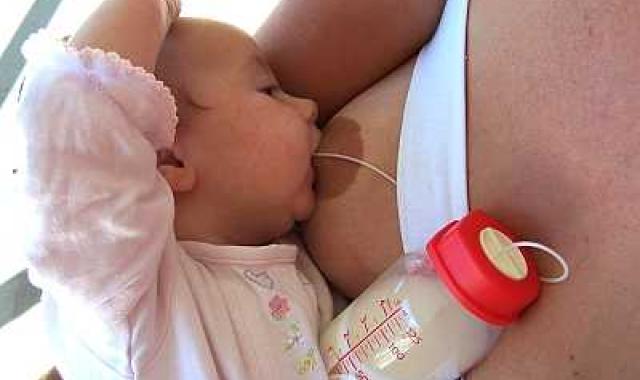
A supply line (also called a breastfeeding supplementer) helps your baby get extra milk at the breast, rather than from a bottle.
A supply line is a simple device made up of a container of milk and fine tubing. The container is usually worn on a cord around your neck or propped up between your breasts. This keeps it above your baby during feeding. The tubing carries milk from the container to your breast, so when your baby sucks, they get milk from both your breast and the tube.
A supply line lets you fully breastfeed while giving your baby extra milk, whether it’s your own expressed milk, donor human milk, or formula.
You might use a supply line if:
Your baby is premature, sick or struggles to suck well.
You have nipple shape challenges or have had breast surgery.
You don’t have enough milk-making tissue for a full supply.
Birth was tough and breastfeeding got off to a slow start.
You're working to increase your low supply.
You're relactating after weaning.
You're bringing in milk for your adopted baby, your baby born by surrogacy or your baby born to your partner.
How a supply line supports your baby and your milk supply
- Giving extra milk through a supply line rewards your baby’s sucking, helping them stay at the breast longer. Extra sucking at the breast helps trigger your let-down reflex and stimulates milk production. The more your baby feeds, the more milk you make.
- Using your own expressed milk in the supply line helps your baby get more milk for the same sucking effort – great if your baby tires easily.
- Using a supply line lets you give your baby extra milk without using a bottle. Some babies can start to prefer the easy action of sucking a bottle instead of breastfeeding. With a supply line, your baby continues to feed at the breast, which supports your milk supply.
Is a supply line right for me?
For a supply line to work well, your baby needs to be able to suck at the breast, even if they tire quickly. If their sucking is poor or abnormal, they may not get milk from the tube any better than from the breast. If your baby can’t suck, you might need other feeding methods, like finger feeding or cup feeding.
You can use a supply line for only a short while or long term, depending on what works best for you and your baby.
They can be a bit fiddly at first, but they get easier with practice. Follow instructions for use and cleaning.
Finger feeding
Finger feeding is another way some mums give their baby small amounts of milk without using a bottle. It can help in short‑term situations when a baby isn’t attaching to the breast yet or needs a little extra support to practise their sucking skills. But finger feeding isn’t right for every baby, and it needs to be done safely to avoid issues like baby not getting enough milk, hygiene issues or slowing breastfeeding progress.
If you’re thinking about finger feeding, it’s important to do this with guidance from a lactation professional, such as an International Board Certified Lactation Consultant (IBCLC). They can help you decide if it’s right for your baby and show you how to use it safely.

Getting support
Starting breastfeeding can feel overwhelming, and you don’t have to work through it on your own. A supply line can be really helpful, especially when you’ve got good support to guide you. Reaching out to someone who understands breastfeeding can make a big difference.
An ABA breastfeeding counsellor can listen, offer reassurance, and talk through your options. For more individualised support, a lactation professional such as an IBCLC can help you and your baby get breastfeeding going in a way that feels right for you.
© Australian Breastfeeding Association January 2026
Evidence-led info and practical tips from our Special Situation Information Series
Breastfeeding: using a supply line