Learn how food sensitivities can affect breastfed babies and what you can do to help.
Breastmilk is amazing! It changes in taste and composition based on what you eat. This means your baby gets to experience a variety of flavours, even before starting solids.
Most babies enjoy and benefit from this variety. Occasionally, some babies may react to certain foods.
Just as flavours from your diet pass through to your baby, so do some food proteins and other food chemicals.1-3 If your baby has a food sensitivity to any of these, they may have reactions.4
There are different types of food sensitivity in babies, including food allergy and food intolerance.
What is a food allergy?
A food allergy happens when your baby’s immune system reacts to an allergen – in this case food. Even a tiny amount can cause a big reaction. Allergic reactions can happen quickly after a feed (like vomiting, reflux, or a rash) or take hours or days (such as blood in baby’s poo or eczema). The most common foods causing allergies are cows’ milk, nuts, shellfish, fish, soy, wheat and sesame.5
What is food intolerance?
Food intolerance is different. It doesn’t involve the immune system and reactions can be delayed, sometimes 24 to 48 hours or more after your baby is exposed. With intolerance, a small amount of food might not cause a reaction, but a larger amount could.
Babies with food intolerance react to food chemicals coming through the breastmilk from their mother’s diet. These include food additives and natural chemicals found in healthy foods, often the things that give foods their flavour. Babies can also react to some everyday foods, such as dairy products, soy and some grains.
It's possible for a baby to have both food allergy and food intolerance.
In breastfed babies, allergy and intolerance can look similar
Allergies and intolerances can cause similar symptoms in breastfed babies, such as:
- wind
- gastro-oesophageal reflux
- green, mucousy poos
- eczema
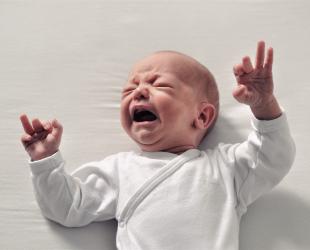
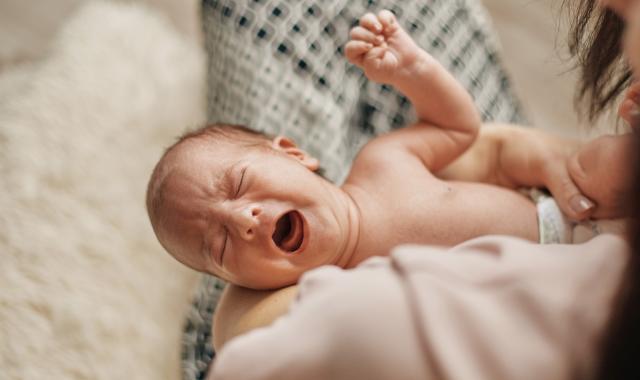
- a wakeful baby who seems to be in pain
Could it be something other than food?
Babies can be unsettled for lots of reasons. Before changing your diet to try to prevent your baby’s symptoms, consider if your baby is unsettled due to
- not getting enough breastmilk
- lactose overload from too much milk
- a medical condition such as an ear or throat infection
- normal newborn behaviour, like fussy periods
Does your baby have other symptoms of food sensitivity, like a rash or odd-looking poos? In some cases, reflux disease can be associated with food allergy or intolerance, especially to cows' milk.6 Talking to your doctor can help you to make sense of your baby’s symptoms.
Lactose intolerance – where does it fit?
Lactose intolerance is different from food allergy or intolerance. Lactose is a natural part of breastmilk made in the breast, not from your diet. Sometimes, babies develop secondary lactose intolerance after an illness or allergy. For more, see Lactose intolerance and the breastfed baby.
Next steps if you suspect allergy or food intolerance
If you’ve ruled out other causes and would like to check if your diet is affecting your baby, consult a health professional before making any changes.3 When you’re breastfeeding, you need good nutrition. If you start cutting out foods, you’ll need to make up for what you’re missing by eating other foods.
- Breastfeeding is usually safe and beneficial, even if your baby has food sensitivities.
- There’s no need to avoid certain foods unless your baby is already showing symptoms.
- If your baby does have ongoing symptoms, your health professional may suggest changing your diet for a while to see if it helps.
Can you reduce the risk of allergy?
Parents often hear different advice about preventing allergies. Should you avoid certain foods during pregnancy or while breastfeeding? The answer is 'no'. Here’s what research tells us:
- Avoiding foods during pregnancy or while breastfeeding does not reduce allergy risk and may even increase it.7
- Exclusive colostrum feeding in the first week can make a big difference in reducing peanut allergy.8
- Exclusive breastfeeding for around 6 months (at least the first 4 months) may help lower your baby’s risk.9
- There is not enough evidence to support giving your baby allergenic foods before 6 months.10
When your baby is ready to start solids (at around 6 months), the current advice is to introduce common allergy-causing foods during the first year while continuing to breastfeed.5
Find more information about reducing allergy risk and introducing allergenic foods.
Getting support
If you think your baby is reacting to foods in your diet, it’s best to consult a health professional, such as a dietitian. The Dietitians Australia website is a good place to search for a dietitian experienced in food allergies and intolerances.
The information on this website does not replace advice from your health care provider.
© Australian Breastfeeding Association July 2026
- Beauchamp GK, Mennella JA 2009, Early flavor learning and its impact on later feeding behavior. J Pediatr Gastroenterol Nutr 48 Suppl 1:S25–30. https://doi.org/10.1097/MPG.0b013e31819774a5
- Kilshaw PJ, Cant AJ 1984, The passage of maternal dietary proteins into human breast milk. Int Arch Allergy Appl Immunol 75(1):8–15. https://doi.org/10.1159/000233582
- Swain A, Soutter V, Loblay R 2021, Food Intolerance Handbook Volume 1: Diagnostic Elimination Diet. Sydney: Allergy Unit, Royal Prince Alfred Hospital. Swain A, Soutter V, Loblay R 2021, Food Intolerance Handbook Volume 1: Diagnostic Elimination Diet. Sydney: Allergy Unit, Royal Prince Alfred Hospital. https://www.slhd.nsw.gov.au/rpa/allergy/pdf/2020_FIH_Vol1%20contents%20pages.pdf
- Hill DJ, Roy N, Heine RG, Hosking CS, Francis DE, Brown J, Speirs B, Sadowsky J, Carlin JB 2005, Effect of low-allergen maternal diet on colic among breastfed infants: a randomized, controlled trial. Pediatrics 116(5):e709–715. https://doi.org/10.1542/peds.2005-0147
- Vale, S. L., Netting, M. J., Hornung, C. J., Smith, J., Roche, I., McWilliam, V., ... & Ford, L. S. (2026). Australasian Society of Clinical Immunology and Allergy (ASCIA) Guideline: Infant feeding for food allergy prevention. Clinical & Experimental Allergy. https://doi.org/10.1111/cea.70217
- Salvatore S, Agosti M, Baldassarre ME, Salvatore S, Agosti M, Baldassarre ME, D'Auria E, Pensabene L, Nosetti L, Vandenplas Y (2021). Cow's milk allergy or gastroesophageal reflux disease – can we solve the dilemma in infants? Nutrients, 13(2), 297. https://doi.org/10.3390/nu13020297
- Abrams, E. M., Shaker, M. S., Chan, E. S., Brough, H. A., & Greenhawt, M. (2023). Prevention of food allergy in infancy: The role of maternal interventions and exposures during pregnancy and lactation. The Lancet. Child & Adolescent Health, 7(5), 358–366. https://doi.org/10.1016/S2352-4642(22)00349-2
- Bhasin, M., Cooper, M., Macchiaverni, P., Joys, R. S., O'Sullivan, T. A., Keelan, J. A., Venter, C., Palmer, D. J., Lowe, A. J., Prescott, S. L., Silva, D., & Verhasselt, V. (2025). Colostrum as a protective factor against peanut allergy: Evidence from a birth cohort. Allergy, 10.1111/all.70043. Advance online publication. https://doi.org/10.1111/all.70043
- Musallam, N., Almog, M., Wagner, R., Epov, L., Dor, V., & Kessel, A. (2025). Can exclusive breastfeeding in the first 4 months reduce food allergy?: A retrospective questionnaire study. Annals of Allergy, Asthma & Immunology, 134(6), 713–718.e10. https://doi.org/10.1016/j.anai.2025.02.011
- Breen, C., Scarpone, R., Perkin, M. R., & Boyle, R. J. (2025). Food allergy prevention: Is earlier complementary food introduction really the optimal approach?. Clinical and Experimental Allergy, 55(9), 748–751. https://doi.org/10.1111/cea.70142