Ep 31 - Breastfeeding stories ... breastfeeding and adoption
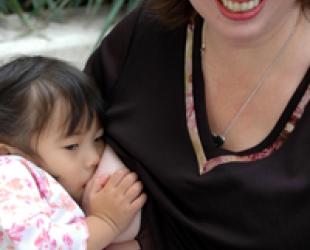
Simone and Jessica chat with Amy, who shares her story of breastfeeding her adopted child. Amy talks about her experience, in a touching story that shows there’s more than one path to breastfeeding success.
November, 2024.

Podcast episode
Companion blog post
Podcast information
Links to resources and information discussed in this episode:
- Relactation and induced lactation
- Using a supply line
- Expressing to relactate or induce lactation
- Expressed milk but not in a bottle
- Increasing your supply
- A carer's guide to the breastfed baby
- Expressing - the basics
Breastfeeding support:
- National Breastfeeding Helpline - 1800 mum 2 mum (1800 686 268) - Open 24/7
- LiveChat
- Find your local ABA group
Credits: This episode is presented by Simone Casey and Jessica Leonard, featuring Amy. Audio editing by Jessica Leonard. Show notes by Jessica Leonard. Transcription by Leanne Matthews. Produced by Belinda Chambers, Jessica Leonard and Simone Casey.
00;00;00;00 - 00;00;25;17
Unknown
Participating in providing that nutrition and comfort for my child meant more than I could have imagined, I think. Just having been unable to conceive or carry or birth a child myself, the way that breastfeeding just filled a little hole in my sense of womanhood was really, really significant. Welcome to Breastfeeding with ABA. A podcast brought to you by volunteers from the Australian Breastfeeding Association.
00;00;25;19 - 00;00;52;09
Unknown
Breastfeeding with ABA is a podcast about breastfeeding made by parents for parents. In this episode, we'll be hearing from Amy, who will be talking about her experience with breastfeeding her adopted child. We're recording this podcast in different parts of Australia. We acknowledge the traditional custodians of the land, that we're recording on and the land you're listening on. We'd like to pay our respects to elders past, present and emerging and to any Aboriginal people who are listening today.
00;00;52;11 - 00;01;12;01
Unknown
We also acknowledge the long history of oral storytelling on this country and of women supporting each other to learn to feed their babies. My name is Jess and I'm a Breastfeeding Counsellor with the Australian Breastfeeding Association and a mum of two kids. I'm speaking to you from the land of the Wurundjeri people of the Kulin Nation in the northern suburbs of Melbourne.
00;01;12;04 - 00;01;42;01
Unknown
I'm Simone and I'm a Breastfeeding Counsellor with the Australian Breastfeeding Association, as well as an International Board Certified Lactation Consultant, some people call them the LC for short. I think I met Amy too. I was thinking about when we actually met and when I met Amy when I was working in my capacity as a private LC and I did a home visit with Amy and her husband after she contacted me to help her to get started with breastfeeding her adopted baby.
00;01;42;07 - 00;02;08;29
Unknown
And Amy. I'm pretty sure your sister was a midwife who'd worked with me. Was that right? That's right, yes. I was trying to remember the exact little, you know something, the little puzzle piece that brought us together. Fantastic thanks, Simone. So, Amy, do you want to tell us a little bit about yourself and your family? Yeah. I'm a mum of two beautiful kids and my husband Andy and I live down on the surf coast on Wadawurrung country.
00;02;09;01 - 00;02;34;03
Unknown
And yeah, we've got a five year old who's come to us through infant adoption. Born here in Australia, and we've got a seven month well, she's 17 months old, come to us through permanent care and also born in Australia. But both have beautiful, diverse ethnic backgrounds, so we're a lovely little multicultural mix. So can you tell us a little bit about your journey into parenthood?
00;02;34;06 - 00;02;59;28
Unknown
Yeah, Andy and I tried to have kids for a couple of years without success and basically unexplained infertility, and so we started the journey into looking into infant adoption and permanent care, and it took about four and a half years, the process from start to receiving that call that we were having a little boy join our family. So it was a really long one, it was a really arduous one.
00;03;00;02 - 00;03;21;05
Unknown
Yeah, and difficult and challenging one. But yeah, I guess this this process of adoption and permanent care was something that we had interest in regardless of whether or not we were going to conceive. So it was something we were excited about and certainly not a second best. So Amy, when did you first hear about an adoptive mum inducing lactation?
00;03;21;07 - 00;03;42;02
Unknown
Yeah, I can’t remember the exact way time that I first heard about adoptive mothers breastfeeding, but it was likely through an article or YouTube clip from America in the early phases of our application. Just a little Google search and yeah, seeing some interviews there. And yeah, I mean, the process of adoption, as I said, took a long time, four and a half years.
00;03;42;02 - 00;04;02;20
Unknown
So there was heaps of time to read and research, you know, everything while you're imagining adoption finally being a part of your life. And did you know as soon as you kind of heard that it was a possibility that it was something that you wanted to try? Yeah, absolutely. I just thought how amazing to be able to provide for my child in a way that I otherwise hadn't.
00;04;02;22 - 00;04;28;16
Unknown
And the research that I'd done just really spoke to the incredible benefits for attachment that it would have between mother and baby in that adoptive process. So yeah, I was really keen to give it my best shot. I always wonder, you know, when you do mention it to people, a lot of people haven't heard of it. Do you find that when you talk to people that there's a lot of, you know, amazement that this is actually even a thing?
00;04;28;18 - 00;04;51;07
Unknown
Yeah, absolutely. And people don't understand it’s possible and they're really surprised. Definitely want to find out more. Wow, How did you do that? So, yeah, definitely. I get a lot of positive response when people find out. But I think some people are shocked or a bit weirded out, but most people are really amazed and just think it's such an incredible thing to be able to do.
00;04;51;10 - 00;05;14;17
Unknown
So did you start out with sort of telling family and friends when you were looking at embarking on this process? Yeah, my sister's a midwife, as I said, and I've got a couple of good friends that are midwives as well. So I had spoken about it with them and certainly talked about it with my husband initially. In my research, I'd read a lot about how important support would be in order to be successful with it.
00;05;14;19 - 00;05;33;04
Unknown
And so I shared the details of what would be involved because it's arduous on not just you, but you as a couple. And so I knew I'd need his full support and encouragement in order for it to be successful. And he was great. He showed a lot of interest and although initially cautious because he didn't want me to get my hopes up, or be disappointed we didn't have a baby at the time, you know?
00;05;33;04 - 00;06;03;12
Unknown
So I was just dreaming and we wouldn't know what our baby would be if we were even placed with one. But he was incredibly supportive in both the initial trial of inducing lactation and during breastfeeding. And I also gave the ABA adoption brochure to my mother and my mother in law as well to read so that they could understand what I was hoping to achieve and having breastfed three and four children respectively, they were really sceptical and quite shocked really, that inducing lactation was possible.
00;06;03;14 - 00;06;22;04
Unknown
But after reading the information and listening to my desire to give, to give it a go, they were really supportive. So I didn't receive any pushback, only support, which is amazing, and that's really nice. Did you have to do a lot of preparation in the lead up to the adoption in terms of, you know, I guess a medical process?
00;06;22;11 - 00;06;53;01
Unknown
Yeah. So from my research, basically I followed the recommendations that I read and also I saw a GP to discuss it with her, following some advice from a friend who is a GP. So she prescribed me a contraceptive and recommended that I go on that for nine months to make my body think it was pregnant and then go off that and go on another medication, which I think is used to people with diabetes that has a side effect of producing milk or increasing milk production.
00;06;53;03 - 00;07;20;02
Unknown
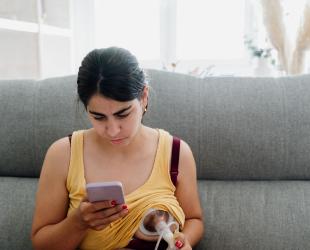
So that's what I did. So once I stopped the pill after nine months, I took this medication as prescribed along with the natural herbs everybody does - blessed thistle, fenugreek, etc. and you know, the diet has recommended oats, etc., etc. to support lactation. And then I gently started massaging and, you know, my breast and expressing four times a day, and then I eased into using a breast pump on a low setting for short periods of time, 3 to 4 times a day.
00;07;20;04 - 00;07;41;26
Unknown
So I sort of did that, you know, 7 a.m., 12 noon, 5 p.m., 10 p.m. I was working full time in a new position at the time, so pumping at work was really quite difficult and I was often ducking off to my car on a lunch break or hiding away in a public toilet to pump. So I found it quite a tricky situation because my workplace, I'd started a new job.
00;07;41;26 - 00;08;03;06
Unknown
They obviously didn't think I was pregnant. They didn't know - well I wasn't pregnant. They didn't know that I was on the adoption register either. And so, yeah, it was a delicate situation, I suppose. Yeah, certainly expressing milk for a baby that didn't exist also seemed like .. I wouldn't know much about that. I guess so it would be a difficult thing to explain.
00;08;03;08 - 00;08;21;20
Unknown
And I also yeah, and I found the process quite mentally challenging and yeah, emotionally it began to take its toll after a while. You know, as you can imagine, in order to sort of get a let down, you know, the research was like, look at some pictures of babies and imagine yourself having a baby in your arms and all those sorts of things.
00;08;21;20 - 00;08;38;16
Unknown
And, you know, so we had a little nursery set up at the time in hope, you know. So I would sit in there and try and express. But as you can imagine, of, you know, desiring a baby for years and years. And, you know, that time of infertility is such a difficult one. And yeah, it was an emotional time.
00;08;38;16 - 00;09;06;18
Unknown
And often it meant doing that imagining, you know, it brought more sadness than it did milk. So, yeah, it was it was challenging to get a let down and get any milk at the beginning. And I needed to tune into my maternal sort of instincts and imagine a baby with me. So, yeah, after three months of doing that, I decided I was a bit too emotionally unable to continue and I made the decision to see it as a successful trial.
00;09;06;20 - 00;09;27;02
Unknown
I did produce some milk, so that was encouraging. But yeah, it was just really disappointing for me at the time that my efforts hadn't coincided with the placement of a child because that was obviously what I'd really hoped. But I was certainly more confident and hopeful that my body was more familiar with having done it once and the possibility of inducing lactation again in the future.
00;09;27;03 - 00;09;47;21
Unknown
So, gotta take the wins with the disappointment. Absolutely, I think that's such a great way to look at something like that, that you like yep, it might not have been the success that I was picturing when I started on this, but it was a success. And to just reframe that in your own mind and within yourself as being successful, I think it's really lovely to hear that you were able to do that.
00;09;47;24 - 00;10;08;24
Unknown
So at some point after this, you've got to meet your little baby. So tell us about that. Yeah. So we received a call that we’d been matched with an 11 week old boy who we then met a week later. And this is just an incredibly surreal time for my husband and I. He was actually on a work trip in remote Indonesia, so it took quite a while to get through to him to let him know that he had a son.
00;10;08;27 - 00;10;26;23
Unknown
But yeah, he was able to fly back quickly and we were able to meet with the caseworkers the following day, heard about his background and saw some pictures, and then a week later we met him for the first time and began transition with the foster family he was staying with, over three days before we brought him home.
00;10;26;25 - 00;10;46;29
Unknown
So yeah, it was absolutely an amazing time and one that we'd waited for and dreamt of for so long. And yeah, we treasured every moment was bliss, was wonderful. Must've been so strange for your husband as well. Being overseas and receiving the call to tell him that he had a son like it just sounds so incredibly emotionally intense.
00;10;47;01 - 00;11;08;07
Unknown
Yeah, absolutely. Yeah. I mean, you dream about and you think about what it's going to be like every day. Yeah, And then it happens and it's just happens. Yeah. Cool. Yeah. So what happened with feeding after you got to bring your baby home? Yeah. So our son had been formula fed by bottle for the first 12 weeks of his life.
00;11;08;07 - 00;11;43;16
Unknown
So it was 12 weeks by the time he came home with us and initially by the special care nurses in the hospital and then by the foster family who looked after him for the following 11 weeks. So he'd never been breastfed nor experienced any skin to skin feeding. So I bathed together with him a lot, spent lots of time, skin to skin, building our attachment and familiarizing him with the smell of my my milk, which I yeah, I'd started pumping straight away once I'd heard about it, went back on the medication, went back on the herbs and diet and everything and started pumping again.
00;11;43;18 - 00;12;02;23
Unknown
Yeah. And I think that's probably when I got the call, probably I would say. Simone you supported Amy in your role as a lactation consultant. Can you tell us about sort of how you did that? And maybe to start with, you can just sort of talk a little bit about the differences between your roles with ABA in your role as a lactation consultant?
00;12;02;25 - 00;12;27;13
Unknown
Yeah, so with the ABA, I'm a Breastfeeding Counsellor, so that's giving mother to mother support. I do a lot of work on the Breastfeeding Helpline and in the local area, group meetings and things like that. But in that role, I guess if someone calls me on the helpline, they won't know that I'm a lactation consultant and that's something I went on to do afterwards actually because of my experience with as a Breastfeeding Counsellor for I think 17 years now.
00;12;27;13 - 00;12;51;18
Unknown
So I did go on to do some further study and then become a Lactation Consultant. And it was in that role as a Lactation Consultant that Amy did contact me. And I did, yeah, I'm pretty sure it was through her sister that she knew that I existed. I may have even worked with her at a hospital at one stage, and Amy called me through my business as a private Lactation Consultant.
00;12;51;18 - 00;13;16;16
Unknown
And so I, I hadn't helped a woman with breastfeeding an adopted child before, but in theory, I knew a lot about how it worked. And obviously I had helped a lot of women to bring babies to the breast who hadn't been breastfeeding as well. So I sort of was pretty confident that I'd know how to help her, even though I hadn't actually, you know, it's not sort of usual thing you get contacted about.
00;13;16;18 - 00;13;36;11
Unknown
So I was actually really excited though, to meet Amy and to meet her little baby. And I still remember walking in the front door and meeting her and her husband and her little son. And you know, I was excited that she had been able to produce some milk at that point because I knew even just a little bit was going to be enough to get started.
00;13;36;13 - 00;13;55;23
Unknown
And so, yeah, we just had a really nice session on that first day because we both didn't know whether her son would go to the breast, you know, and that was something that we just had to have a little work on. And she'd been doing lots of skin on skin and some really great preparation. And he was used to being near her already and was very comfortable.
00;13;55;25 - 00;14;19;04
Unknown
So that part of it was a great start already. And he showed a lot of interest in latching beforehand. And I'd tried the SNS a few, you know, quite a few feeds or four feeds, I think. So he honestly latched on the nipple shield for a short time on each occasion and maybe got 10 to 30 mls down through the supplementer that I just couldn't
00;14;19;11 - 00;14;41;01
Unknown
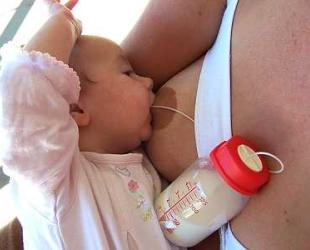
Couldn't manage the shield and the supplementer and him and getting it getting it all together. And that's when I just really needed help with. But yeah, made a big difference. Yeah. And just to let everyone know what SNS or a supplementer is, it's basically a, a little bottle that you would put milk in, you could put breast milk in it, you can put formula in it.
00;14;41;03 - 00;15;04;03
Unknown
Sometimes you can like hang them in a little cord around your neck. Some people put the little bottle in the in the strap of their bra and it has a very, very tiny fine tube that comes out of the top of it. And you can tape it to your breast or place it on your breast. And then when the baby goes onto the breast, they actually get this tiny little bit of tube in their mouth on the side of their mouth at the same time.
00;15;04;06 - 00;15;28;01
Unknown
And then they can drink whatever there is on the breast, but plus get extra supplement of that formula or extra breast milk if there's not enough coming out of the breast at that time. So that's how the supplementer works. And then quite often when that with a baby that has been on a lot of bottles or obviously in your son's case he'd only had a bottle and a couple of little sucks on the nipple shield.
00;15;28;03 - 00;15;57;01
Unknown
A nipple shield can be quite handy because of the silicone feel of the shield and it goes over a woman's nipple, and the nipple sort of sucks into the shield as to the baby's very strong suction sucks along with that. And that can remind them a little bit of what their bottle feels like. So sometimes it's a really good transition tool to transition a baby from a bottle onto the breast, just sort of like a similar feeling to their bottle.
00;15;57;03 - 00;16;23;27
Unknown
And eventually a lot of babies that start off on the shield, we can gradually reduce the use of that shield or just take that shield away and they'll go on directly onto the breast. So those are the sorts of things that you were kind of supporting, Amy, with, were they Simone, to get those things happening? Yeah I just sort of was showing her, I guess the ins and outs of using that SNS there's a few little tricks on, you know, because you sort of feel like you have to be an octopus and have lots of hands to try and grab everything.
00;16;23;27 - 00;16;50;21
Unknown
And so it was just sort of showing her lots of little tricks and tips on how to manage the SNS and the nipple shield. And he did straight away while we were there. He did drink quite well. And look, it's so difficult to know whether a baby of that age will you know, I've had babies that have been on bottles for weeks and weeks and weeks and get to a certain age and just won't go back to the breast at all.
00;16;50;21 - 00;17;13;10
Unknown
So the fact that he'd never had a, you know, a breast in all that time and literally just went straight on to it was pretty amazing. Yeah. He caught onto the idea really quickly and I expected it to be a much longer transition, but I was just amazed how natural it became for him so instantaneously. And I mean, I remember you propping me up properly with pillows and everything, and then you put Adam skin to skin.
00;17;13;12 - 00;17;37;18
Unknown
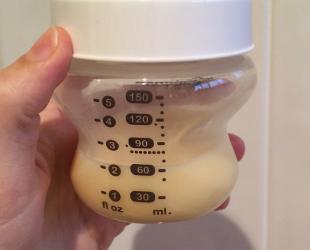
Upright on my chest to see if he would instinctively move down to the nipple. And he did. And he and he latched then. And the following day he left three feeds in a row, having in the entire 150 ml bottle by the SNS. So it was just an incredible sensation and experience for me, having not carried and birth to a child, to have a child actually feeding from my breast.
00;17;37;18 - 00;17;59;06
Unknown
It was unbelievable. Yeah, my child feeding from my breast is amazing. Incredible. So what are the supports did you get apart from you know, you've mentioned that Simone came and saw you in your home as a private Lactation Consultant. What other support did you get throughout the process? Yeah, I did go to a couple of the ABA meetings and did get some support from a Breastfeeding Counselor there.
00;17;59;06 - 00;18;32;22
Unknown
I remember it was, yeah, maybe five or six weeks down the track and she actually said, You know what, I think you should ditch the SNS. I reckon he'll feed just on you. You should just try to see if you've got enough milk for him to. And he actually did. And that, that gave me real comfort there. And then in our lounge room or someone's lounge room just gave me a real confidence that yeah, he was and he would, he would latch on me, wouldn't get enough just from me, but he would latch on and have a go and just feed him without that all those tubes, which was again a real, really special experience.
00;18;32;25 - 00;18;54;06
Unknown
And I also looked at YouTube clips and followed tips via other SNS users via Facebook group. And I particularly gained a lot in the preparation phase from reading a book called “Breastfeeding Without Birthing” by Alyssa Schnell, an American woman. And that yeah, that inspired me in the first instance and really encouraged me that it was possible.
00;18;54;09 - 00;19;12;29
Unknown
I guess once you got to that point where it sounds like your baby was able to latch on and drink without the SNS attached that your supply had obviously started to come up with all that direct contact and that lots and lots of, you know, more direct breastfeeds, which would help to supply probably a lot more than that pump would.
00;19;13;02 - 00;19;36;15
Unknown
And yeah, you got to a point where you were actually pumping a fair bit more than you were at the start. So can you give us an idea of how much milk you think that you were sort of able to get? I know it's always hard if they are drinking directly to know exactly how much that is, both, you know, whether it was half his needs or whether he had to have a top up every time or not or every time or anything like that.
00;19;36;15 - 00;19;59;11
Unknown
But you could tell us about. Yeah, ultimately, I think I averaged pumping about 390 mil per day. So that was sort of 60 mil combined, like both breasts five times a day and occasionally that like I'd have an additional 90 mil if, you know, if my has often my husband did the night feed with a bottle like that was mostly because it was a special experience for him as well.
00;19;59;17 - 00;20;26;19
Unknown
So we, we still incorporated that and so I'd get him more on that pump. So it was about half of his daily supply, but presumably he was getting more from me than I could pump it. You know, it's hard to know, but yeah, that increased over time. So the first time I induced lactation before our son came along, it was 1 to 2 weeks before I sort of got the first drop of milk by hand expressing, and then it gradually increased to about 10 mls per sitting.
00;20;26;19 - 00;20;48;13
Unknown
As I use the electric pump on a low sitting. And I was only taking a smaller dosage of the medication then as instructed by the doctor. But once I knew our son was coming, I took more and I pumped overnight as well. I took a pill overnight and I pumped overnight, which I wasn't doing before. And so yeah, and I was expressing four hourly.
00;20;48;13 - 00;21;18;06
Unknown
So within two weeks I was producing about 3 to 4 mil that, that second time round. And then yeah, as I, by 4 to 6 weeks it was sort of up to 30 to 40 mls and then yeah, got up to an average of 60 sometimes 90 mls a pump. Yeah massive amounts though when you think about it you started with nothing for two weeks and then you're pumping up to 90 mls and then you know, of course that's not even counting what he was getting directly from you.
00;21;18;13 - 00;21;41;19
Unknown
Yeah. So I got to the point where I was feeding him directly with SNS, and so I'd only top him up via the SNS every second feed, but he was also having solids at that point. So he's 5 to 6 months old by then. So yeah, it was a big success. And I guess as far as his nutrition content as well, we were really great, really benefited from some donated expressed breast milk.
00;21;41;19 - 00;22;03;23
Unknown
So he had donated EBM from about 15 women in addition to me. So he really got an amazing nutritional diversity of intake for that that period, which was incredible. I was also thinking, how long did it take you to get off the nipple shield? I forgot to ask you that before. Yeah, I can't remember now, but it wasn't that long.
00;22;03;23 - 00;22;22;06
Unknown
It was only it was a couple of weeks. Yeah. I thought that it wasn't that long once he got the hang of it, I guess you can just sort of gradually inch it away. But yeah, I was pretty sure you were off it. Yeah, it was, it was really difficult to juggle it in addition to the other things and yeah, after a couple of weeks I think he was fine without it.
00;22;22;06 - 00;22;49;01
Unknown
Was it ever your goal to get to exclusive breastfeeding or did you have other things that were higher priority. Yeah. For me the goal was that I could breastfeed at all and I think yeah, for me I just didn't want to spend my entire time pumping, for me, you know, just because of the you pump after you feed, you know, and then and you know, they're woken up and then you feed and then they play.
00;22;49;01 - 00;23;10;03
Unknown
And that's their happiest time. And I, you know, I found myself sitting on the couch pumping, not being able to participate in his happy floor playtime, which, you know, is the funnest part of the day. So, yeah, I didn't I didn't go crazy with the pumping because I just wanted to enjoy him and yeah, be present for particularly that happy part of the day.
00;23;10;06 - 00;23;43;06
Unknown
So yeah, I think that balance I found was important and over time as well like I dropped pumping overnight as well just again so that I was a happier mum the next day. So how long did you breastfeed your baby for altogether? We breastfed for four months in total. So from, from when he was about 14 weeks until he was about seven months old and he initiated the weaning because he became really distracted during feeds at that age, seven months, and frustrated at the slow pace of the milk flow from both my breast and the SNS.
00;23;43;08 - 00;24;03;10
Unknown
So I was sad that it ended, but I was also really overwhelmingly satisfied at what we'd achieved and yeah, really thrilled at the special time it was for he and I in bonding and yeah, I strongly believe that he benefit immensely, not just from my breast milk and breast milk, but from all those other women, 15 women and from that contact.
00;24;03;13 - 00;24;25;24
Unknown
Yeah, I think I can see in his health and you know, in our relationship and connection and you know, his emotional stability and adjustment that yeah I'm certain that it made a big difference. I'm going to ask about - you have another baby that you've since adopted as well and you tell me a bit about that experience in relation to feeding and what sort of happened for your baby to come into your life.
00;24;25;26 - 00;24;49;07
Unknown
Yeah, we're so fortunate to be placed with a little girl. She came to us at seven months old through permanent care. So it hasn't actually come through permanently yet that it will shortly. But yeah, she's, she's beautiful. And at seven months old she had exclusively been bottle fed formula her whole life and she was also born, you know, in the midst of those COVID times as well in a hospital.
00;24;49;07 - 00;25;07;22
Unknown
So, you know, she had quite a rough start because of her circumstances and spent quite a bit of time in hospital prior to going to the foster carer. Saw a lot of masks in her early days, etc.. So she really did just she was exclusively bottle fed for the first seven months and had already started solids by the time that she joined us.
00;25;07;22 - 00;25;32;08
Unknown
So yeah, we just made the decision that it wasn't going to be quite as feasible and wasn't worth trying to force an additional thing, which takes a lot of effort, a lot of time to try and make work. We had to juggle what was going to be most important for her adjustment into our family and also thinking about our son as well, and his adjustment and connection to her.
00;25;32;08 - 00;25;53;06
Unknown
So we decided that trying to add breastfeeding to what was already going to be, yeah, a big adjustment for everybody probably wasn't going to work this time around. We certainly did skin to skin bottle feeds though, and yeah, all those things. I was about to say that, I bet you wouldn't have let go of that skin to skin time because that was so nice with your son.
00;25;53;06 - 00;26;17;22
Unknown
I'm pretty sure you were going to go. Right. Let's chuck this baby on my chest again. Absolutely, skin to skin bottle feeding, skin to skin bathing and yeah, and also that EBM, donated EBM And we were just so grateful to say yeah you did have some of that again I read some of the same donors. One was actually yes, one was one of the same donors, which is amazing because they obviously had another child at the same time.
00;26;17;25 - 00;26;41;29
Unknown
So that was very special yeah. We only had two donors. Two donors. Incredible. Gave us incredibly a huge amount, which if we fed her for probably five months, I think exclusively. Amazing, I guess. Would you have any other advice to give to adoptive parents that you may meet that are thinking about inducing lactation? Yeah. Look I would highly recommend it.
00;26;42;04 - 00;27;08;23
Unknown
Obviously I had a positive experience, but I just think, you know, with all breastfeeding, this is my only experience. But with all breastfeeding you have to you have to think about the bigger picture of what's happening around you. And I think finding that balance between what's healthy for you and your emotional and physical health and also for, you know, your baby and your other children and, you know, the family as a whole is important.
00;27;08;25 - 00;27;28;22
Unknown
You know, in that first phase, when I was hoping for a baby to come and trying this process, yeah, expressing at the time did really emotionally take its toll. And so it was important that I stopped when I did. So I think yeah, I just think you have to you have to do it with your wellbeing in mind.
00;27;28;29 - 00;27;52;01
Unknown
Success won't come if you force the issue, I suppose. With a lot more social media around, you know, on my Tik-Tok, there's always people inducing lactation, probably because I talk about it or I talk about breastfeeding. I get all the breastfeeding women and I, you know, I'm seeing it more and more and more. So it's been quite interesting just to see how much milk some people actually can produce.
00;27;52;01 - 00;28;20;16
Unknown
I've seen I saw a one woman that was producing enough for twins to induce lactation. I mean, I just couldn't believe that she hadn't birth to baby before. No, she hadn't. Wow. Yeah. So yeah. So you know, the body and human body is so amazing that it can produce this milk basically via stimulation. Actually, I was talking to some women today and I told them I was recording a podcast and they said, I didn't even know that was a thing.
00;28;20;16 - 00;28;43;04
Unknown
And how does that work? And I just tried to explain about the oxytocin hormone and about how breastfeeding isn't purely hormonally driven. In the beginning, there is that whole supply and demand thing that's actually driven by the stimulation and the removal of the milk. And that's what actually makes more rather than always that you’ve birthed to baby, you delivered a placenta.
00;28;43;07 - 00;29;02;08
Unknown
What normally what does that triggers the lactation when that's not there, there's still that element of milk removal and if you can get that to happen, you know through whether it's through the use of that medication or just literally as you did with the pumping again and again and again just to get it started, then you've got this beautiful baby starting to suck.
00;29;02;08 - 00;29;20;28
Unknown
So then your oxytocin hormones like going, wow, okay, let's just give me a little bit more out here. And that's how it all can sort of escalate, which is, you know, it's just amazing the human body can do that. And I guess participating in providing that nutrition and comfort for my child meant more than I could have imagined.
00;29;20;28 - 00;29;40;17
Unknown
I think just having been unable to conceive or carry or birth a child myself, the way that breastfeeding just filled a little hole in my sense of womanhood was really, really significant. And the sense of personal achievement and accomplishment, you know, that it gave me after such a long process, you know, and the emotional toll of the preparation stage.
00;29;40;24 - 00;30;09;14
Unknown
Yeah, it was just really amazing. It was such a special experience that I'll yeah, I'll treasure it forever was amazing. You've been listening to Breastfeeding with ABA. For more information on this topic and this episode's companion blog post, see the show notes for links, visit Breastfeeding dot ASN Dot AU. To find out more about connecting with ABA in your local area or to join as a member. To speak to a Breastfeeding Counsellor
00;30;09;19 - 00;30;36;20
Unknown
Call the National Breastfeeding Helpline on 1800 686 268. It's available 24 hours a day, every day of the year. Our live chat service is another option for breastfeeding support. Check the website to see when it's open. Please rate, review and subscribe to the Breastfeeding with ABA podcast.